
Работа в PlayStation
Если вы хотите создавать новые удивительные приключения – или рассказывать о них миру – вы можете делать это вместе с нами.
О компании Sony Interactive Entertainment
Компания Sony Interactive Entertainment (SIE) является мировым лидером в области интерактивного развлекательного программного обеспечения. Компания представляет бренд и семейство продуктов и услуг PlayStation®. PlayStation является инноватором на рынке с момента запуска первой версии PlayStation в Японии в 1994 г.
Семейство продуктов и услуг PlayStation включает PlayStation®5, PlayStation®4, PlayStation®VR, PlayStation™Store, PlayStation®Plus и программное обеспечение PlayStation от PlayStation Studios.
Штаб-квартира компании находится в Сан-Матео, штат Калифорния. SIE является дочерней компанией Sony Group Corporation и выполняет глобальные функции. Штаб-квартиры компании расположены в Калифорнии, Лондоне и Токио.
О компании Sony Interactive Entertainment
Компания Sony Interactive Entertainment (SIE) является мировым лидером в области интерактивного развлекательного программного обеспечения. Компания представляет бренд и семейство продуктов и услуг PlayStation®. PlayStation является инноватором на рынке с момента запуска первой версии PlayStation в Японии в 1994 г.
Семейство продуктов и услуг PlayStation включает PlayStation®5, PlayStation®4, PlayStation®VR, PlayStation™Store, PlayStation®Plus и программное обеспечение PlayStation от PlayStation Studios.
Штаб-квартира компании находится в Сан-Матео, штат Калифорния. SIE является дочерней компанией Sony Group Corporation и выполняет глобальные функции. Штаб-квартиры компании расположены в Калифорнии, Лондоне и Токио.
Свяжитесь с нами
Все продукты PlayStation создаются рядом компаний Sony Interactive Entertainment. Если вы проживаете в Европе, Африке, на Ближнем Востоке, в Океании, Индии, России и Украине, то при использовании наших продуктов и услуг вы можете столкнуться со следующими компаниями SIE:
Свяжитесь с нами
Все продукты PlayStation создаются рядом компаний Sony Interactive Entertainment. Если вы проживаете в Европе, Африке, на Ближнем Востоке, в Океании, Индии, России и Украине, то при использовании наших продуктов и услуг вы можете столкнуться со следующими компаниями SIE:
Sony Interactive Entertainment Europe Limited (“SIEE”)
SIEE управляет сайтом www.playstation.com. SIEE также разрабатывает и издает продукты и услуги, связанные с PlayStation, в том числе игры для PlayStation и сетевые сервисы, и распространяет оборудование PlayStation. SIEE является материнской компанией сетевых магазинов Sony Interactive Entertainment Network Europe Limited и Sony Interactive Entertainment Direct Europe Limited.
Зарегистрированный адрес:
10 Great Marlborough Street,
London, W1F 7LP,
United Kingdom.
Номер компании в Великобритании: 03277793
Номер плательщика НДС в Великобритании: GB 760 9739 93
Адрес электронной почты: networksupport@ru.playstation.com
Sony Interactive Entertainment Network Europe Limited (“SIENE”)
SIENE управляет PlayStation Network и PlayStation Store. Это сетевой магазин цифровых продуктов и услуг, продаваемых через PlayStation Store на консолях, www.playstation.com и в мобильном приложении PlayStation.
Зарегистрированный адрес:
10 Great Marlborough Street,
London, W1F 7LP,
United Kingdom.
Номер компании в Великобритании: 6020283
Номер плательщика НДС в Великобритании: GB 760 9739 93
Адрес электронной почты: networksupport@ru.playstation.com
 |
|
| Product type |
|
|---|---|
| Owner | Sony Interactive Entertainment |
| Country | Minami-Aoyama, Minato, Tokyo, Japan |
| Introduced | December 3, 1994; 28 years ago |
| Markets | Worldwide |
| Website | www.playstation.com |
PlayStation (Japanese: プレイステーション, Hepburn: Pureisutēshon, officially abbreviated as PS) is a video gaming brand that consists of five home video game consoles, two handhelds, a media center, and a smartphone, as well as an online service and multiple magazines. The brand is produced by Sony Interactive Entertainment, a division of Sony; the first PlayStation console was released in Japan in December 1994, and worldwide the following year.[1]
The original console in the series was the first console of any type to ship over 100 million units, doing so in under a decade.[2] Its successor, the PlayStation 2, was released in 2000; it is the best-selling home console to date, having reached over 155 million units sold by the end of 2012.[3] Sony’s next console, the PlayStation 3, was released in 2006, selling over 87.4 million units by March 2017.[4] Sony’s next console, the PlayStation 4, was released in 2013, selling a million units within a day, becoming the fastest selling console in history.[5] The latest console in the series, the PlayStation 5, was released in 2020[6] and sold 10 million units in its first 249 days, unseating its predecessor as the fastest-selling PlayStation console to-date.[7]
The first handheld console in the series, the PlayStation Portable (PSP), sold a total of 80 million units worldwide by November 2013.[8] Its successor, the PlayStation Vita (PSVita), which launched in Japan in December 2011 and in most other major territories in February 2012, sold over four million units by January 2013.[9] PlayStation TV is a microconsole and a non-portable variant of the PlayStation Vita handheld game console.[10] Other hardware released as part of the PlayStation series includes the PSX, a digital video recorder which was integrated with the PlayStation and PlayStation 2, though it was short-lived due to its high price and was never released outside Japan, as well as a Bravia television set which has an integrated PlayStation 2. The main series of controllers utilized by the PlayStation series is the DualShock, which is a line of vibration-feedback gamepads, having sold 28 million units by June 2008.[11]
The PlayStation Network is an online service with about 110 million registered users[12] (as of June 2013) and over 103 million active users monthly.[13] (as of December 2019) It comprises an online virtual market, the PlayStation Store, which allows the purchase and download of games and various forms of multimedia, a subscription-based online service known as PlayStation Plus and a social gaming networking service called PlayStation Home, which had over 41 million users worldwide at the time of its closure in March 2015.[14] PlayStation Mobile (formerly PlayStation Suite) is a software framework that provides PlayStation content on mobile devices. Version 1.xx supports both PlayStation Vita, PlayStation TV and certain devices that run the Android operating system, whereas version 2.00 released in 2014 only targeted PlayStation Vita and PlayStation TV.[15] Content set to be released under the framework consist of only original PlayStation games currently.[16]
Seventh generation PlayStation products also use the XrossMediaBar, which is an Technology & Engineering Emmy Award–winning graphical user interface.[17] A touch screen-based user interface called LiveArea was launched for the PlayStation Vita, which integrates social networking elements into the interface. Additionally, the PlayStation 2 and PlayStation 3 consoles also featured support for Linux-based operating systems; Linux for PlayStation 2 and OtherOS respectively, though this has since been discontinued. The series has also been known for its numerous marketing campaigns, the latest of which being the «Greatness Awaits» and eventually, «Play Has No Limits» commercials in the United States.
The series also has a strong line-up of first-party games due to PlayStation Studios, a group of many studios owned by Sony Interactive Entertainment that exclusively developed them for PlayStation consoles. In addition, the series features various budget re-releases of games by Sony with different names for each region; these include the Greatest Hits, Platinum, Essentials, and The Best selection of games.
History
Origins

Original PlayStation logo (1994)
PlayStation was the brainchild of Ken Kutaragi, a Sony executive who managed one of the company’s hardware engineering divisions and was later dubbed «The Father of the PlayStation».[18][19]
Until 1991, Sony had little direct involvement with the video game industry. The company supplied components for other consoles, such as the sound chip for the Super Famicom from Nintendo, and operated a video game studio, Sony Imagesoft.[20] As part of a joint project between Nintendo and Sony that began as early as 1988, the two companies worked to create a CD-ROM version of the Super Famicom,[21] though Nintendo denied the existence of the Sony deal as late as March 1991.[22] At the Consumer Electronics Show in June 1991, Sony revealed a Super Famicom with a built-in CD-ROM drive that incorporated Green Book technology or CD-i, called «Play Station» (also known as SNES-CD). However, a day after the announcement at CES, Nintendo announced that it would be breaking its partnership with Sony, opting to go with Philips instead but using the same technology.[23] The deal was broken by Nintendo after they were unable to come to an agreement on how revenue would be split between the two companies.[23] The breaking of the partnership infuriated Sony President Norio Ohga, who responded by appointing Kutaragi with the responsibility of developing the PlayStation project to rival Nintendo.[23]

The sole remaining prototype of Sony’s original «PlayStation», a Super NES with a built-in CD-ROM drive
At that time, negotiations were still on-going between Nintendo and Sony, with Nintendo offering Sony a «non-gaming role» regarding their new partnership with Philips. This proposal was swiftly rejected by Kutaragi who was facing increasing criticism over his work with regard to entering the video game industry from within Sony. Negotiations officially ended in May 1992 and in order to decide the fate of the PlayStation project, a meeting was held in June 1992, consisting of Sony President Ohga, PlayStation Head Kutaragi and several senior members of Sony’s board. At the meeting, Kutaragi unveiled a proprietary CD-ROM-based system he had been working on which involved playing video games with 3D graphics to the board. Eventually, Sony President Ohga decided to retain the project after being reminded by Kutaragi of the humiliation he suffered from Nintendo. Nevertheless, due to strong opposition from a majority present at the meeting as well as widespread internal opposition to the project by the older generation of Sony executives, Kutaragi and his team had to be shifted from Sony’s headquarters to Sony Music, a completely separate financial entity owned by Sony, so as to retain the project and maintain relationships with Philips for the MMCD development project (which helped lead to the creation of the DVD).[23]
According to SCE’s producer Ryoji Akagawa and chairman Shigeo Maruyama, there was uncertainty over whether the console should primarily focus on 2D sprite graphics or 3D polygon graphics. Eventually, after witnessing the success of Sega’s Virtua Fighter in Japanese arcades, that Sony realized «the direction of the PlayStation became instantly clear» and 3D polygon graphics became the console’s primary focus.[24]
The PlayStation logo was designed by Manabu Sakamoto. He wanted the logo to capture the 3D support of the console, but instead of just adding apparent depth to the letters «P» and «S», he created an optical illusion that suggested the letters in depth of space. Sakamoto also stuck with four bright principal colors, red, yellow, green, and blue, only having to tune the green color for better harmony across the logo. Sakamoto also designed the black and white logo based on the same design, reserved for times where colors could not be used.[25]
Formation of Sony Computer Entertainment
At Sony Music Entertainment, Kutaragi worked closely with Shigeo Maruyama, the CEO of Sony Music, and with Akira Sato to form Sony Computer Entertainment Inc. (SCEI) on November 16, 1993.[26] A building block of SCEI was its initial partnership with Sony Music which helped SCEI attract creative talent to the company as well as assist SCEI in manufacturing, marketing and producing discs, something that Sony Music had been doing with Music Discs. The final two key members of SCEI were Terry Tokunaka, the President of SCEI from Sony’s headquarters, and Olaf Olafsson. Olafsson was CEO and president of New York-based Sony Interactive Entertainment[27] which was the parent company for the 1994-founded Sony Computer Entertainment of America (SCEA).
The PlayStation project, SCEI’s first official project, was finally given the green light by Sony executives in 1993 after a few years of development. Also in 1993, Phil Harrison, who later became President of SCE Worldwide Studios, was recruited into SCEI to attract developers and publishers to produce games for their new PlayStation platform.[23]
Computer Gaming World in March 1994 reported a rumor that the «Sony PS-X» would be released in Japan «before the end of this year and will retail for less than $400».[28] After a demonstration of Sony’s distribution plan as well as tech demos of its new console to game publishers and developers in a hotel in Tokyo in 1994, numerous developers began to approach PlayStation. Two of whom later became major partners were Electronic Arts in the West and Namco in Japan. One of the factors which attracted developers to the platform was the use of a 3D-capable, CD-ROM-based console which was much cheaper and easier to manufacture for in comparison to Nintendo’s rival console, which used cartridge systems. The project eventually hit Japanese stores in December 1994 and gained massive sales due to its lower price point than its competitor, the Sega Saturn. The popularity of the console spread after its release worldwide in North America and Europe.[23]
Home consoles
PlayStation
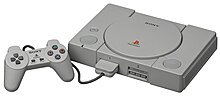
The original PlayStation

The redesigned PS one
The original PlayStation, released in Japan on December 3, 1994, was the first of the ubiquitous PlayStation series of console and hand-held game devices. It has included successor consoles and upgrades including the Net Yaroze (a special black PlayStation with tools and instructions to program PlayStation games and applications), «PS one» (a smaller version of the original) and the PocketStation (a handheld which enhances PlayStation games and also acts as a memory card). It was part of the fifth generation of video game consoles competing against the Sega Saturn and the Nintendo 64. By December 2003, the PlayStation and PS one had shipped a combined total of 102.49 million units,[29] eventually becoming the first video game console to sell 120 million units.[2]
PS One
Released on July 7, 2000,[30] concurrently with its successor the PlayStation 2, the PS One (stylized as PS one) was a considerably smaller, redesigned version of the original PlayStation video game console.[31] The PS one went on to outsell all other consoles, including its successor, throughout the remainder of the year.[31] It featured two main changes from its predecessor, the first being a cosmetic change to the console and the second being the home menu’s Graphical User Interface; a variation of the GUI previously used only on PAL consoles up to that point.
PlayStation 2

Original PlayStation 2 console (left) and slimline PlayStation 2 console with 8 MB Memory Card and DualShock 2 controller (right)
Released in 2000, 15 months after the Dreamcast and a year before its other competitors, the Xbox and the Nintendo GameCube, the PlayStation 2 is part of the sixth generation of video game consoles, and is backwards-compatible with most original PlayStation games. Like its predecessor, it has received a slimmer redesign. It is the most successful console in the world,[32] having sold over 155 million units as of December 28, 2012.[3] On November 29, 2005, the PS2 became the fastest game console to reach 100 million units shipped, accomplishing the feat within 5 years and 9 months from its launch. This achievement occurred faster than its predecessor, the PlayStation, which took «9 years and 6 months since launch» to reach the same figure.[2] PlayStation 2 shipments in Japan ended on December 28, 2012.[33] The Guardian reported on January 4, 2013 that PS2 production had ended worldwide, but studies showed that many people all around the world still own one even if it is no longer in use. PlayStation 2 has been ranked as the best selling console of all time as of 2015.[34]
Slimline model
Released in 2004, four years after the launch of the original PlayStation 2, the PlayStation 2 Slimline was the first major redesign of the PlayStation 2. Compared to its predecessor, the Slimline was smaller, thinner, quieter and also included a built-in Ethernet port (in some markets it also has an integrated modem). In 2007, Sony began shipping a revision of the Slimline which was lighter than the original Slimline together with a lighter AC adapter.[35] In 2008, Sony released yet another revision of the Slimline which had an overhauled internal design incorporating the power supply into the console itself like the original PlayStation 2 resulting in a further reduced total weight of the console.[36]
PlayStation 3
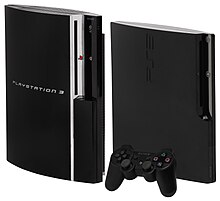
Original (left) and slim (right) PlayStation 3 consoles with the DualShock 3 controller
Released on November 11, 2006 in Japan, the PlayStation 3 (PS3) is a seventh generation game console from Sony. It competes with the Microsoft Xbox 360 and the Nintendo Wii. The PS3 is the first console in the series to introduce the use of motion-sensing technology through its Sixaxis wireless controller. The console also incorporates a Blu-ray Disc player and features high-definition resolution. The PS3 was originally offered with either a 20 GB or 60 GB hard drive, but over the years its capacity increased in increments available up to 500 GB. The PlayStation 3 has sold over 80 million consoles worldwide as of November 2013.[37]
Slim model
Like its predecessors, the PlayStation 3 was re-released in 2009 as a «slim» model. The redesigned model is 33% smaller, 36% lighter, and consumes 34% to 45% less power than previous models.[38][39] In addition, it features a redesigned cooling system and a smaller Cell processor which was moved to a 45nm manufacturing process.[40] It sold in excess of a million units within its first 3 weeks on sale.[41] The redesign also features support for CEC (more commonly referred to by its manufacturer brandings of BraviaSync, VIERA Link, EasyLink and others) which allows control of the console over HDMI by using the remote control as the controller. The PS3 slim also runs quieter and is cooler than previous models due to its 45 nm Cell. The PS3 Slim no longer has the «main power» switch (similar to PlayStation 2 slim), like the previous PS3 models, which was located at the back of the console.[38] It was officially released on September 1, 2009 in North America and Europe and on September 3, 2009 in Japan, Australia and New Zealand.[38][42][43]
Super Slim model
In 2012, Sony revealed a new «Super Slim» PlayStation 3. The new console, with a completely redesigned case that has a sliding door covering the disc drive (which has been moved to the top of the console), is 4.3 pounds, almost three pounds lighter than the previous «slim» model. The console comes with either 12GB flash memory or a 250GB, 500GB hard drive. Several bundles which include a Super Slim PS3 and a selection of games are available.
PlayStation 4

The PlayStation 4 (PS4) was announced by Sony Computer Entertainment at a press conference on February 20, 2013. In the meeting, Sony revealed some hardware specifications of the new console.[44][45] The eighth-generation system, launched in the fourth quarter of 2013, introduced the x86 architecture to the PlayStation series. According to lead system architect, Mark Cerny, development on the PlayStation 4 began as early as 2008.[46] PlayStation Europe CEO Jim Ryan emphasized in 2011 that Sony wanted to avoid launching the next-generation console behind the competition.[47]
Among the new applications and services, Sony introduced the PlayStation App, allowing PS4 owners to turn smartphones and tablets into a second screen to enhance gameplay.[48] The company also planned to debut PlayStation Now game streaming service, powered by technology from Gaikai.[49][50] By incorporating a share button on the new controller and making it possible to view in-game content being streamed live from friends, Sony planned to place more focus on social gameplay as well.[48] The PlayStation 4 was first released in North America on November 15, 2013.
Slim model
PlayStation 4 Slim (officially marketed simply as PlayStation 4 or PS4) was unveiled on September 7, 2016. It is a revision of the original PS4 hardware with a streamlined form factor. The new casing is 40% smaller and carries a rounded body with a matte finish on the top of the console rather than a two-tone finish. The two USB ports on the front have a larger gap between them, and the optical audio port was also removed.[168] It ships with a minor update to the DualShock 4 controller, with the light bar visible through the top of the touchpad and dark matte grey coloured exterior instead of a partially shiny black. The PS4 Slim was released on September 15, 2016, with a 500 GB model at the same price point as the original PS4 model.[169] Its model number is CUH-2000.[170]
Pro model
PlayStation 4 Pro or PS4 Pro for short (originally announced under the codename Neo)[35] was unveiled on September 7, 2016. Its model number is CUH-7000.[170] It is an updated version of the PlayStation 4 with improved hardware, including an upgraded GPU with 4.2 teraflops of processing power, and higher CPU clock. It is designed primarily to enable selected games to be playable at 4K resolution, and improved quality for PlayStation VR. All games are backwards and forward compatible between PS4 and PS4 Pro, but games with optimizations will have improved graphics performance on PS4 Pro. Although capable of streaming 4K video from online sources, PS4 Pro does not support Ultra HD Blu-ray.[171] [172] [173] Additionally the PS4 Pro is the only PS4 model which can remote play at 1080p. The other models are limited to 720p.[174]
PlayStation 5

The PlayStation 5 (PS5)[51] was released worldwide on November 12, 2020, and, alongside the Xbox Series X and Series S released the same month, is part of the ninth generation of video game consoles. The first news of the PS5 came from Mark Cerny in an interview with Wired in April 2019.[52] Sony intends for the PlayStation 5 to be its next-generation console and to ship worldwide by the end of 2020.[53] In early 2019, Sony’s financial report for the quarter ending March 31, 2019, affirmed that new next-generation hardware was in development but would ship no earlier than April 2020.[54]
The current specifications were released in October 2019.[55] The console is slated to use an 8-core, 16-thread CPU based on AMD’s Zen 2 microarchitecture, manufactured on the 7 nanometer process node. The graphics processor is a custom variant of AMD’s Navi family using the RDNA microarchitecture, which includes support for hardware acceleration of ray-tracing rendering, enabling real-time ray-traced graphics.[55] The new console ships with a custom SSD storage, as Cerny emphasized the need for fast loading times and larger bandwidth to make games more immersive, as well as to support the required content streaming from disc for 8K resolution.[52] In a second interview with Wired in October 2019, further details of the new hardware were revealed: the console’s integrated Blu-ray drive would support 100GB Blu-ray discs[53] and Ultra HD Blu-ray;[56] while a game installation from a disc is mandatory as to take advantage of the SSD, the user will have some fine-grain control of how much they want to have installed, such as only installing the multiplayer components of a game.[53] Sony is developing an improved suspended gameplay state for the PlayStation 5 to consume less energy than the PlayStation 4.[57]
The system’s new controller, the DualSense has adaptive triggers that can change the resistance to the player as necessary, such as changing the resistance during the action of pulling an arrow back in a bow in-game.[53] The controller also has strong haptic feedback through voice coil actuators, which together with an improved controller speaker is intended to give better in-game feedback.[53] USB-C connectivity, together with a higher rated battery are other improvements to the new controller.[53]
The PlayStation 5 features a completely revamped user interface.[51] The PlayStation 5 is backwards-compatible with most PlayStation 4 and PlayStation VR games, with Cerny stating that the transition to the new console is meant to be a soft one.[52][55] In a later interview, Jim Ryan talked of the PlayStation 5 being able to play «99%» of PlayStation 4 games, an estimate derived from a sample size of «thousands».[58] At CES 2020, Sony unveiled the official logo for the platform.[59]
Comparison
| Console | PlayStation (PS) | PlayStation 2 (PS2) | PlayStation 3 (PS3) | PlayStation 4 (PS4) | PlayStation 5 (PS5) |
|---|---|---|---|---|---|
| Image |
Top: PS Bottom: PS One |
Left: PS2 Right: PS2 Slimline |
Top: PS3 (Left) and PS3 Slim (Right) Bottom: PS3 Super Slim |
  
Top: PS4 Middle: PS4 Slim Bottom: PS4 Pro |

PS5 Standard Console (Top) and PS5 Digital Edition (Bottom) |
| Launch price | PS
¥39,800[1] PS One ¥15,000 [62] |
PS2
¥39,800[1] PS2 Slimline US$149 |
PS3
¥49,980 (20 GB)[1] US$599 (60 GB)[60] PS3 Slim ¥29,980 (tax included) (120 GB) PS3 Super Slim ¥24,980 (tax included) (250 GB) |
PS4
¥38,980 (500 GB) PS4 Slim US$299 (500 GB) US$349 (1 TB) €299 (500 GB) €349 (1 TB) PS4 Pro US$399 (1 TB) €399 (1 TB) |
PS5
¥49,980 (825 GB) PS5 Digital Edition ¥39,980 (825 GB) |
| Release date |
PS One
|
PS2 Slimline
|
More…
PS3 Super Slim
|
PS4 Slim
PS4 Pro
|
North America, Australia, New Zealand, Japan, South Korea November 12, 2020 Rest of the world November 19, 2020 China May 15, 2021 |
| Units shipped | 102.49 million shipped, including 28.15 million PS one units (as of March 31, 2007)[29] | >155 million (as of December 28, 2012)[3] | >87.4 million (as of March 31, 2017)[4] | >117.2 million (as of March 31, 2022)[72] | 25 million (as of September 30, 2022)[73] |
| Best-selling game | Gran Turismo; 10.85 million shipped (as of April 30, 2008)[74][75] | Grand Theft Auto: San Andreas; 17.33 million shipped (as of March 26, 2008)[74] | Grand Theft Auto V; over 15 million shipped (as of December 7, 2013) | Uncharted 4: A Thief’s End; over 15 million shipped (as of March 31, 2019)[76] | — |
| Media | CD-ROM | DVD-ROM/CD-ROM | BD-ROM, DVD-ROM, CD-ROM, SACD (1st and 2nd Gen Only)[77] | Blu-ray, DVD Blu-ray 6x CAV, DVD 8x CAV |
Ultra HD Blu-ray, Blu-ray, DVD |
| Included accessories and extras |
|
|
|
|
|
| Accessories (retail) |
|
|
|
|
|
| CPU | R3000A 32bit RISC chip @ 33.7 MHz – Manufactured by LSI Corporation | 300 MHz MIPS «Emotion Engine» | Cell Broadband Engine (3.2 GHz Power ISA 2.03-based PPE with eight 3.2 GHz SPE) |
|
8-Core variable frequency (3.5 GHz capped) AMD Zen 2[80] |
| GPU | 16.47 million colors
Resolution: 256×224 – 640×480 |
147 MHz «Graphics Synthesizer»; fill rate 2.352 gigapixel/sec; 1.1 gigapixel w. 1 texture(diffuse); 588 megapixel/sec w. 2 textures (2 diffuse maps or 1 diffuse map and 1 other(0 around 74 mill, 1 around 40 mill, 2 around 20 mill); 2 textures per pass
Capable of multi-pass rendering; Connected to VU1 on CPU (a vector only for visual style coding things with 3.2 GFLOPS) to deliver enhanced shader graphics and other enhanced graphics |
550 MHz RSX «Reality Synthesizer» (based on Nvidia G70 architecture) 192 — 251.2 GFLOPS |
|
Custom AMD RDNA 2 36 out of 40 Compute Units enabled (2304 out of 2560 shaders enabled), variable frequency (2.23 GHz capped), up to 10.28 TFLOPS[80] |
| Online service | — | Non-unified service | PlayStation Network PlayStation Store Internet browser A/V chat via PlayStation Eye or PS2 EyeToy, voice chat via headset |
PlayStation Network PlayStation Store Internet browser |
|
| Backward compatibility | — | PlayStation | 20GB & 60GB: All PlayStation and PlayStation 2 titles Original 80GB: All PS1 titles, most PS2 titles.[83] All other models (model code CECHGxx and later): Support for PS1 titles only. |
No native backwards compatibility. Cloud based backwards compatibility via PlayStation Now.[84] Emulated PlayStation 2 titles available from the PlayStation Store. | Most PlayStation 4 and PlayStation VR games |
| System software | Proprietary OS | Proprietary OS, Linux DVD Playback Kit |
XrossMediaBar (XMB) | Orbis OS[85] | TBA |
| System software features |
Audio CD playback | Audio CD playback
DVD Playback |
Operating Systems can be installed and run via a hypervisor (feature unavailable with Slim Model[86]) Audio CD playback Audio file playback (ATRAC3, AAC, MP3, WAV, WMA) Blu-ray playback Image editing and slideshows (JPEG, GIF, PNG, TIFF, BMP) |
Blu-ray playback
DVD playback |
Blu-ray playback
Ultra HD Blu-ray playback |
| Consumer programmability | Requires the Net Yaroze kit | Yabasic software, Linux for PlayStation 2 | Development on console via free Linux platform or PC. | — | — |


Handheld systems
PlayStation Portable
The PlayStation Portable (PSP) was Sony’s first handheld console to compete with Nintendo’s DS console. The original model (PSP-1000) was released in December 2004 and March 2005,[87] The console is the first to utilize a new proprietary optical storage medium known as Universal Media Disc (UMD), which can store both games and movies.[88][89] It contains 32 MB of internal flash memory storage, expandable via Memory Stick PRO Duo cards.[90] It has a similar control layout to the PS3 with its PlayStation logo button and its  (‘Triangle’),
  (‘Circle/O’),
  (‘Cross/X’) and
  (‘Square’) buttons in their white-colored forms.
PSP-2000 and PSP-3000 models
The PSP-2000 (also known as the Slim & Lite in PAL territories) was the first major hardware revision of the PlayStation Portable, released in September 2007. The 2000 series was 33% lighter and 19% slimmer than the original PlayStation Portable.[91][92] The capacity of the battery was also reduced by ⅓ but the run time remained the same as the previous model due to lower power consumption. Older model batteries will still work and they extend the amount of playing time.[93] The PSP Slim & Lite has a new gloss finish. Its serial port was also modified in order to accommodate a new video-out feature (while rendering older PSP remote controls incompatible). On a PSP-2000, PSP games will only output to external monitors or TVs in progressive scan mode, so that televisions incapable of supporting progressive scan will not display PSP games; non-game video will output in either progressive or interlaced mode. USB charging was also made possible.[94] Buttons are also reportedly more responsive on the PSP-2000.[95] In 2008, Sony released a second hardware revision called the PSP-3000 which included several features that were not present in the PSP-2000, such as a built-in microphone and upgraded screen, as well as the ability to output PSP games in interlaced mode.
PSP Go model
Released in October 2009, the PSP Go is the biggest redesign of the PlayStation Portable to date. Unlike previous PSP models, the PSP Go does not feature a UMD drive but instead has 16 GB of internal flash memory to store games, videos and other media.[96] This can be extended by up to 32GB with the use of a Memory Stick Micro (M2) flash card. Also unlike previous PSP models, the PSP Go’s rechargeable battery is not removable or replaceable by the user. The unit is 43% lighter and 56% smaller than the original PSP-1000,[97] and 16% lighter and 35% smaller than the PSP-3000.[98] It has a 3.8″ 480 × 272 LCD[99] (compared to the larger 4.3″ 480 × 272 pixel LCD on previous PSP models).[100] The screen slides up to reveal the main controls. The overall shape and sliding mechanism are similar to that of Sony’s mylo COM-2 internet device.[101] The PSP Go was produced and sold concurrently with its predecessor the PSP-3000 although it did not replace it.[97] All games on the PSP Go must be purchased and downloaded from the PlayStation Store as the handheld is not compatible with the original PSP’s physical media, the Universal Media Disc. The handheld also features connectivity with the PlayStation 3’s controllers the Sixaxis and DualShock 3 via Bluetooth connection.[98]
PSP-E1000 model
The PSP-E1000 is a budget-focused PSP model which, unlike previous PSP models, does not feature Wi-Fi or stereo speakers (replaced by a single mono speaker)[102] and has a matte «charcoal black» finish similar to the slim PlayStation 3.[103] The E1000 was announced at Gamescom 2011 and available across the PAL region for an RRP of €99.99.[103]
PlayStation Vita
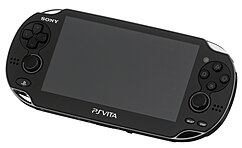

The second generation PS Vita system, PCH-2000
Released in Japan on December 17, 2011 and North America on February 22, 2012,[104] the PlayStation Vita[105] was previously codenamed Next Generation Portable (NGP). It was officially unveiled by Sony on January 27, 2011 at the PlayStation Meeting 2011.[106] The original model of the handheld, the PCH-1000 series features a 5-inch OLED touchscreen,[107] two analog sticks, a rear touchpad, Sixaxis motion sensing and a 4 core ARM Cortex-A9 MPCore processor.
The new PCH-2000 series system is a lighter redesign of the device that was announced at the SCEJA Press Conference in September 2013 prior to the Tokyo Game Show. This model is 20% thinner and 15% lighter compared to the original model, has an additional hour of battery life, an LCD instead of OLED, includes a micro USB Type B port, 1GB of internal storage memory. It was released in Japan on October 10, 2013 in six colors: white, black, pink, yellow, blue, and olive green, and in North America on May 6, 2014.[108]
The Vita was discontinued in March 2019. SIE president Jim Ryan said that while the Vita was a great device, they have moved away from portable consoles, «clearly it’s a business that we’re no longer in now».[25]
Controllers
Early PlayStation controllers
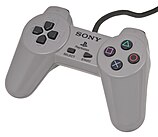
An original PlayStation controller

PlayStation Analog Joystick

Dual Analog controller
Released in 1994, the PlayStation control pad was the first controller made for the original PlayStation. It featured a basic design of a D-pad, 4 main select buttons ( (‘Green Triangle’), (‘Red Circle/Red O’)), (‘Blue Cross/Blue X’) and (‘Pink Square’), and start and select buttons on the face. ‘Shoulder buttons’ are also featured on the top [L1, L2, R1, R2] (named by the side [L=Left, R=Right] and 1 and 2 [top and bottom]). In 1996, Sony released the PlayStation Analog Joystick for use with flight simulation games.[109] The original digital controller was then replaced by the Dual Analog in 1997, which added two analog sticks based on the same potentiometer technology as the Analog Joystick.[110] This controller was then also succeeded by the DualShock controller.
DualShock, Sixaxis and DualSense

An original DualShock controller
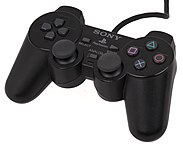
DualShock 2 controller
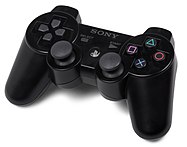
Sixaxis controller

DualShock 3 controller

DualShock 4 controller

DualSense controller
Released in 1998, the DualShock controller for the PlayStation succeeded its predecessor, the Dual Analog, and became the longest running series of controllers for the PlayStation brand. In addition to the inputs of the original, digital, controller (, , , , L1, L2, R1, R2, Start, Select and a D-pad), the DualShock featured two analog sticks in a similar fashion to the previous Dual Analog controller, which can also be depressed to activate the L3 and R3 buttons.[111]
The DualShock series consists of four controllers: the DualShock which was the fourth controller released for the PlayStation; the DualShock 2, the only standard controller released for the PlayStation 2, and the DualShock 3, the second and current controller released for the PlayStation 3, and the DualShock 4, which went through a massive redesign and is the default input of the PlayStation 4, and upon release was compatible with the PS3 originally only via USB and eventually with a firmware update, Bluetooth connectivity was enabled. The Sixaxis was the first official controller for the PlayStation 3, and is based on the same design as the DualShock series (but lacking the vibration motors of the DualShock series of controllers).
Like the Dual Analog, the DualShock and DualShock 2 feature an «Analog» button between the analog sticks that toggles the analog sticks on and off (for use with games which support only the digital input of the original controller). On the PlayStation 3 Sixaxis and DualShock 3 controllers, the analog sticks are always enabled. Beginning with the Sixaxis, a ‘PlayStation button’ (which featured the incorporated PS logo and is similar in function to the Xbox 360 «Guide» button) was included on controllers. The PlayStation button replaces the «Analog» button of the DualShock and DualShock 2 controllers. Pressing the PS button on the PS3 brings up the XMB, while holding it down brings up system options, known as «Quick Menu» on the PS4, (such as quit the game, change controller settings, turn off the system, and turn off the controller).[112]
PlayStation Move

PlayStation Move navigation controller

PlayStation Move controller
PlayStation Move is a motion-sensing game controller platform for the PlayStation 3 video game console by Sony Computer Entertainment (SCE). Based on the handheld motion controller wand, PlayStation Move uses the PlayStation Eye webcam to track the wand’s position and the inertial sensors in the wand to detect its motion. First revealed on June 2, 2009, PlayStation Move was launched in Q3/Q4 2010. Hardware available at launch included the main PlayStation Move motion controller and an optional PlayStation Move sub-controller.[113]
Although PlayStation Move is implemented on the existing PlayStation 3 console, Sony states that it is treating Move’s debut as its own major «platform launch», planning an aggressive marketing campaign to support it. In addition to selling the controllers individually,[114] Sony also plans to provide several different bundle options for PlayStation Move hardware; including a starter kit with a PS Eye, a Move motion controller, and a demo/sampler disc, priced under US$100;[115] a full console pack with a PS3 console, DualShock 3 gamepad, PS Eye, and Move motion controller; and bundles of a Move motion controller with select games.[114]
Other hardware


BRAVIA KDL22PX300

The official PS2 DVD remote control

The official PlayStation 3 Bluetooth remote control
PocketStation
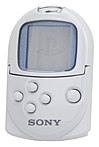
The PocketStation was a Memory Card peripheral by Sony Computer Entertainment for the original PlayStation. Categorized by Sony as a combination of a Memory Card and a miniature personal digital assistant.[116] Released exclusively in Japan on January 23, 1999,[117] it featured a monochrome LCD, a speaker, a real-time clock and infrared communication capability. It could also be used as a standard PlayStation memory card by connecting it to a PlayStation memory card slot.[116] It was extremely popular in Japan and Sony originally had plans to release it in the United States but the plan was ultimately scrapped due to various manufacturing and supply-and-demand problems.[118][119]
LCD Screen for PSone
The optional 5-inch LCD screen (SCPH-131) that was released alongside or packed in with PSone console.
PSX (2003)
Released solely in Japan in 2003, the Sony PSX was a fully integrated DVR and PlayStation 2 video game console. It was the first Sony product to utilize the XrossMediaBar (XMB)[120] and can be linked with a PlayStation Portable to transfer videos and music via USB.[121] It also features software for video, photo and audio editing.[120] PSX supports online game compatibility using an internal broadband adapter. Games that utilize the PS2 HDD (for example, Final Fantasy XI) are supported as well.[122] It was the first product released by Sony under the PlayStation brand that did not include a controller with the device itself.[123]
Television sets
Released in 2010, the Sony BRAVIA KDL22PX300 is a 22-inch (56 cm) 720p television which incorporates a PlayStation 2 console, along with 4 HDMI ports.[124]
A 24-inch 1080p PlayStation branded 3D television, officially called the PlayStation 3D Display, was released in late 2011. A feature of this 3D television is SimulView. During multiplayer games, each player will only see their respective screen (in full HD) appear on the television through their respective 3D glasses, instead of seeing a split screen (e.g. player 1 will only see player 1’s screen displayed through their 3D glasses).
PlayTV
PlayTV is an add-on unit for the PlayStation 3 that allows the PS3 to act as an HDTV or DTV receiver, as well as a digital video recorder (DVR).
Sony Ericsson Xperia Play
The Xperia Play is an Android-powered smartphone with a slide-up gamepad resembling the PSP Go developed by Sony Ericsson aimed at gamers and is the first to be PlayStation Certified.
Sony Tablets
Sony Tablets are PlayStation Certified Android tablets, released in 2011, 2012, and 2013. They offer connectivity with PlayStation 3 controllers and integrate with the PlayStation network using a proprietary application. The following models were released between 2011 and 2013: S, Sony Tablet S, Sony Tablet P, Xperia Tablet S and Xperia Tablet Z.
PlayStation TV
PlayStation TV, known in Asia as PlayStation Vita TV, is a microconsole and a non-portable variant of the PlayStation Vita handheld. It was announced on September 9, 2013 at a Sony Computer Entertainment Japan presentation. Instead of featuring a display screen, the console connects to a television via HDMI. Users can play using a DualShock 3 controller, although due to the difference in features between the controller and the handheld, certain games are not compatible with PS TV, such as those that are dependent on the system’s touch-screen, rear touchpad, microphone or camera. The device is said to be compatible with over 100 Vita games, as well as various digital PlayStation Portable, PlayStation and PC Engine titles. The system supports Remote Play compatibility with the PlayStation 4, allowing players to stream games from the PS4 to a separate TV connected to PS TV, and also allows users to stream content from video services such as Hulu and Niconico, as well as access the PlayStation Store. The system was released in Japan on November 14, 2013, in North America on October 14, 2014, and in Europe and Australasia on November 14, 2014.[125]
PlayStation VR
PlayStation VR is a virtual reality device that is produced by Sony Computer Entertainment. It features a 5.7 inch 1920×1080 resolution OLED display, and operates at 120 Hz which can eliminate blur and produce a smooth image; the device also has a low latency of less than 18ms.[126] Additionally, it produces two sets of images, one being visible on a TV and one for the headset, and includes 3D audio technology so the player can hear from all angles. The PlayStation VR was released in October 2016.[127]
PlayStation Classic
The PlayStation Classic is a miniature version of the original 1994 Model SCPH-1001 PlayStation console, that comes preloaded with 20 games, and two original style controllers. It was launched on the 24th anniversary of the original console on December 3, 2018.[128]
Games

PlayStation games in Japanese store
Each console has a variety of games. The PlayStation 2, PSX and PlayStation 3 exhibit backwards compatibility and can play most of the games released on the original PlayStation. Some of these games can also be played on the PlayStation Portable but they must be purchased and downloaded from a list of PS one Classics from the PlayStation Store. Games released on the PlayStation 2 can currently only be played on the original console as well as the PSX and the early models of the PlayStation 3 which are backwards compatible. The PlayStation 3 has two types of games, those released on Blu-ray Discs and downloadable games from the PlayStation Store. The PlayStation Portable consists of numerous games available on both its physical media, the Universal Media Disc and the Digital Download from the PlayStation Store. However, some games are only available on the UMD while others are only available on the PlayStation Store. The PlayStation Vita consists of games available on both its physical media, the PlayStation Vita card and digital download from the PlayStation Store.
First party games

PlayStation Studios is a group of video game developers owned by Sony Interactive Entertainment. It is dedicated to developing video games exclusively for the PlayStation series of consoles. The series has produced several best-selling franchises such as the Gran Turismo series of racing video games as well as critically acclaimed titles such as the Uncharted series. Other notable franchises include God of War, Twisted Metal and more recently, LittleBigPlanet (series), Infamous, and The Last of Us.
Re-releases
Greatest Hits (North America), Platinum Range (PAL territories) and The Best (Japan and Asia) are video games for the Sony PlayStation, PlayStation 2, PlayStation 3, and PlayStation Portable consoles that have been officially re-released at a lower price by Sony. Each region has its own qualifications to enter the re-release program. Initially, during the PlayStation era, a game had to sell at least 150,000 copies (later 250,000)[129] and be on the market for at least a year[130] to enter the Greatest Hits range. During the PlayStation 2 era, the requirements increased with the minimum number of copies sold increasing to 400,000 and the game had to be on the market for at least 9 months.[129] For the PlayStation Portable, games had to be on the market for at least 9 months with 250,000 copies or more sold.[131] Currently, a PlayStation 3 game must be on the market for 10 months and sell at least 500,000 copies to meet the Greatest Hits criteria.[132] PS one Classics were games that were released originally on the PlayStation and have been re-released on the PlayStation Store for the PlayStation 3 and PlayStation Portable. Classics HD are compilations of PlayStation 2 games that have been remastered for the PlayStation 3 on a single disc with additional features such as upscaled graphics, PlayStation Move support, 3D support and PlayStation Network trophies. PlayStation Mobile (formerly PlayStation Suite) is a cross-platform, cross-device software framework aimed at providing PlayStation content, currently original PlayStation games, across several devices including PlayStation Certified Android devices as well as the PlayStation Vita.
PlayStation Indies
Sony has generally supported indie game development since incorporating the digital distribution storefront in the PlayStation 3, though initially required developers to complete multiple steps to get an indie game certified on the platform. Sony improved and simplified the process in transitioning to the PlayStation 4.[133]
As Sony prepared to transition from the PlayStation 4 to PlayStation 5, they introduced a new PlayStation Indies program led by Shuhei Yoshida in July 2020. The program’s goals are to spotlight new and upcoming indie titles for the PlayStation 4 and 5, focusing on those that are more innovative and novel, akin to past titles such as PaRappa the Rapper, Katamari Damacy, LittleBigPlanet, and Journey. Sony also anticipates bringing more indie titles to the PlayStation Now series as part of this program.[134]
Online services
PlayStation 2 online service
Online gaming on PlayStation consoles first started in July 2001 with the release of PlayStation 2’s unnamed online service in Japan. Later in August 2002 saw its release in North America, followed by the European release in June 2003. This service was shut down on March 31, 2016.
PlayStation Network
Released in 2006, the PlayStation Network is an online service[135] focusing on online multiplayer gaming and digital media delivery. The service is provided and run by Sony Computer Entertainment for use with the PlayStation 3, and was later implemented on the PlayStation Portable, PlayStation Vita, PlayStation 4 and PlayStation 5 video game consoles.[136] The service has over 103 million active users monthly (as of December 2019).[13] The Sony Entertainment Network provides other features for users like PlayStation Home, PlayStation Store, and Trophies.
PlayStation Store
The PlayStation Store is an online virtual market available to users of the PlayStation 3, PlayStation 4, PlayStation 5 and PlayStation Portable game consoles via the PlayStation Network. The store uses both physical currency and PlayStation Network Cards. The PlayStation Store’s gaming content is updated every Tuesday and offers a range of downloadable content both for purchase and available free of charge. Available content includes full games, add-on content, playable demos, themes and game and movie trailers. The service is accessible through an icon on the XMB on the PS3 and PSP. The PS3 store can also be accessed on the PSP via a Remote Play connection to the PS3. The PSP store is also available via the PC application, Media Go. As of September 24, 2009, there have been more than 600 million downloads from the PlayStation Store worldwide.[137]
Video content such as films and television shows are also available from the PlayStation Store on the PlayStation 3 and PSP and will be made available on some new Sony BRAVIA televisions, VAIO laptop computers and Sony Blu-ray Disc players from February 2010.[138]
Life with PlayStation
Life with PlayStation was a Folding@home application available for PlayStation 3 which connected to Stanford University’s Folding@home distributed computer network and allowed the user to donate their console’s spare processing cycles to the project.[139] Folding@home is supported by Stanford University and volunteers make a contribution to society by donating computing power to this project. Research made by the project may eventually contribute to the creation of vital cures. The Folding@home client was developed by Sony Computer Entertainment in collaboration with Stanford University.[140] Life with PlayStation also consisted of a 3D virtual view of the Earth and contained current weather and news information of various cities and countries from around the world, as well as a World Heritage channel which offered information about historical sites, and the United Village channel which is a project designed to share information about communities and cultures worldwide.[141][142] As of PlayStation 3 system software update version 4.30 on October 24, 2012, the Life With PlayStation project has ended.
PlayStation Plus
PlayStation Plus, a subscription-based service on the PlayStation Network, complements the standard PSN services.[143] It enables an auto-download feature for game patches and system software updates. Subscribers gain early or exclusive access to some betas, game demos, premium downloadable content (such as full game trials of retail games like Infamous, and LittleBigPlanet) and other PlayStation Store items, as well as a free subscription to Qore. Other downloadable items include PlayStation Store discounts and free PlayStation Network games, PS one Classics, PlayStation Minis, themes and avatars.[144] It offers a 14-day free trial.
PlayStation Blog
PlayStation Blog (stylized as PlayStation.Blog) is an online PlayStation-focused gaming blog, part of the PlayStation Network. It was launched on June 11, 2007[145] and has featured in numerous interviews with third-party companies such as Square Enix.[146] It also has posts from high-ranking Sony Computer Entertainment executives such as Jack Tretton, former President and Chief Executive Officer of Sony Computer Entertainment, and Shawn Layden, current President, SIEA, and Chairman, SIE Worldwide Studios.[147][148] A sub-site of the blog called PlayStation Blog Share was launched on March 17, 2010 and allowed readers of the blog as well as users of the PlayStation Blog to submit ideas to the PlayStation team about anything PlayStation-related and vote on the ideas of other submissions.[149][150] Sony Computer Entertainment Europe launched a European sub-outlet, PlayStation Blog Europe, on May 28, 2009, to replace the «semi-official» site Three Speech that shut down on April 17.[151][152] This branch was merged into the main outlet on 1 June 2020.[153]
PlayStation App
The PlayStation App is an application that was released on January 11, 2011 in several European countries for iOS (version 4 and above) and for Android (version 1.6 and above),[154] and has been installed more than 3.6 million times as of March 2, 2014.[155] It allows users to view their trophies, see which of their PSN friends are online and read up to date information about PlayStation.[154] It does not feature any gaming functionality.[154]
PlayStation Mobile
The PlayStation Mobile (formerly PlayStation Suite) is a software framework that will be used to provide downloadable PlayStation content to devices running Android 2.3 and above as well as the PlayStation Vita. The framework will be cross-platform and cross-device, which is what Sony calls «hardware-neutral». It was set to release before the end of calendar year 2011. In addition, Android devices that have been certified to be able to playback PlayStation Suite content smoothly will be certified with the PlayStation Certified certification.[16]
PlayStation Now
PlayStation Now (PS Now) was a Gaikai-based video game streaming service used to provide PlayStation gaming content to PlayStation 3 (PS3), PlayStation 4 (PS4), PlayStation 5 (PS5), PlayStation Vita, PlayStation TV and BRAVIA televisions.[156] The service allowed users to pay for access to a selection of original PlayStation 3 titles on either a per-game basis or via a subscription. PlayStation Now was announced on January 7, 2014 at the 2014 Consumer Electronic Show. At CES, Sony presented demos of The Last of Us, God of War: Ascension, Puppeteer and Beyond: Two Souls, playable through PS Now on Bravia TVs and PlayStation Vitas. PlayStation Now was launched in Open Beta in the United States and Canada on PS4 on July 31, 2014, on PS3 on September 18, 2014, on PS Vita and PS TV on October 14, 2014, with support for select 2014 Bravia TVs coming later in the year.[157] It was merged into PlayStation Plus in May and June 2022, and is no longer available as a standalone subscription.[158]
PlayStation Home
PlayStation Home is a community-based social gaming networking service for the PlayStation 3 on the PlayStation Network (PSN). It is available directly from the PlayStation 3 XrossMediaBar. Membership is free, and only requires a PSN account. Home has been in development since early 2005 and started an open public beta test on December 11, 2008.[159] Home allows users to create a custom avatar, which can be made to suit the user’s preference.[160] Users can decorate their avatar’s personal apartment («HomeSpace») with default, bought, or won items. They can travel throughout the Home world (except cross region), which is constantly updated by Sony and partners. Each part of the world is known as a space. Public spaces can just be for display, fun, or for meeting people. Home features many mini-games which can be single player or multiplayer. Users can shop for new items to express themselves more through their avatars or HomeSpace.[161] Home features video screens in many places for advertising, but the main video content is shown at the theatre for entertainment. Home plays host to a variety of special events which range from prize-giving events to entertaining events. Users can also use Home to connect with friends and customize content.[159] Xi, a once notable feature of Home, is the world’s first console based Alternate Reality Game that took place in secret areas in Home and was created by nDreams.[162][163]
Room for PlayStation Portable
«Room» (officially spelled as R∞M with capital letters and the infinity symbol in place of the «oo») was being beta tested in Japan from October 2009 to April 2010. Development of Room has been halted on April 15, 2010 due to negative feedback from the community.[164] Announced at TGS 2009, it was supposed to be a similar service to the PlayStation Home and was being developed for the PSP.[165] Launching directly from the PlayStation Network section of the XMB was also to be enabled. Just like in Home, PSP owners would have been able to invite other PSP owners into their rooms to «enjoy real time communication.»[166] A closed beta test had begun in Q4 2009 in Japan.[167]
Others
In 2015, Sony launched PlayStation Gear, an online merchandise and apparel store.[168] Jason Schreier of Bloomberg News reported in December 2021 that Sony was working to create a new subscription service, code-named Spartacus, intended as a competitor to the Xbox Game Pass service by Microsoft, with plans to release in the second quarter of 2022. The multi-tiered service would incorporate PlayStation Plus, PlayStation Now, and additional features, such as the most-expensive tier that would give players access to PlayStation 1, 2, and 3 games.[169]
Software
XrossMediaBar
The XrossMediaBar, originally used on the PSX, is a graphical user interface used for the PlayStation 3 and PlayStation Portable, as well as a variety of other Sony devices. The interface features icons that are spread horizontally across the screen. Navigation moves the icons instead of a cursor. These icons are used as categories to organize the options available to the user. When an icon is selected on the horizontal bar, several more appear vertically, above and below it (selectable by the up and down directions on a directional pad).[170] The XMB can also be accessed in-game albeit with restrictions, it allows players to access certain areas of the XMB menu from within the game and is only available for the PlayStation 3.[171] Although the capacity to play users’ own music in-game was added with this update, the feature is dependent on game developers who must either enable the feature in their games or update existing games.[172]
LiveArea
LiveArea, designed to be used on the PlayStation Vita, is a graphical user interface set to incorporate various social networking features via the PlayStation Network. It has been designed specifically as a touchscreen user interface for users.[173]
Linux operating systems
Linux for PlayStation 2
In 2002, Sony released the first useful and fully functioning operating system for a video game console, after the Net Yaroze experiment for the original PlayStation. The kit, which included an internal hard disk drive and the necessary software tools, turned the PlayStation 2 into a full-fledged computer system running Linux. Users can utilize a network adapter to connect the PlayStation 2 to the internet, a monitor cable adaptor to connect the PlayStation 2 to computer monitors as well as a USB Keyboard and Mouse which can be used to control Linux on the PlayStation 2.[174][175]
Linux for PlayStation 3
The PlayStation 3 (excluding PlayStation 3 Slim) also supports running Linux OS on firmware versions prior to 3.21 without the need for buying additional hardware purchase. Yellow Dog Linux provides an official distribution that can be downloaded, and other distributions such as Fedora, Gentoo and Ubuntu have been successfully installed and operated on the console.[40] The use of Linux on the PlayStation 3 allowed users to access 6 of the 7 Synergistic Processing Elements; Sony implemented a hypervisor restricting access to the RSX. The feature to install a second operating system on a PlayStation 3 was removed in a firmware update released in 2010.[176]
Media
Magazines
The PlayStation brand has a wide series of magazines, from across different continents, covering PlayStation related articles and stories. Many of these magazines work closely with Sony and thus often come with demo discs for PlayStation games. Currently there are three magazines still in circulation namely PlayStation: The Official Magazine,[177] PlayStation Official Magazine,[178] Official PlayStation Magazine (Australia).[179] However, over the years, many PlayStation magazines have spawned while a few have also become defunct, these include the Official U.S. PlayStation Magazine,[180] Official UK PlayStation Magazine,[181] Official UK PlayStation 2 Magazine.[182]
PlayStation Underground
PlayStation Underground was a non-traditional magazine that Sony Computer Entertainment America produced and published between Spring 1997 to Spring 2001. Subscribers received two PlayStation CDs, along with a booklet and colorful packaging every quarter.[183] The CDs contained interviews, cheats, programmers moves, game demos and one-of-a-kind Memory Card saves. Several issues showed how a game was created from basic design to final product. Since the CDs could only be run on a PlayStation, it proved a useful marketing tool which spawned a line of PlayStation Underground JamPacks Demo CDs and which contained highlights from recent issues of PlayStation Underground, along with seemingly as many game demos that could be packed on a single CD. Unlike PlayStation Underground these were available in most stores for $4.95, were published twice a year in Summer and Winter and usually spotlighted newly released or coming soon games. By 2001, Sony had decided to phase out Underground to focus on the JamPacks with the release of the PlayStation 2. PlayStation Underground CDs are mainly in the hands of collectors these days.[184]
Marketing

Slogans
Advertising slogans used for each PlayStation console iteration:
- PlayStation
- «eNoS Lives» (The first letter ‘E’ was printed in red to denote the word, ready. Enos stood for Ready, Ninth of September)[23] (US Commercials)
- «U R Not e» (The letter ‘E’ was printed in red to denote the word, ready, as in You Are Not Ready)[23]
- «Do Not Underestimate The Power of PlayStation.» (From the S.A.P.S. – Society Against PlayStation — series of adverts)[185]
- PS one
- «Wherever, Whenever, Forever.»[186]
- PlayStation 2
- PlayStation Portable
- «PSP Hellz Yeah» (PSP-1000 Series)
- «Dude, Get Your Own…» (PSP-2000 Series)[188]
- «Everywhere Just Got Better» (PSP-3000 Series and PSPgo)[189]
- «It’s GO Time» (PSPgo)[190]
- «Your Whole World In Your Hands» (UK & Europe Territories)[191]
- «Step Your Game Up» (US Territory, PSP-3000 Series and PSPgo)[192]
- PlayStation 3
- «The Wait Is Over»
- «Welcome Chang3» (the number three is used to denote an ‘e’ and was printed in red)[193]
- «This is Living.»[194]
- «Play B3yond» (the number three is used to denote an ‘e’ and was printed in red)[187]
- «It Only Does Everything» (US Commercials) (PS3 Slim)[195]
- «The Game Is Just The Start. Start PS3.» (EU countries)[196]
- «Long Live Play» (PS3 Slim)
- «Never Stop Playing» (PS3 Slim)
- «Greatness Awaits» (PS3 SuperSlim)
- PlayStation Move
- «This Changes Everything»[197]
- «Move Into The Action»[198]
- PlayStation Network
- «Download, Play, Connect.»
- PlayStation Vita
- «Never Stop Playing.»
- «The World is in Play.» (EU only)
- PlayStation 4
- «See the Future»
- «Push the boundaries of Play»[199]
- «Greatness Awaits»[200]
- «This is 4 the Players»
- «Where the Greatest Play»[201]
- PlayStation 5
- «Play Has No Limits» [202]
Notable advertising campaigns
It Only Does Everything
The most notable of recent PlayStation commercials is the series of «It Only Does Everything» commercials featuring a fictional character called Kevin Butler who is a Vice President at PlayStation. These commercials usually advertise the PlayStation 3 and its games through a series of comedic answers to «Dear PlayStation» queries.[195] These commercials garnered popularity among gamers, though its debut commercial received criticism from the Nigerian government due to a reference to the common 419 scams originating in Nigeria. Sony issued an apology and a new version of the advert with the offending line changed was produced.[203]
A spin-off of the campaign has been created for the PlayStation Portable which features similar campaign commercials called the «Step Your Game Up» campaign featuring a fictional teenage character named Marcus Rivers acting in a similar fashion to Kevin Butler but answering the «Dear PlayStation» queries about the PSP.[192]
Netherlands Ceramic White PSP Commercials
In July 2006, an advertising campaign in the Netherlands was released in which a white model dressed entirely in white and a black model dressed entirely in black was used to compare Sony’s new Ceramic White PSP and the original Piano Black PSP. This series of ads depicted both models fighting with each other[204] and drew criticism from the media for being racist, though Sony maintains that the ad did not feature any racist message.[205]
All I want for Xmas is a PSP
In November 2006, a marketing company employed by Sony’s American division created a website entitled «All I want for Xmas is a PSP«, designed to promote the PSP virally. The site contained a blog which was purportedly written by «Charlie», a teenage boy attempting to get his friend Jeremy’s parents to buy him a PSP, and providing a «music video» of either Charlie or Jeremy «rapping» about the PSP. Visitors to the website quickly recognized that the domain name was registered to a marketing company, exposing the campaign on sites such as YouTube and digg. Sony was forced to admit that the site was in fact a marketing campaign and in an interview with next-gen.biz, Sony admitted that the idea was «poorly executed«.[206]
Between 1999 and 2007, PlayStation was the main kit sponsor of French Ligue 1 club AJ Auxerre.
Between 2009 and 2010, PlayStation was the main kit sponsor of French Ligue 1 club Olympique Lyonnais.
Reception
In 2005, Australian newspaper The Age wrote an article about the PlayStation brand. Among the numerous interviews conducted with various people in the industry was an interview with Dr Jeffrey Brand, associate professor in communication and media at Bond University who said, «PlayStation re-ignited our imagination with video games». Game designers Yoshiki Okamoto called the brand «revolutionary — PlayStation has changed gaming, distribution, sales, image and more», while Evan Wells of Naughty Dog said «PlayStation is responsible for making playing games cool.»[207]
In 2009, ViTrue, Inc. listed the PlayStation brand as number 13 on their «The Vitrue 100: Top Social Brands of 2009». The ranking was based on various aspects mainly dealing with popular social media sites in aspects such as Social Networking, Video Sharing, Photo Sharing and Blogs.[208]
In 2010, Gizmodo stated that the PlayStation brand was one of the last Sony products to completely stand apart from its competitors, stating that «If you ask the average person on the street what their favorite Sony product is, more often than not you’ll hear PlayStation».[209] As of April 2012, the PlayStation brand is the «most followed» brand on social networking site, Facebook, with over 22 million fans and followers in total which is more than any other brand in the entertainment industry. A study by Greenlight’s Entertainment Retail has also shown that the PlayStation brand is the most interactive making 634 posts and tweets on social networking sites Facebook and Twitter.[210]
In July 2014, Sony boasted in a company release video that the PlayStation 3, PlayStation 4 and PlayStation Vita sold a combined total of 100 million units.[211] It was announced at Tokyo Game Show on September 1, 2014, that PlayStation home game consoles claim 78% market share of all home consoles in Japan.[212]
As of 2015, PlayStation is the strongest selling console brand worldwide.[213]
References
- ^ a b c d e f g h «Business Development/Japan». Sony Computer Entertainment Inc. Archived from the original on December 17, 2007. Retrieved December 19, 2007.
- ^ a b c «PlayStation 2 Breaks Record as the Fastest Computer Entertainment Platform to Reach Cumulative Shipment of 120 Million Units» (PDF) (Press release). Sony Computer Entertainment. November 30, 2005. Archived from the original (PDF) on August 23, 2009. Retrieved June 8, 2008.
- ^ a b c «NeoGAF». Archived from the original on August 27, 2017. Retrieved January 22, 2017.
- ^ a b «SIE Business Development | Sony Interactive Entertainment Inc». SIE.COM. Archived from the original on April 27, 2019. Retrieved May 2, 2019.
- ^ «SIE Press Release | Sony Interactive Entertainment Inc». SIE.COM. Archived from the original on December 3, 2013.
- ^ McWhertor, Michael; Carpenter, Nicole (September 16, 2020). «PlayStation 5 launches Nov. 12 for $499». Polygon. Archived from the original on September 17, 2020. Retrieved September 20, 2020.
- ^ Good, Owen S. (July 28, 2021). «Despite short supply, the PlayStation 5 is Sony’s fastest-selling console ever». Polygon. Archived from the original on July 8, 2022. Retrieved July 8, 2022.
- ^ rossmcguinness20 (November 27, 2013). «Xbox One v PlayStation 4: Who will win the next-gen console race? – Metro News». Metro. Archived from the original on November 28, 2013. Retrieved January 12, 2014.
- ^ Stuart, Keith (January 4, 2013). «PlayStation 2 manufacture ends after 12 years». the Guardian. Archived from the original on March 5, 2017. Retrieved January 22, 2017.
- ^ «News: Sony announces PS Vita TV microconsole». ComputerAndVideoGames.com. September 9, 2013. Archived from the original on September 14, 2013. Retrieved October 2, 2013.
- ^ «DualShock 3 Wireless Controller available for PlayStation 3 this summer». Next-Gen.biz. July 1, 2008. Archived from the original on October 22, 2013. Retrieved July 1, 2008.
- ^ Boxer, Steve (July 3, 2013). «Sony chief on the PS4 and E3 battle». The Guardian. ISSN 0261-3077. Archived from the original on April 30, 2019. Retrieved May 5, 2019.
- ^ a b «PLAYSTATION™NETWORK MONTHLY ACTIVE USERS REACHES 103 MILLION». SIE.COM. Archived from the original on January 13, 2020. Retrieved January 23, 2020.
- ^ «Sony USA – Electronics, PlayStation, Movies, Music, Product Support». Archived from the original on January 22, 2014.
- ^ Unity for PSM and PSM SDK 2.0 are now ready for submission! Archived January 18, 2016, at the Wayback Machine. PSM DevPortal. Retrieved on July 15, 2014.
- ^ a b Plunkett, Luke (January 26, 2011). «PlayStation Games Coming To Android Phones». Kotaku. Gawker Media. Archived from the original on January 29, 2011. Retrieved January 25, 2011.
- ^ «58th Annual Technology & Engineering Emmy Awards». Emmy Online. January 8, 2007. Archived from the original on February 1, 2009. Retrieved November 12, 2008.
- ^ Ashcraft, Brian (February 19, 2010). «What’s The Father of the PlayStation Doing These Days?». Kotaku. Archived from the original on October 1, 2021. Retrieved August 11, 2010.
- ^ Magrino, Tom (November 11, 2009). «‘Father of the PlayStation’ adopts new start up». IGN. Archived from the original on March 3, 2010. Retrieved August 11, 2010.
- ^ DeMaria, Rusel; Wilson, Johnny L. (2003). High Score!: The Illustrated History of Electronic Games (2 ed.). New York: McGraw-Hill/Osborne. p. 376. ISBN 0-07-223172-6.
- ^ «Game Over», by David Scheff
- ^ «Celebrating Software». Computer Gaming World. June 1991. p. 64. Archived from the original on December 3, 2013. Retrieved November 17, 2013.
- ^ a b c d e f g h Edge Staff (April 24, 2009). «The Making Of: PlayStation». Edge Online. Edge Magazine. Archived from the original on February 6, 2014. Retrieved February 2, 2014.
- ^ «How Virtua Fighter Saved PlayStation’s Bacon». WIRED. September 5, 2012. Archived from the original on October 14, 2014. Retrieved March 11, 2017.
- ^ a b Cork, Jeff (December 3, 2019). «PlayStation: The First 25 Years». Game Informer. Archived from the original on May 30, 2020. Retrieved December 3, 2019.
- ^ «Corporate History». Sony Computer Entertainment. Archived from the original on January 17, 2011. Retrieved August 14, 2010.
- ^ «75 Power Players: The Heavyweight». Next Generation. Imagine Media (11): 58. November 1995.
- ^ O’Riley, Liam Thomas (March 1994). «A Portrait Of The Journalist As A Dirty Old Man». The Rumor Bag. Computer Gaming World. p. 186. Archived from the original on November 10, 2017. Retrieved November 10, 2017.
- ^ a b «PlayStation Cumulative Production Shipments of Hardware». Sony Computer Entertainment. Archived from the original on May 24, 2011. Retrieved June 5, 2008.
- ^ «SCEE 2000—Key Facts and Figures». Sony Computer Entertainment Europe. Archived from the original on September 19, 2007. Retrieved November 25, 2006.
- ^ a b Smith, Tony (December 6, 2000). «Sony PSone sales rocket as PS Two famine continues». theregister.co.uk. Archived from the original on May 22, 2009. Retrieved January 17, 2011.
- ^ Rick Aristotle Munarriz (February 15, 2007). «PS2 on fool.com». fool.com. Archived from the original on January 21, 2021. Retrieved August 11, 2010.
- ^ プレイステーション2の日本国内での出荷が本日(2012年12月28日)で完了. Famitsu (in Japanese). Enterbrain. December 28, 2012. Archived from the original on December 28, 2012. Retrieved December 28, 2012.
- ^ «PlayStation 2 manufacture ends after 12 years». The Guardian. January 4, 2013. Archived from the original on September 21, 2013. Retrieved January 22, 2017.
- ^ Gantayat, Anoop (June 8, 2007). «PS2 Gets Lighter». IGN.com. Archived from the original on August 9, 2007. Retrieved February 10, 2015.
- ^ «PlayStation®2 (SCPH-90000 SERIES) comes in a new design and in three color variations». Sony Computer Entertainment. Archived from the original on April 30, 2010. Retrieved March 25, 2010.
- ^ «Now PS3 sales reach 80m units». MCV. November 6, 2013. Archived from the original on March 1, 2014. Retrieved November 6, 2013.
- ^ a b c Miller, Paul (August 18, 2009). «Sony unveils slimmer PS3: $300, lands in September (updated!)». Engadget. Archived from the original on August 20, 2009. Retrieved August 18, 2009.
- ^ Miller, Ross (August 27, 2009). «PlayStation 3 Slim review». Engadget. AOL Tech. Archived from the original on August 28, 2010. Retrieved July 26, 2010.[ PlayStation 3 Slim review]
- ^ a b «Sony answers our questions about the new PlayStation 3». Ars Technica. August 18, 2009. Archived from the original on August 20, 2009. Retrieved August 19, 2009.
- ^ «New PS3 has sold over one million». Eurogamer. September 24, 2009. Archived from the original on October 15, 2009. Retrieved November 7, 2009.
- ^ «Entertainment on PS3 has a new look». PlayStation AU. August 18, 2009. Archived from the original on August 21, 2009. Retrieved August 24, 2009.
- ^ Carnoy, David (August 18, 2009). «Sony officially announces $299 PS3 Slim». cnet. Archived from the original on June 17, 2011. Retrieved August 18, 2009.
- ^ Bishop, Bryan (February 20, 2013). «Sony announces the PlayStation 4». TheVerge. Archived from the original on December 7, 2013. Retrieved February 20, 2013.
- ^ Rivington, James (February 20, 2013). «The PlayStation 4 has been officially revealed in New York!». TechRadar. Archived from the original on April 26, 2013. Retrieved February 21, 2013.
- ^ Goldfarb, Andrew (February 20, 2013). «PlayStation 4 Revealed». IGN. Archived from the original on May 17, 2020. Retrieved February 21, 2013.
- ^ Minkley, Johnny (November 23, 2011). «Sony: it would be «undesirable» for PS4 to launch significantly later than the competition». Eurogamer. Archived from the original on November 25, 2011. Retrieved February 21, 2013.
- ^ a b Sony Computer Entertainment Inc. (February 21, 2013). «SONY COMPUTER ENTERTAINMENT INC. INTRODUCES PLAYSTATION®4 (PS4™)». Archived from the original on April 24, 2013. Retrieved February 25, 2013.
- ^ «PlayStation™Now: Bringing Game Streaming to Consoles». Archived from the original on July 2, 2014. Retrieved April 23, 2014.
- ^ Jackson, Mike (February 20, 2013). «Gaikai tech brings spectating, instant demos, more to PS4». Archived from the original on May 9, 2013. Retrieved February 25, 2013.
- ^ a b Knezevic, Kevin (October 8, 2019). «PS5’s Improved UI Will Let You See What’s Happening In Games Without Opening Them». GameSpot. Archived from the original on October 8, 2019. Retrieved October 8, 2019.
- ^ a b c Rubin, Peter (April 16, 2019). «Exclusive: What to Expect From Sony’s Next-Gen PlayStation». Wired. Archived from the original on April 21, 2019. Retrieved April 16, 2019.
- ^ a b c d e f Rubin, Peter (October 8, 2019). «Exclusive: A Deeper Look at the PlayStation 5». Wired. Archived from the original on October 8, 2019. Retrieved October 8, 2019.
- ^ Warren, Tom (April 26, 2019). «Sony: PlayStation 5 won’t launch in the next 12 months». The Verge. Archived from the original on April 26, 2019. Retrieved April 26, 2019.
- ^ a b c 次世代コンソールゲーム機 「プレイステーション 5」に名称決定 [Next generation game console named «PlayStation 5»] (press release) (in Japanese), Sony Interactive Entertainment, October 8, 2019, archived from the original on October 9, 2019, retrieved October 9, 2019
- ^ Square, Push (July 13, 2020). «PS5 and 4K UHD Blu-rays: Can PlayStation 5 Play Them?». Push Square. Archived from the original on April 18, 2021. Retrieved April 18, 2021.
- ^ Yin-Poole, Wesley (September 25, 2019). «PS5 won’t waste as much energy as PS4, Sony says». Eurogamer. Archived from the original on September 24, 2019. Retrieved October 9, 2019.
- ^ September 2020, Rami Tabari 17 (September 17, 2020). «PS5 confirmed to be backwards compatible with ‘99%’ of PS4 games Sony tested». LaptopMag. Archived from the original on October 26, 2020. Retrieved September 28, 2020.
- ^ Makuch, Eddie Makuch (January 6, 2020). «PS5 Logo Revealed At CES 2020». gamespot.com. Archived from the original on January 7, 2020. Retrieved January 7, 2020.
- ^ a b c d e f g h «Business Development/North America». Sony Computer Entertainment. Archived from the original on February 27, 2012. Retrieved June 5, 2008.
- ^ a b c d e f g h «Business Development/Europe». Sony Computer Entertainment. Archived from the original on June 9, 2008. Retrieved June 5, 2008.
- ^ «History of Sony Interactive Entertainment». SIE.COM. Archived from the original on November 17, 2020. Retrieved November 20, 2020.
- ^ Boxer, Steve (February 1, 2007). «PS3 launch price is no fun for UK gamers». The Guardian. Archived from the original on January 7, 2021. Retrieved February 18, 2015.
- ^ «Business Development/Japan». Sony Computer Entertainment Inc. Archived from the original on June 17, 2008. Retrieved June 5, 2008.
- ^ «SCEE 1995—Key Facts and Figures». Sony Computer Entertainment Europe. Archived from the original on August 12, 2009. Retrieved June 5, 2008.
- ^ Thorsen, Tor (October 26, 2007). «Sony: 120 million PS2s sold». GameSpot. Archived from the original on August 17, 2009. Retrieved July 26, 2010.
- ^ a b Ryan, Jim (August 21, 2013). «PlayStation at gamescom 2013: The best place to play». PlayStation Blog. Archived from the original on August 24, 2013. Retrieved August 26, 2013.
- ^ Koller, John (August 20, 2013). «PS4 Launches in North America on November 15th, Gamescom Wrap-up». PlayStation Blog. Archived from the original on October 1, 2013. Retrieved August 26, 2013.
- ^ Phillips, Tom (September 9, 2013). «PlayStation 4 won’t launch in Japan until February 2014». Eurogamer. Archived from the original on September 9, 2013. Retrieved September 11, 2013.
- ^ a b c Walton, Mark (July 9, 2016). «PS4 Slim review: A smaller, sexier console with few compromises». Arstechnica. Archived from the original on December 14, 2020. Retrieved July 9, 2016.
- ^ a b c Layden, Shawn (November 10, 2016). «PlayStation 4 Pro Launches Today». PlayStation Blog. Archived from the original on May 27, 2020. Retrieved November 10, 2016.
- ^ «PS5 shipments top 19.3 million; PS4 tops 117.2 million». Gematsu. May 10, 2022. Archived from the original on November 21, 2022. Retrieved May 15, 2022.
- ^ Wood, Anthony (November 1, 2022). «PlayStation 5 Has Passed 25 Million Units Sold, Sony Producing More Than Expected». IGN. Archived from the original on November 5, 2022. Retrieved November 5, 2022.
- ^ a b «Gran Turismo Series Shipment Exceeds 50 Million Units Worldwide» (Press release). Sony Computer Entertainment. May 9, 2008. Archived from the original on September 16, 2008. Retrieved June 3, 2008.
- ^ ««Gran Turismo» Series Software Title List». Polyphony Digital. April 2008. Archived from the original on February 6, 2007. Retrieved June 3, 2008.
- ^ George, Daniel (May 21, 2019). «God of War surpasses 10 million sales on the PS4, Uncharted 4 tops 15M». FanSided. Archived from the original on June 2, 2019. Retrieved October 8, 2019.
- ^ «PS3 SACD FAQ». ps3sacd.com. Archived from the original on March 26, 2021. Retrieved October 11, 2015.
- ^ «Design and Price Unveiled, Available at $399 in U.S. and at €399 in Europe». PlayStation. Sony Computer Entertainment America LLC. Archived from the original on March 4, 2016. Retrieved January 11, 2014.
- ^ «PS4 Systems». PlayStation. Archived from the original on October 28, 2015. Retrieved June 27, 2015.
- ^ a b Leadbetter, Richard (March 18, 2020). «Inside PlayStation 5: the specs and the tech that deliver Sony’s next-gen vision». Eurogamer. Archived from the original on March 18, 2020. Retrieved March 18, 2020.
- ^ «The Xbox One: Hardware Analysis & Comparison to PlayStation 4». Eurogamer.net. Archived from the original on June 7, 2013. Retrieved May 24, 2013.
- ^ Leadbetter, Richard (October 20, 2016). «Inside PlayStation 4 Pro: How Sony made the first 4K games console». Eurogamer. Archived from the original on December 21, 2020. Retrieved August 12, 2019.
- ^ Gantayat, Anoop (November 12, 2006). «PS3 Backwards Compatibility Issues — New system has some problems with past titles». IGN. Archived from the original on February 5, 2012. Retrieved June 5, 2008.
- ^ Hearn, Mark (February 20, 2013). «PlayStation 4 will not have native PS3 backwards compatibility». Archived from the original on May 30, 2013. Retrieved June 8, 2013.
- ^ Anthony, Sebastian. «PS4 runs Orbis OS, a modified version of FreeBSD that’s similar to Linux | ExtremeTech». ExtremeTech. Archived from the original on November 18, 2020. Retrieved June 25, 2013.
- ^ Sony Computer Entertainment America Staff. «Open Platform for PlayStation 3». PlayStation.com. Sony Computer Entertainment. Archived from the original on August 6, 2020. Retrieved July 26, 2010.
- ^ Thorsen, Tor (March 24, 2005). «The US PSP Launch». GameSpot. Archived from the original on July 1, 2007. Retrieved March 12, 2008.
- ^ «E3 2003: PSP Press Release». gamedaily.com. December 31, 2003. Archived from the original on March 23, 2008. Retrieved March 12, 2008.
- ^ «Support — PSP — Movies». «Sony Computer Entertainment. Archived from the original on August 5, 2008. Retrieved March 12, 2008.
- ^ Lam, Brian (July 11, 2007). «New PSP Slim Coming September, Kinda Looks the Same». Archived from the original on October 15, 2007. Retrieved October 16, 2007.
- ^ «Get the skinny!». Sony Computer Entertainment Europe. July 12, 2007. Archived from the original on July 15, 2007. Retrieved November 30, 2008.
- ^ Quirk, Gregory A. (November 20, 2007). «Under the Hood: Sony Playstation Portable slims down». EE Times. Archived from the original on April 19, 2016. Retrieved November 30, 2008.
- ^ PlayStation Portable Safety and Support Manual
- ^ «Hands on with PSP Slim». pocketgamer.co.UK. Archived from the original on July 14, 2007. Retrieved July 22, 2007.
- ^ «E3 07: Redesigned Sony PSP Hands-On». GameSpot.com. Archived from the original on August 28, 2007. Retrieved July 22, 2007.
- ^ Bramwell, Tom (May 30, 2009). «Sony Qore accidentally outs PSP Go». EuroGamer. p. 1. Archived from the original on June 2, 2009. Retrieved May 30, 2009.
- ^ a b Good, Owen (May 30, 2009). «Qore Lets Slip the First Look at PSP Go». Kotaku. Archived from the original on January 13, 2017. Retrieved July 26, 2010.
- ^ a b «UK Exclusive: More PSPgo Details». TheSixthAxis. June 27, 2009. Archived from the original on June 3, 2019. Retrieved March 28, 2010.
- ^ Sony Computer Entertainment America Staff. «PSP systems». PlayStation.com. Sony Computer Entertainment America. Archived from the original on December 1, 2008. Retrieved July 26, 2010.
- ^ Beaumont, Claudine (May 31, 2009). «Sony PSP: Details of new Go console leak ahead of E3». Telegraph.co.uk. The Daily Telegraph. Archived from the original on June 6, 2009. Retrieved July 26, 2010.
- ^ Chen, Jason (May 30, 2009). «So the PSP Go Is Basically a Sony Mylo 2 With Gaming Then?». Gizmodo. Archived from the original on November 29, 2018. Retrieved September 10, 2017.
- ^ Skipper (August 18, 2011). «Sony has Introduced PSP-E1000 and Slashed Price of PS3». Technorotic.com. Archived from the original on September 12, 2011. Retrieved August 23, 2011.
- ^ a b «New PSP Announced At Gamescom 2011 – PlayStation.Blog.Europe». Blog.eu.playstation.com. April 15, 2009. Archived from the original on September 21, 2011. Retrieved August 18, 2011.
- ^ «Get Ready: PS Vita is Coming To the United Kingdom and North America at February 22nd – PlayStation Blog». PlayStation Blog. Sony. October 18, 2011. Archived from the original on October 20, 2011. Retrieved October 19, 2011.
- ^ «NGP becomes PlayStation Vita». Eurogamer. June 7, 2011. Archived from the original on June 10, 2011. Retrieved June 7, 2011.
- ^ Savov, Vlad (January 27, 2011). «Sony’s next PSP, codenamed NGP». Engadget. AOL. Archived from the original on March 15, 2012. Retrieved July 2, 2011.
- ^ «PS Vita 2000 LCD Compared To OLED Display In The PS Vita 1000». NextPowerUp. Archived from the original on November 22, 2013. Retrieved October 20, 2014.
- ^ Koller, John (February 10, 2014). «New PS Vita Model Confirmed for US, Included in Borderlands 2 Bundle». Sony Computer Entertainment. Archived from the original on June 3, 2020. Retrieved February 12, 2014.
- ^ «SCPH». Maru-chang.com. Archived from the original on July 19, 2021. Retrieved August 13, 2012.
- ^ IGN staff (April 3, 1997). «Analog Joypad To Go On Sale In Japan». IGN.com. Archived from the original on February 11, 2012. Retrieved July 4, 2008.
- ^ «Dual Shock 2 Review». IGN. September 27, 2001. Archived from the original on May 15, 2011. Retrieved December 7, 2008.
The biggest difference between the Dual Shock 2 and the original … is the fact that … all of the buttons and even the digital pad offer analog support. This means that the d-pad, the four face buttons and the four shift buttons are all pressure sensitive and have 255 degrees of sensitivity. … It’s also worth noting that the Dual Shock 2 is a bit lighter than the original Dual Shock.
- ^ Hruschak, PJ (April 10, 2010). «Gamertell Review: Sony Dualshock 3 wireless controller». Gamertell. Archived from the original on November 27, 2010. Retrieved July 5, 2010.
- ^ «PlayStation Move motion controller delivers a whole new entertainment experience to PlayStation 3». Sony Computer Entertainment. March 10, 2010. Archived from the original on March 15, 2010. Retrieved March 11, 2010.
Sony Computer Entertainment (SCE) today announced that PlayStation Move motion controller for PlayStation 3 computer entertainment system, launches worldwide this fall […] In fiscal year 2010 [ending March 31, 2011], SCE Worldwide Studios will also release more than 20 games that are either dedicated to or supported with the PlayStation Move platform.
- ^ a b Hardy, Mark (March 10, 2010). «Introducing PlayStation Move». PlayStation Blog EU. Sony Computer Entertainment Europe. Archived from the original on November 14, 2012. Retrieved March 11, 2010.
- ^ Bramwell, Tom (March 11, 2010). «PlayStation Move unveiled». Eurogamer. Eurogamer Network. Archived from the original on March 12, 2010. Retrieved March 11, 2010.
Exact pricing and bundling information will follow soon, but in the meantime we’ve been told that the Move controller, PlayStation Eye camera and a starter disc with game demos will be bundled for under $100 this autumn.
- ^ a b プレイステーションの楽しみをさらに広げる (PDF) (in Japanese). Sony Computer Entertainment. October 8, 1998. Archived from the original (PDF) on October 10, 2009. Retrieved August 28, 2008.
- ^ «PocketStation delayed in Japan». Computer and Video Games. Future Publishing. December 9, 1998. Archived from the original on June 24, 2007. Retrieved August 28, 2008.
Sony has delayed the Japanese release of its PocketStation PDA from December 23 to January 23, 1999.
- ^ Wheeler, Commodore (May 13, 1999). «Pocketstation Cancelled in the US». RPGFan. Archived from the original on November 24, 2011. Retrieved December 2, 2009.
- ^ IGN staff (May 13, 1999). «PocketStation Slips Indefinitely». IGN. Archived from the original on January 14, 2009. Retrieved December 2, 2009.
- ^ a b «聞かせて! みんなの»PSX»生活» (in Japanese). Sony Computer Entertainment. Retrieved January 4, 2010.[dead link]
- ^ «ハードディスク搭載DVDレコーダー»PSX» «PSP»» (in Japanese). Sony Computer Entertainment. Archived from the original on January 8, 2010. Retrieved January 4, 2010.
- ^ «ハードディスク搭載DVDレコーダー»PSX»» (in Japanese). Sony Computer Entertainment. Archived from the original on January 8, 2010. Retrieved January 4, 2010.
- ^ «ハードディスク搭載DVDレコーダー»PSX» Accessories» (in Japanese). Sony Computer Entertainment. Archived from the original on March 12, 2010. Retrieved January 4, 2010.
- ^ «PS2 News: New Sony TV features in-built PS2 — ComputerAndVideoGames.com». Archived from the original on December 6, 2010.
- ^ 2014-08-12, Gamescom 2014: PlayStation TV Launches in October, Bringing PS4 Remote Play to Your TV Archived August 12, 2018, at the Wayback Machine, GameSpot
- ^ «PlayStation VR». PlayStation. Archived from the original on January 25, 2016. Retrieved February 11, 2016.
- ^ Egan, Matt. «The latest leak ‘confirms’ the PlayStation VR release date». PC Advisor. Archived from the original on February 16, 2016. Retrieved February 11, 2016.
- ^ «Introducing PlayStation Classic, with 20 Pre-Loaded Games». September 18, 2018. Archived from the original on December 22, 2020. Retrieved December 10, 2020.
- ^ a b Sony Computer Entertainment America Staff (September 11, 2003). «Sony Computer Entertainment America Expands Extensive «Greatest Hits» Software Library By Adding Three New Titles». PlayStation.com. Archived from the original on November 24, 2011. Retrieved July 26, 2010.
- ^ Sony Computer Entertainment America Staff (March 3, 1997). «PlayStation Leads Videogame Industry with Aggressive New Price Structure; PlayStation Game Console to Retail for $149 and PlayStation Software to be Targeted at a MSRP of $49.99 or Less». Business Wire. Sony Computer Entertainment America. Archived from the original on March 10, 2006. Retrieved July 26, 2010.
- ^ Haynes, Jeff (May 8, 2006). «E3 2006: PSP Greatest Hits Program to be Launched». IGN. Archived from the original on November 9, 2007. Retrieved July 26, 2010.
- ^ Nguyen, Kim (July 28, 2008). «PS3 Greatest Hits Launch Today». PlayStation Blog. Archived from the original on August 7, 2011. Retrieved March 25, 2010.
- ^ Webster, Andrew (March 29, 2013). «PlayStation and indie games: a love story». The Verge. Archived from the original on June 4, 2019. Retrieved July 1, 2020.
- ^ Yoshida, Shuhei (July 1, 2020). «Introducing PlayStation Indies and a morning of captivating new games». PlayStation Blog. Archived from the original on October 20, 2021. Retrieved July 1, 2020.
- ^ Graft, Kris (March 15, 2006). «PSBB: Kutaragi’s 10 PlayStation Points». Next Gen. Archived from the original on March 19, 2008. Retrieved January 15, 2008.
- ^ Hirohiko Niizumi, Tor Thorsen (March 15, 2006). «PlayStation Network Platform detailed». GameSpot. Archived from the original on February 12, 2010.
- ^ Tanaka, John (September 23, 2009). «TGS 2009: Keynote Address». IGN. Archived from the original on May 17, 2012. Retrieved March 28, 2010.
- ^ «Sony «Leveraging» PSN Services for Other Sony Electronics». 1UP.com. July 1, 2010. Archived from the original on January 16, 2013. Retrieved July 1, 2010.
- ^ «Life with PlayStation». PlayStation.com. September 18, 2009. Archived from the original on November 13, 2012. Retrieved October 7, 2009.
- ^ Rimon, Noam (September 17, 2008). «Start your «Life with PlayStation»«. PlayStation Blog. Sony Computer Entertainment. Archived from the original on September 19, 2008. Retrieved July 5, 2010.
- ^ «United Village Project». UNESCO World Heritage Site. UNESCO. Archived from the original on September 20, 2010. Retrieved October 1, 2009.
- ^ Ashcraft, Brian (September 18, 2008). «Life With PlayStation out now». Kotaku. Archived from the original on September 26, 2009. Retrieved July 5, 2010.
- ^ Panico, Susan (June 24, 2010). «PlayStation Plus: Your Questions Answered». PlayStation Blog. Sony Computer Entertainment. Archived from the original on June 29, 2010. Retrieved July 5, 2010.
- ^ Reilly, Jim (June 24, 2010). «First PlayStation Plus Details». IGN. Archived from the original on August 26, 2011. Retrieved July 5, 2010.
- ^ Seybold, Patrick (June 11, 2007). «Welcome, You’ve Been Waiting». PlayStation Blog. Archived from the original on August 6, 2009. Retrieved March 25, 2010.
- ^ Morell, Chris (February 12, 2010). «Final Fantasy XIII Your Questions Answered». PlayStation Blog. Archived from the original on March 25, 2010. Retrieved March 25, 2010.
- ^ Layden, Shawn (April 1, 2016). «A New Chapter in the Story of PlayStation». PlayStation Blog. Archived from the original on December 1, 2017. Retrieved August 19, 2017.
- ^ Tretton, Jack (October 19, 2009). «Welcome to the PlayStation Nation». PlayStation Blog. Archived from the original on March 16, 2010. Retrieved March 25, 2010.
- ^ McWhertor, Michael (March 17, 2010). «What Do PlayStation 3 Owners Want Most From Sony?». Kotaku. Archived from the original on March 3, 2016. Retrieved March 25, 2010.
- ^ Seybold, Patrick (March 17, 2010). «Introducing PlayStation Blog Share». PlayStation Blog. Archived from the original on March 4, 2016. Retrieved March 25, 2010.
- ^ Garratt, Patrick (April 8, 2009). «Three Speech to close, EU PS Blog on the way [Update]». VG247. Archived from the original on November 1, 2022. Retrieved November 1, 2022.
- ^ Large, Charlotte (May 28, 2009). «Welcome – You’ve Been Waiting». PlayStation Blog Europe. Archived from the original on May 30, 2009.
- ^ Tailby, Stephen (June 1, 2020). «US and EU PlayStation Blogs Merge Into One to Streamline Sony Messaging». Push Square. Archived from the original on November 1, 2022. Retrieved November 1, 2022.
- ^ a b c
- ^ «PlayStation®4 (PS4™) Sales Surpass 6.0 Million Units Worldwide In Less Than 4 Months Since Launch, Rapidly Popularizes A New Way To Enjoy Social Interaction Through Gaming». MarketWatch. Archived from the original on January 18, 2016. Retrieved January 22, 2017.
- ^ «PlayStation™Now – Streaming Game Service on Consoles – Devices». PlayStation. Archived from the original on December 16, 2017. Retrieved January 22, 2017.
- ^ PlayStation Now
- ^ «UPDATE: All-new PlayStation Plus launches in June with 700+ games and more value than ever». PlayStation Blog. March 29, 2022. Archived from the original on March 29, 2022. Retrieved July 8, 2022.
- ^ a b Buser, Jack (December 10, 2010). «PlayStation Home Open Beta Launches Tomorrow». PlayStation Blog. Sony Computer Entertainment. Archived from the original on June 17, 2010. Retrieved July 5, 2010.
- ^ Sony Computer Entertainment Europe Staff (2008). «PlayStation Home Online Manual — Your Character». Sony Computer Entertainment. Archived from the original on February 24, 2012. Retrieved July 5, 2010.
- ^ IGN Australia Staff. «IGN:PlayStation Home». IGN. Archived from the original on December 19, 2010. Retrieved July 5, 2010.
- ^ CydoniaX (March 23, 2009). «Xi has begun!». PlayStation Blog. Sony Computer Entertainment. Archived from the original on March 25, 2009. Retrieved June 21, 2009.
- ^ CydoniaX (January 4, 2009). «Xi Has Moved into the Real World». PlayStation Blog. Sony Computer Entertainment. Archived from the original on April 3, 2009. Retrieved June 21, 2009.
- ^ Spencer (April 15, 2010). «Sony Pulls The Plug On PSP Social Network Service». Siliconera. Archived from the original on April 18, 2010. Retrieved April 15, 2010.
- ^ Staff (September 23, 2009). «PSP Room: It’s Like PS Home for The PSP». G4 TV. Archived from the original on June 29, 2017. Retrieved December 20, 2009.
- ^ Yoon, Andrew (September 24, 2009). «TGS 2009: Make room for ‘PlayStation Room’«. Joystiq. Archived from the original on November 26, 2009. Retrieved December 20, 2009.
- ^ «Sony Computer Entertainment Japan Introduces Room for PlayStation Portable this Winter» (Press release). Sony Computer Entertainment. September 24, 2009. Archived from the original on October 9, 2009. Retrieved December 20, 2009.
- ^ Moser, Cassidee (March 11, 2015). «PlayStation Gear Store Features Licensed Clothes, Accessories». IGN. Archived from the original on November 1, 2022. Retrieved November 1, 2022.
- ^ Schreier, Jason (December 3, 2021). «PlayStation Plans New Service to Take On Xbox Game Pass». Bloomberg News. Archived from the original on December 30, 2021. Retrieved December 3, 2021.
- ^ «About XMB (XMediaBar)». Sony Computer Entertainment. 2007. Archived from the original on January 10, 2007. Retrieved November 10, 2006.
- ^ «Firmware v2.40 Walkthrough Part 2: The XMB». Sony. June 30, 2008. Archived from the original on August 27, 2011. Retrieved June 30, 2008.
- ^ «In-Game XMB Support Coming Sometime In 2008». Kotaku. January 8, 2008. Archived from the original on February 12, 2008. Retrieved February 21, 2008.
- ^ Savov, Vlad (January 27, 2011). «Sony’s next PSP, codenamed NGP». Engadget. AOL. Archived from the original on March 15, 2012. Retrieved January 29, 2011.
- ^ Nestor, Marius (June 15, 2006). «Linux for PlayStation». Softpedia. Archived from the original on April 5, 2010. Retrieved July 5, 2010.
- ^ Sony Computer Entertainment Staff (January 20, 2002). «Sony Computer Entertainment America Announces Linux for PlayStation(R)2». Sony Computer Entertainment. Archived from the original on May 9, 2012. Retrieved July 5, 2010.
- ^ Seybold, Patrick (March 28, 2010). «PS3 Firmware (v3.21) Update». PlayStation Blog. Archived from the original on June 15, 2011. Retrieved March 29, 2010.
- ^ Future US Staff. «PlayStation: The Official Magazine». Future US. Archived from the original on July 26, 2010. Retrieved July 5, 2010.
- ^ Future Publishing Staff. «PlayStation Official Magazine». Future Publishing. Archived from the original on July 25, 2011. Retrieved July 5, 2010.
- ^ PlayStation Australia Staff (June 16, 2010). «PlayStation News Articles: – Official PlayStation Magazine». PlayStation.com Australia. Sony Computer Entertainment. Archived from the original on March 24, 2012. Retrieved July 5, 2010.
- ^ Ziff Davis Enterprise Staff. «Official U.S. Playstation — Official U.S. Playstation Magazine». Ziff Davis Enterprise. Archived from the original on November 26, 2010. Retrieved July 5, 2010.
- ^ Future plc Staff. «The Official UK Playstation Magazine». Future plc. Archived from the original on November 15, 2009. Retrieved July 5, 2010.
- ^ Future plc Staff. «Official Playstation 2 UK Magazine». Media UK. Archived from the original on July 29, 2010. Retrieved July 5, 2010.
- ^ Chris Kramer, Samantha Sackin (March 26, 1997). «PlayStation goes underground; PlayStation UndergroundClub launches with innovative CD-ROM CD…» Business Wire. Sony Computer Entertainment America. Retrieved June 30, 2010.[dead link]
- ^ Giant Bomb Staff. «PlayStation Underground». Giant Bomb. Archived from the original on June 29, 2010. Retrieved June 30, 2010.
- ^ Fahey, Mike (November 24, 2009). «A Holiday Message From The Society Against PlayStation». Kotaku. Archived from the original on March 10, 2010. Retrieved July 5, 2010.
- ^ «Sony Computer Entertainment America introduces the PSone and LCD Screen». Archived from the original on August 18, 2010. Retrieved July 5, 2010.
- ^ a b c d e f Athab, Majed (June 10, 2008). «Don’t Underestimate the Power of PlayStation: 10 best ads». Joystiq. Archived from the original on August 21, 2010. Retrieved July 5, 2010.
- ^ Yoon, Andrew (May 2, 2007). «Dude, Get Your Own campaign expands to television». Joystiq. Archived from the original on February 23, 2011. Retrieved July 5, 2010.
- ^ Yoon, Andrew (December 3, 2008). «Urban PSP campaign moves online». Joystiq. Archived from the original on June 29, 2011. Retrieved July 5, 2010.
- ^ Koller, John (September 28, 2009). «It’s GO Time: PSPgo Available October 1st». PlayStation Blog. Archived from the original on August 24, 2010. Retrieved July 5, 2010.
- ^ Yoon, Andrew (November 12, 2008). «Put the whole world in your hands in new PSP ad». Joystiq. Archived from the original on June 29, 2011. Retrieved July 5, 2010.
- ^ a b Lee C Kovacs (May 24, 2010). «Marcus Rivers Is Kevin Butler for PSP». TheSixthAxis. Archived from the original on May 27, 2010. Retrieved June 16, 2010.
- ^ Fran Mirabella III (May 15, 2005). «Pre-E3 2005: PlayStation 3 to Change E3?». IGN. Archived from the original on December 3, 2008. Retrieved July 5, 2010.
- ^ Athab, Majed (May 30, 2008). «This is Advertising: Top 10 worst PlayStation ads, part 3». Joystiq. Archived from the original on July 12, 2010. Retrieved July 5, 2010.
- ^ a b «A First Look At Two of The PS3’s Newer, Funnier Ads». Kotaku. August 27, 2009. Archived from the original on June 23, 2022. Retrieved February 9, 2010.
- ^ Sony Computer Entertainment UK (August 26, 2009). «The Game Is Just The Start with PS3». PlayStation.com UK. Sony Computer Entertainment. Archived from the original on April 29, 2010. Retrieved July 5, 2010.
- ^ Islam, Zak (June 12, 2010). «PlayStation Move Slogan Possibly Outed». PlayStation LifeStyle. Archived from the original on June 16, 2010. Retrieved June 30, 2010.
- ^ Crecente, Brian (September 1, 2010). «Eyes Deep In the Magical Playstation Move Dox». Kotaku. Archived from the original on September 2, 2010. Retrieved August 31, 2010.
- ^ Sony Computer Entertainment UK (February 21, 2013). «DualShock 4 revealed: pushing the boundaries of play». blog.eu.playstation.com. Archived from the original on March 11, 2013. Retrieved March 9, 2013.
- ^ Beer, Jeff (November 28, 2016). «Sony Playstation’s «Greatness Awaits» Ad Strategy Keeps Aiming For Gamers’ Hearts». Fast Company. Archived from the original on December 17, 2019. Retrieved December 17, 2019.
- ^ Makuch, Eddie (June 6, 2014). «Sony: PS4 Is «Where the Greatest Play»«. GameSpot. Archived from the original on August 10, 2014. Retrieved August 5, 2014.
- ^ «PS5: Play Has No Limits». PlayStation official website. June 11, 2020. Archived from the original on June 14, 2013. Retrieved June 18, 2020.
- ^ «Sony apologizes, changes PS3 ad after Nigerian backlash». Quickjump Network. September 12, 2009. Archived from the original on June 7, 2014. Retrieved December 20, 2009.
- ^ Grant, Christopher (July 4, 2006). «Sony’s racially charged PSP ad». Joystiq. Archived from the original on July 8, 2006. Retrieved July 7, 2006.
- ^ Stuart, Keith (July 5, 2006). «Sony ad causes white riot». The Guardian. Archived from the original on July 16, 2006. Retrieved July 6, 2006.
- ^ Staff (December 13, 2006). «Sony: PSP Viral Campaign ‘Poorly Executed’«. Edge. Archived from the original on November 19, 2011. Retrieved December 16, 2006.
- ^ Hill, Jason (November 17, 2005). «Playing for keeps». theage.co.uk. The Age. Archived from the original on February 25, 2011. Retrieved June 30, 2010.
- ^ ViTrue Staff. «The Vitrue 100: Top Social Brands of 2009». ViTrue, Inc. Archived from the original on May 25, 2010. Retrieved June 30, 2010.
- ^ Johnson, Joel (March 5, 2010). «The Return of Sony». Gizmodo. Archived from the original on March 26, 2010. Retrieved March 25, 2010.
- ^ Woollaston, Vicky (June 30, 2010). «PlayStation ‘most followed’ brand on social sites». Webuser.co.uk. Retrieved June 30, 2010.[dead link]
- ^ «PS4, PS3, and Vita Combined Have Sold Over 100 Million Systems, Sony Says». GameSpot. Archived from the original on January 10, 2016. Retrieved July 20, 2015.
- ^ «Sony wooing Japanese to PS4 with ‘Dragon Quest’ – The Japan Times». The Japan Times. Archived from the original on January 10, 2016. Retrieved July 20, 2015.
- ^ Leack, Jonathan (April 3, 2015). «370 Million PlayStation Consoles Have Been Sold Since December 1994». CraveOnline. Archived from the original on July 17, 2015. Retrieved February 5, 2016.
External links
- Official website
Бренд видеоигр, принадлежащий Sony
 |
|
| Тип продукта | Игровая консоль. (домашняя, портативная и микроконсоль ). Производственная компания. (PlayStation Productions ; сериалы и фильмы) |
|---|---|
| Владелец | Sony Interactive Entertainment |
| Страна | Минами-Аояма, Минато, Токио, Япония |
| введено | 3 декабря 1994 г.; 25 лет назад (1994-12-03) |
| Рынки | По всему миру |
| Веб-сайт | www.playstation.com |
PlayStation (Японский : プ レ イ ス テ ー シ ョ ン, Хепберн : Pureisutēshon, официально сокращенно PS ) — это японская видеоигра бренда, состоящая из пяти домашние игровые приставки, а также медиацентр, онлайн-сервис, линейка контроллеров, два портативных устройств и телефон, а также несколько журналов. Бренд производит Sony Interactive Entertainment, подразделением Sony, первая консоль была выпущена как PlayStation в Японии в декабре 1994 года, а во всем мире в следующем году.
Первоначальная консоль в этой серии была первой консолью любого типа, отгруженной более чем за 100 миллионов единиц менее чем за десять лет. Ее преемник, PlayStation 2, был выпущен в 2000 году. PlayStation 2 является самой продаваемой домашней консолью на сегодняшний день, и к концу 2012 года было продано более 155 миллионов единиц. Следующая консоль Sony, PlayStation 3, была выпущена в 2006 году, и к марту 2017 года было продано более 87,4 миллиона единиц. Последняя консоль Sony, PlayStation 4, была выпущена в 2013 году, продав миллион единиц в течение дня, став самой быстро продаваемой консолью в истории. Следующая консоль в этой серии, PlayStation 5, как ожидается, будет выпущена в ноябре 2020 года.
Первая портативная игровая консоль в серии, PlayStation Portable или PSP, к ноябрю 2013 года было продано в общей сложности 80 миллионов устройств по всему миру. Его преемник, PlayStation Vita, запущенный в Японии в декабре 2011 года и большинстве других территорий в феврале 2012 года. К январю 2013 года было продано более четырех миллионов единиц. PlayStation TV — это микроконсоль и непереносимый вариант портативной игровой консоли PlayStation Vita. Другое оборудование, выпущенное как часть серии PlayStation, включает PSX, цифровой видеомагнитофон, который был интегрирован с PlayStation и PlayStation 2, но просуществовал недолго из-за своей высокой цены и никогда не выпускался за пределами Японии, как и телевизор Sony Bravia со встроенной PlayStation 2. Основная серия контроллеров, используемых в серии PlayStation, — это DualShock, который является линейка вибрационной обратной связью геймпад, к июню 2008 года было продано 28 миллионов контроллеров.
PlayStation Network — это онлайн-сервис с примерно 110 миллионами зарегистрированных пользователей (по состоянию на июнь 2013 г.) и более 103 миллионов пользователей ежемесячно (по состоянию на декабрь 2019 г.). Он включает в себя виртуальный онлайн-рынок PlayStation Store, который позволяет покупать и загружать игры и различные формы мультимедиа, онлайн-сервис на основе подписки, известный как PlayStation Plus и социальные игры сетевая служба под названием PlayStation Home, у которой на момент закрытия в марте 2015 года было более 41 миллиона пользователей по всему миру. PlayStation Mobile (ранее PlayStation Suite) — это программная среда, которая предоставляет контент PlayStation на мобильные устройства. Версия 1.xx поддерживает как PlayStation Vita, PlayStation TV, так и некоторые устройства, работающие под управлением операционной системы Android, тогда как версия 2.00, выпущенная в 2014 году, нацелена только на PlayStation Vita и PlayStation TV. Контент установлен на В настоящее время выпускаются только оригинальные игры для PlayStation.
В продуктах PlayStation 7-го поколения также используется XrossMediaBar, удостоенная награды Эмми в области технологий и инженерии графический интерфейс пользователя. Пользовательский интерфейс на основе сенсорного экрана под названием LiveArea был запущен для PlayStation Vita, который объединяет элементы социальных сетей в интерфейс. Кроме того, консоли PlayStation 2 и PlayStation 3 также поддерживали операционные системы на базе Linux ; Linux для PlayStation 2 и Другие ОС соответственно, хотя с тех пор это было прекращено. Сериал также известен своими многочисленными маркетинговыми кампаниями, которые являются самой последней рекламой «Величие ждет» в своих Штатах.
Также есть сильная линейка игр от разработчиков, благодаря Sony Interactive Entertainment Worldwide Studios, группе многих студий, принадлежащих Sony Interactive Entertainment, которые разработали их исключительно для PlayStation. консоли. Кроме того, в серии представлены различные бюджетные переиздания игр от Sony с разными названиями для каждого региона; К ним защитные игры Greatest Hits, Platinum, Essentials и The Best.
Содержание
- 1 История
- 1.1 Истоки
- 1.2 Формирование Sony Computer Entertainment
- 2 Домашние консоли
- 2.1 PlayStation
- 2.1.1 PS One
- 2.2 PlayStation 2
- 2.2.1 Модель Slimline
- 2.3 PlayStation 3
- 2.3.1 Slim модель
- 2.3.2 Модель Super Slim
- 2.4 PlayStation 4
- 2.4.1 Slim модель
- 2.4.2 Pro модель
- 2.5 PlayStation 5
- 2.6 Сравнение
- 2.1 PlayStation
- 3 Карманные системы
- 3.1 PocketStation
- 3.2 PlayStation Portable
- 3.2.1 Модели PSP-2000 и PSP-3000
- 3.2.2 Модель PSP Go
- 3.2.3 Модель PSP-E1000
- 3.3 PlayStation Vita
- 4 Другое оборудование
- 4.1 PSX (2003)
- 4.2 Телевизоры
- 4.3 Sony Ericsson Xperia Play
- 4.4 Sony Tablets
- 4.5 PlayStation TV
- 4.6 PlayStation VR
- 4.7 PlayStation Classic
- 5 Игры
- 5.1 Основные игры
- 5.2 Переиздания
- 5.3 PlayStation Indies
- 6 Интернет-услуги
- 6.1 Онлайн-сервис PlayStation 2
- 6.2 PlayStation Network
- 6.3 PlayStation Store
- 6.4 Жизнь с PlayStation
- 6.5 PlayStation P lus
- 6.6 Блог PlayStation
- 6.7 Приложение PlayStation
- 6.8 PlayStation Mobile
- 6.9 PlayStation Now
- 6.10 Социальные сети в Интернете
- 6.10.1 PlayStation Home
- 6.10.2 Комната для PlayStation Portable
- 7 Программное обеспечение
- 7.1 XrossMediaBar
- 7.2 LiveArea
- 7.3 Операционные системы Linux
- 7.3.1 Linux для PlayStation 2
- 7.3.2 Linux для PlayStation 3
- 8 Контроллеры
- 8.1 Ранние контроллеры PlayStation
- 8.2 DualShock series и Sixaxis
- 8.3 PlayStation Move
- 9 Media
- 9.1 Журналы
- 9.2 PlayStation Underground
- 10 Маркетинг
- 10.1 Слоганы
- 10.2 Известный рекламные кампании
- 10.2.1 Это только делает все
- 10.2.2 Нидерланды Ceramic White PSP Advertising
- 10.2.3 Все, что я хочу на Рождество, — это PSP
- 11 Ресепшн
- 12 Ссылки
- 13 Внешние ссылки
История
Origins
Оригинальный логотип PlayStation (1994)
PlayStation была детищем Кена Кутараги, руководитель Sony, который управлял одной из жестких войн компании e и позже была названа «Отцом PlayStation».
История консоли началась в 1988 году, когда она была совместным проектом Nintendo и Sony по созданию консоли CD-ROM для Super Famicom. Хотя Nintendo отрицала факт сделки с Sony еще в марте 1991 года, Sony представила Super Famicom со встроенным приводом CD-ROM, в котором использовалась технология Green Book или CD-i, называемая Play Station «(также известный как SNES-CD ) на Consumer Electronics Show в июне 1991 года. Однако через день после объявления на выставке CES Nintendo объявила, что разрывает свое партнерство с Sony решила использовать вместо Philips, но с использованием той же технологии. Сделка была расторгнута Nintendo после того, как они смогли прийти к соглашению о распределении доходов между двумя поставщиками. Разрыв партнерства пришел в ярость президента Sony Норио Ога, в ответ
Единственный оставшийся прототип оригинальной «PlayStation» от Sony, Super Nintendo с CD-ROM приводом
В то, назначил Кутараги ответственным за проект проекта PlayStation, чтобы конкурировать с Nintendo. время переговоры между Nintendo и S только еще продолжались, и Nintendo предложила Sony «неигровую роль» в отношении их нового партнерства с Philips. Это предложение было быстро отвергнуто Кутараги, который столкнулся с растущей критикой его работы по выходу на рынок видеоигр изнутри Sony. Переговоры официально завершились в мае 1992 года, и для того, чтобы решить судьбу проекта PlayStation, в июне 1992 года была проведена встреча в которой участвовали президент Sony Охга, глава PlayStation Кутараги и несколькоопоставленных членов совета директоров Sony. На встрече Кутараги представил проприетарную систему на основе CD-ROM, над которой он работал, позволяя играть в видеоигры с 3D-графикой на доске. В конце концов, президент Sony Охга решил сохранить проект после того, как Кутараги напомнил ему об унижении, которое он перенес со стороны Nintendo. Тем не менее, из-за сильного противодействия со стороны представителей менее присутствовавшего на встрече, а также из-за широко распространенной внутренней оппозиции проекту со стороны старшего поколения руководителей Sony, Кутараги и его команду пришлось перевести из штаб-квартиры Sony в Sony Музыка, полностью отдельная финансовая организация, принадлежащая Sony, чтобы сохранить проект и поддерживать отношения с Philips по проекту MMCD (который помог создать DVD ).
По словам продюсера SCE Риоджи Акагавы и председатель Сигео Маруяма, не была уверенности в том, должна ли консоль в первую очередь ориентироваться на графику 2D спрайт или трехмерную полигональную графику. В конце концов, после того, как я стал свидетелем успеха Sega Virtua Fighter в японских игровых автоматах, где Sony поняла, что «направление PlayStation стало очевидным», трехмерная полигональная графика стала основным направлением консоли.
Логотип P LayStation был разработан Манабу Сакамото. Он хотел логотип, чтобы запечатлеть трехмерную поддержку консоли, но вместо того, чтобы просто создать кажущуюся глубину буквам «P» и «S», он создал оптическую иллюзию, предлагающую буквы в глубине. Сакамото также придерживался четырех основных ярких цветов: красного, желтого, зеленого и синего, и ему нужно было настроить только зеленый цвет для большей гармонии по всему логотипу. Сакамото также разработал черно-белый логотип на основе того же дизайна, зарезервированного для тех случаев, когда нельзя использовать цвета.
Создание Sony Computer Entertainment
На Sony Music Entertainment Кутараги вместе сотрудничал с Шигео Маруяма, генеральным директором Sony Music, и с Акирой Сато, чтобы основать Sony Computer Entertainment Inc. (SCEI) 16 ноября 1993 года. Строительным блоком SCEI было его первоначальное партнерство. с Sony Music, которая помогла SCEI привлечь в компанию творческие таланты, а также помочь SCEI в производстве, маркетинге и производстве дисков, что Sony Music делала с Music Discs. Двумя последними ключевыми членами SCEI были Терри Токунака, президент SCEI из штаб-квартиры Sony, и Олаф Олафссон. Олафссон был генеральным директором и президентом новой компании Sony Interactive Entertainment, которая была материнской компанией Sony Computer Entertainment of America (SCEA), основанной в 1994 году.
Проект PlayStation, первый официальный проект SCEI, наконец получил зеленый свет от руководителей Sony в 1993 году после нескольких лет разработки. Также в 1993 году Фил Харрисон, который позже стал президентом Sony Computer Entertainment Worldwide Studios, был принят на работу в SCEI, чтобы привлечь разработчиков и издателей к производству игр для их новой платформы PlayStation.
Computer Gaming World в марте 1994 г. распространил слух, что «Sony PS-X » будет выпущен этого в Японии «до конца года и будет продаваться по цене менее 400 долларов». После демонстрации распространения Sony, а также технических средств разработки игр в Токио в 1994 году разработчики начали использовать для PlayStation. Двое из них позже стали части: Electronic Arts на Западе и Namco в Японии. Одним из факторов, привлекших разработчиков на платформе, было использование консоли на базе CD-ROM с поддержкой 3D, что было намного дешевле и проще в производстве по сравнению с консолью-конкурентом Nintendo, в которой использовались картриджи системы. В конце концов, появился проект в магазинах Японии в декабре 1994 года и получил массовые продажи из-за более низких цен, чем у его конкурента, Sega Saturn. Популярность консоли распространилась по всему миру Северной Америки и Европы.
Домашние консоли
PlayStation
 Оригинальная PlayStation Обновленная PS one
Оригинальная PlayStation, выпущенная в Японии 3 декабря 1994, была первой из повсеместно распространенной серии консольных и портативных игровых устройств PlayStation. Он включает в себя в консоли-преемники и обновления, в том числе Net Yaroze (специальная черная PlayStation с инструментами и инструкциями для программирования игр и приложений PlayStation), «PS one» (уменьшенная версия оригинала) и PocketStation (карманный компьютер, расширяющий возможности игр для PlayStation, а также работающий как карта памяти). Он был частью пятого поколения игровых консолей, конкурирующих с Sega Saturn и Nintendo 64. К декабрю 2003 года PlayStation и PS one отгрузили в общей сложности 102,49 миллиона единиц, став первой игровой консолью, проданной 120 миллионов единиц.
PS One
Выпущена 7 июля., 2000, одновременно со своим преемником PlayStation 2, PS One (стилизованная под PS one) была значительно меньшей, переработанной версией оригинальной игровой консоли PlayStation. PS one продолжала продавать больше, чем все другие консоли, включая ее преемника, в течение оставшейся части года. В нем было два основных отличия от своего предшественника: первое — это косметическое изменение консоли, второе — графический интерфейс пользователя главного меню; вариант графического интерфейса пользователя, до которого этого момента использовался только на консолях PAL.
PlayStation 2
Оригинальная консоль PlayStation 2 (слева) и тонкая консоль PlayStation 2 с картой памяти 8 МБ и контроллером DualShock 2 (справа)
Год выпуска 2000, через 15 месяцев после Dreamcast и на год раньше других конкурентов, Xbox и Nintendo GameCube, PlayStation 2 является частью шестого поколения игровых консолей и обратно совместима с большинством оригинальных игр для PlayStation. Как и его предшественник, он получил более тонкий дизайн. Это самая успешная консоль в мире: по состоянию на 28 декабря 2012 года было продано более 155 миллионов единиц. 29 ноября 2005 года PS2 стала самой быстрой игровой консолью, достигшей 100 миллионов отгруженных единиц. подвиг в течение 5 лет и 9 месяцев с момента запуска. Это достижение произошло быстрее, чем у его предшественницы, PlayStation, которой потребовалось «9 лет и 6 месяцев с момента запуска», чтобы достичь того же показателя. Поставки PlayStation 2 в Японию закончились 28 декабря 2012 года. 4 января 2013 года The Guardian сообщила, что производство PS2 закончилось во всем мире, но исследования показали, что многие люди во всем мире еще владеют одной, если она больше не используется. PlayStation 2 была признана самой продаваемой консолью всех времен в 2015 году.
Модель Slimline
Выпущена в 2004 г., через четыре года после запуска оригинальной PlayStation 2, PlayStation 2 Slimline была первым значительным изменением дизайна PlayStation 2. По сравнению со своим предшественником Slimline был меньше, тоньше, тише и имел порт Ethernet (на на некоторых рынках он также имеет встроенный модем ). В 2007 Sony начала получение новой версии Slimline, которая была легче оригинальной Slimline, вместе с более легким адаптером переменного тока. В 2008 Sony выпустила еще одну версию Slimline, в которой была переработана внутренняя конструкция, включающая блок питания в саму консоль, как в оригинальной PlayStation 2, что привело к дальнейшему уменьшению общего веса консоли.
PlayStation 3
Оригинальная () и тонкая (справа) слева консоли PlayStation 3 с контроллером DualShock 3
PlayStation 3 (PS3), выпущенная 11 ноября 2006 года в Японии, игровая консоль седьмого поколения от Sony. Он конкурирует с Microsoft Xbox 360 и Nintendo Wii. PS3 — первая консоль в серии, в которой используется технология обнаружения посредством беспроводного контроллера Sixaxis. Консоль также включает проигрыватель Blu-ray Disc и поддерживает разрешение высокой четкости. Изначально PS3 предлагалась с жестким диском на 20 или 60 ГБ, но с годами его емкость постепенно увеличивалась до 500 ГБ. По состоянию на ноябрь 2013 года PlayStation 3 было продано более 80 миллионов консолей по всему миру.
Тонкая модель
Как и ее предшественники, PlayStation 3 была переиздана в 2009 как «стройная» модель. Модернизированная модель на 33% меньше, на 36% легче и потребляет на 34-45% меньше энергии по с предыдущими моделями. Кроме того, он отличается переработанной системой охлаждения и меньшим по размеру процессором Cell, который был переведен на производственный процесс 45 нм. За первые 3 недели продажи было продано более миллиона единиц. Редизайн также включает поддержку CEC (чаще называемые производителями BraviaSync, VIERA Link, EasyLink и др.), Которая управлять консолью через HDMI с помощью пульта дистанционного управления в качестве контроллера. PS3 slim также работает тише и холоднее, чем предыдущие модели, благодаря 45-нм ячейке. На PS3 Slim больше нет переключателя «основного питания» (аналогично PlayStation 2 slim ), как в предыдущих моделях PS3, который располагался на задней части консоли. Он был официально выпущен 1 сентября 2009 года в Северной Америке и Европе и 3 сентября 2009 года в Японии, Австралии и Новой Зеландии.
Модель Super Slim
В 2012 году Sony представила новую «Super Slim» PlayStation 3. Новая консоль с полностью переработанным корпусом, который имеет раздвижную дверцу, закрывающую дискод (который был перемещен в верхнюю часть консоли)), весит 4,3 фунта, что почти на три фунта легче предыдущей ». стройная «модель». Консоль поставляется с флэш-памятью на 12 ГБ или жестким диском на 250 ГБ или 500 ГБ. Доступно несколько пакетов, в которые входит Super Slim PS3 и набор игр.
PlayStation 4
PlayStation 4 с контроллером DualShock 4.
PlayStation 4 (PS4) — новейшая игровая консоль от Sony Computer Entertainment объявила на пресс-конференции 20 февраля 2013 года. На встрече Sony раскрыла некоторые аппаратные характеристики новой консоли. Система восьмого поколения, выпущенная в четвертом квартале 2013 года, представила архитектуру x86 для серии PlayStation. По словам ведущего системного архитектораМарка Черни, разработка PlayStation 4 началась еще в 2008 году. В 2011 году генеральный директор PlayStation Europe Джим Райан, что Sony не хотела выпускать консоль следующего поколения позади конкурентов.
Среди них. Новые приложения и сервисы Sony представила приложение PlayStation App, позволяющее владельцам PS4 превращать смартфоны и планшеты в второй экран для улучшения игрового процесса. Компания также планирует предоставить сервис потоковой передачи игр PlayStation Now, основанный на технологии Gaikai. Включив кнопку «Поделиться» на новом контроллере и сделав возможным просмотр внутриигрового контента, который транслируется в прямом эфире от друзей, Sony планировала уделить больше внимания социальному игровому процессу. PlayStation 4 была выпущена впервые в Северной Америке 15 ноября 2013 года.
Модель Slim
PlayStation 4 Slim (официально продается просто как PlayStation 4 или PS4 ) была представлена 7 сентября 2016 года. Это переработанная версия оригинального оборудования PS4 с оптимизированным форм-фактором. Новый корпус на 40% меньше и имеет округлый корпус с матовой поверхностью на верхней части консоли, а не двухцветной. Два порта USB на передней панели имеют больший зазор между ними, также был удален оптический аудиопорт. Он поставляется с небольшим обновлением контроллера DualShock 4, со светлой полосой, видимой через верхнюю часть тачпада, и темно-матово-серым внешним видом вместо частично блестящего черного. PS4 Slim был выпущен 15 сентября 2016 года моделью на 500 ГБ по той же цене, что и исходная модель PS4. Номер модели — CUH-2000.
Pro model
PlayStation 4 Pro или для краткости PS4 Pro (объявлено под кодовым названием Neo ) была представлена 7 сентября 2016 года. Номер модели — CUH-7000. Это обновленная версия PlayStation 4 с улучшенным оборудованием, включая модернизированный графический процессор с вычислительной мощностью 4,2 терафлопс и более высокую тактовую частоту процессора. Он разработан в первую очередь для того, чтобы в выбранные игры можно было играть с первым разрешением 4K, а также с улучшенным качеством для PlayStation VR. Все игры обратно и вперед совместимы между PS4 и PS4 Pro, но игры с оптимизацией будут иметь улучшенную графическую производительность на PS4 Pro. Несмотря на то, что PS4 Pro может транслировать потоковое видео 4K из онлайн-источников, он не поддерживает Ultra HD Blu-ray. Кроме того, PS4 Pro — единственная модель PS4, которая может удаленно воспроизводить видео с разрешением 1080p. Другие модели ограничены разрешением 720p.
PlayStation 5
Первые новости о PlayStation 5 (PS5) были получены от Марка Черни в интервью Wired в апреле 2019 года. Sony, что PlayStation 5 станет консолью следующего поколения и будет поставляться по всему миру к концу 2020 года. В начале 2019 года финансовый отчет Sony за квартал, закончившийся 31 марта 2019 года, подтвердил, что новое следующее поколение находится в разработке, но поступит в продажу не ранее апреля 2020 года.
Текущие выпущены в октябре 2019 года. Планируется, что консоль будет использовать 8-ядерный, 16-поточный ЦП на базе микроархитектуры AMD Zen 2, изготовленный по технологическому узлу 7 нанометров. Графический процессор представляет собой настраиваемый вариант семейства AMD Navi с использованием микроархитектуры RDNA, который включает поддержку аппаратного ускорения из рендеринга с трассировкой лучей, что позволяет в реальном времени графика с трассировкой лучей. Новая консоль будет поставляться с настраиваемым хранилищем SSD, что позволяет получить более захватывающими играми, а также для поддержки потоковой передачи контента с диска Разрешение 8K. Во втором интервью Wired в октябре 2019 года были раскрыты дополнительные сведения о новом оборудовании: встроенный в консоль привод Blu-ray будет поддерживать диски Blu-ray емкостью 100 ГБ и Ultra HD Blu-ray <42.>; в то время как установка игры с диска является обязательной, чтобы использовать преимущества SSD, у пользователя будет некоторый точный контроль над тем, сколько он хочет установить, например, установка только многопользовательских компонентов игры. Sony разработала улучшенное состояние приостановки игрового процесса для PlayStation 5, чтобы потреблять меньше энергии, чем PlayStation 4.
Новый контроллер системы будет иметь адаптивные триггеры, которые могут усилить сопротивление игроку по мере необходимости, например, изменение сопротивления во время действия вытягивания стрелы в игре из лука. Контроллер также будет иметь сильную тактильную обратную связь через приводы звуковой катушки, которые вместе с улучшенным динамиком предназначены для улучшения обратной связи в игре. USB-C возможность подключения вместе с аккумулятором с более высоким номиналом — это другие улучшения нового контроллера.
PlayStation 5 будет иметь полностью обновленный пользовательский интерфейс. PlayStation 5 имеет обратную совместимость с играми PlayStation 4 и PlayStation VR, при этом Черни заявляет, что переход на новую консоль должен быть мягким. В более позднем интервью Джим Райан говорил о том, что PlayStation 5 может воспроизводить «99%» игр для PlayStation 4, оценка получена на основе выборки в «тысячи». На CES 2020 Sony представила официальный логотип платформы.
Сравнение
| Консоль | PlayStation (PS) | PlayStation 2 (PS2) | PlayStation 3 (PS3) | PlayStation 4 (PS4) | PlayStation 5 (PS5) | |
|---|---|---|---|---|---|---|
| Изображение |
Вверху: PS Внизу: PS One |
Слева: PS2 Справа: PS2 Slim |
Сверху: PS3 (слева) и PS3 Slim (справа) Снизу: PS3 Super Slim |
Сверху: PS4 снизу: PS4 Pro (PS4 slim (не показано) |
||
| Начальная цена | PS
¥ 39 800. US $ 299. £ 299 PS One неизвестно |
PS2
¥ 39800. US $ 299. £ 299 PS2 Slim неизвестно |
PS3
¥ 49,980 (20 ГБ). US $ 499 (20 ГБ) 599 долларов США (60 ГБ). £ 425 (60 ГБ). € 599 (60 ГБ) PS3 Slim неизвестно PS3 Super Slim неизвестно |
PS4
¥ 38 980 (500 ГБ). 399 долларов США (500 ГБ). € 399 (500 ГБ). £ 349 (500 ГБ) PS4 Slim 299 долларов США (500 ГБ) 349 долларов США (1 ТБ) 299 евро (500 ГБ) 349 евр о (1 ТБ) PS4 Pro 399 долларов США (1 ТБ) 399 евро (1 ТБ) |
PS5
¥ 49,980. 499,99 долларов США. € 499,99. £ 449,99 PS5 Digital Edition ¥ 39,980. US $ 399,99. € 399,99. £ 359,99 . |
|
| Дата выпуска |
. PS One .
|
. PS2 Slim .
|
Подробнее…. PS3 Slim .
. PS3 Super Slim .
|
. PS4 Slim .
.. PS4 Pro .
. |
Северная Америка, Австралия, Новая Зеландия, Япония, Южная Корея . 12 ноября 2020 г.. Остальной мир . 19 ноября 2020 г.. Китай . TBA | |
| Отгружено единиц | Отгружено 102,49 миллиона единиц, включая 28,15 миллиона PS один единиц (на 31 марта 2007 г.) | >155 млн (на 28 декабря 2012 г.) | >87,4 млн (на 31 марта 2017 г.) | >100,0 миллионов (по состоянию на 30 июня 2019 г.) | Н / Д | |
| Самая продаваемая игра | Gran Turismo ; Отгружено 10,85 миллиона (по состоянию на 30 апреля 2008 г.) | Grand Theft Auto: San Andreas ; Отгружено 17,33 млн. (по состоянию на 26 марта 2008 г.) | Grand Theft Auto V ; поставлено более 15 миллионов (по состоянию на 7 декабря 2013 г.) | Uncharted 4: Thief’s End ; поставлено более 15 миллионов (по состоянию на 31 марта 2019 г.) | Н / Д | |
| Носители | CD-ROM | DVD-ROM / CD-ROM | BD -ROM, DVD-ROM, CD-ROM, SACD (только 1-го и 2-го поколения) | Blu-ray, DVD. Blu -ray 6x CAV, DVD 8x CAV | Ultra HD Blu-ray, Blu-ray, DVD | |
| Прилагаемые аксессуары и дополнительные принадлежности |
|
|
|
|
|
|
| Аксессуары (розничная торговля) |
|
|
|
|
|
|
| CPU | R3000A 32-битный RISC-чип @ 33,7 МГц — производства LSI Corporation | 300 МГц MIPS «Emotion Engine « | Cell Broadband Engine (3,2 ГГц Power ISA 2.03 на основе PPE с восемью 3,2 ГГц SPE ) |
|
8-ядерный с переменной частотой (ограничение 3,5 ГГц) AMD Zen 2 | |
| GPU | 16,47 миллиона цветов
Разрешение: 256×224 — 640×480 Sprit Рисование e / BG Регулируемый буфер кадра Без ограничений по строкам Неограниченное количество CLUT (таблицы поиска цвета) 4 000 спрайтов 8×8 пикселей с индивидуальным масштабированием и вращением Одновременный фон (прокрутка параллакса) 620 000 полигонов / сек |
147 МГц «Графический синтезатор»; скорость заполнения 2.352 гигапикселя / сек; 1,1 гигапикселя с. 1 текстура (диффузная); 588 мегапикселей / сек ж. 2 текстуры (2 диффузные карты или 1 диффузная карта и 1 другая (0 около 74 мил, 1 около 40 мил, 2 около 20 мил); 2 текстуры на проход
Возможность многопроходного рендеринга; Подключен к VU1 на ЦП (вектор только для визуального кодирования вещей с 3,2 GFLOPS ) для предоставления улучшенной шейдерной графики и другой улучшенной графики |
550 МГц RSX «Reality Synthesizer» (на основе Nvidia архитектура G70) |
|
Пользовательский AMD RDNA 2 36 вычислительных единиц, переменная частота (ограничение 2,23 ГГц), 10,28 терафлопс | |
| Онлайн-сервис | Н / Д | Неунифицированный сервис | PlayStation Network. PlayStation Store. Интернет-браузер. Аудиовидеочат через PlayStation Eye или PS2 EyeToy, голосовой чат через гарнитуру. | PlayStation Network. PlayStation Store. Интернет b rowser | ||
| Обратная совместимость | Н / Д | PlayStation | 20 ГБ и 60 ГБ: все игры для PlayStation и PlayStation 2 Исходные 80 ГБ: все игры для PS1, большинство игр для PS2. Все остальные модели (код модели CECHGxx и новее): поддержка только игр для PS1. | Отсутствие собственной обратной совместимости. Обратная совместимость на основе облака через PlayStation Now. Эмулированные игры для PlayStation 2 доступны в PlayStation Store. | Большинство PlayStation 4 и PlayStation VR игр | |
| Системное программное обеспечение | проприетарная ОС | проприетарная ОС, Linux. DVD Playback Kit | XrossMediaBar (XMB) | выпуск PlayStation 2. В наши дни компакт-диски PlayStation Underground в основном находятся в руках коллекционеров.
Маркетинг
СлоганыРекламные слоганы, используемые для каждой консоли PlayStation итерация:
Известные рекламные кампанииЭто только всеСамая заметная из недавних рекламных роликов PlayStation — это серия рекламных роликов «It Only Does Everything» с участием вымышленного персонажа по имени Кевин Батлер, вице-президента PlayStation. Эти рекламные ролики обычно рекламируют PlayStation 3 и ее игры с помощью серии комедийных ответов на вопросы «Уважаемая PlayStation». Эти рекламные ролики завоевали популярность среди геймеров, хотя их дебютный рекламный ролик подвергся критике со стороны правительства Нигерии из-за ссылки на распространенные 419 мошенничества, происходящие из Нигерии. Sony принесла извинения, и была выпущена новая версия рекламы с измененной оскорбительной строкой. Для PlayStation Portable был создан спин-офф кампании, представляющий похожие рекламные ролики кампании под названием «Step». Your Game Up »с участием вымышленного подросткового персонажа по имени Маркус Риверс, который действует аналогично Кевину Батлеру, но отвечает на вопросы« Уважаемая PlayStation »о PSP. Нидерланды Ceramic White PSP AdvertisingВ июле 2006 года в Нидерландах была запущена рекламная кампания, в которой белая модель была полностью одета в белое и Модель черного цвета, полностью одетая в черный цвет, использовалась для сравнения новой PSP Sony Ceramic White и оригинальной PSP Piano Black. В этих рекламных роликах обе модели были представлены друг с другом, и вызвали критику средств массовой информации за их расистский характер, хотя Sony утверждает, что реклама не содержит никаких расистских посланий. Все, что я хочу на Рождество, — это PSPВ ноябре 2006 года маркетинговая компания американского подразделения Sony создала веб-сайт под названием «Все, что я хочу на Рождество — это PSP», предназначенный для вирусной рекламы PSP. На сайте был блог, который был написан «Чарли», мальчиком-подростком, который пытался уговорить своего друга Джереми купить ему PSP, и предоставил «музыкальное видео», в котором родители Чарли или Джереми «читают» о PSP. Посетители веб-сайта быстро распознали, что веб-сайт был зарегистрирован на маркетинговую компанию, и представили кампанию на таких сайтах, как YouTube и digg. Sony была вынуждена признать, что сайт на самом деле был маркетинговой кампанией, и в интервью next-gen.biz Sony признала, что идея была «плохо реализована». ПриемВ 2005 году австралийская газета The Age написала статью о бренде PlayStation. Среди голосований, проведенных с различными людьми в отрасли, было интервью с доктором Джеффри Брэндом, адъюнкт-профессором по коммуникациям и СМИ в Университете Бонда, который сказал: «PlayStation возродила наше воображение с видеоиграми». Геймдизайнеры Йошики Окамото назвал бренд «революционным — PlayStation изменила игры, распространение, продажи, имидж и многое другое», а Эван Уэллс из Naughty Dog сказал: «PlayStation несет ответственность за создание игр. игры крутые. « В 2009 году ViTrue, Inc. указала бренд PlayStation на 13-м месте в своем» Vitrue 100: Top Social Brands of 2009 «. Рейтинг основывался на различных аспектах, в основном связанных с популярными сайтами социальных сетей, такими как социальные сети, обмен видео, обмен фотографиями и блоги. В 2010 году Gizmodo заявил, что бренд PlayStation был одним из последних продуктов Sony, который полностью отличался от своих конкурентов, заявив, что «если вы спросите обычного человека на улице, какой его любимый продукт Sony, чаще всего вы услышите PlayStation». По состоянию на апрель 2012 года бренд PlayStation является «самым популярным» брендом в социальной сети Facebook с более чем 22 миллионами поклонников и подписчиков, что больше, чем у любого другого бренда в индустрии развлечений. Исследование, проведенное Greenlight’s Entertainment Retail, также показало, что бренд PlayStation является наиболее интерактивным, создав 634 сообщений и твитов на сайтах социальных сетей Facebook и Twitter. В июле 2014 года Sony хвасталась в видеоролике компании о выпуске PlayStation 3., PlayStation 4 и PlayStation Vita было продано в общей сложности 100 миллионов единиц. 1 сентября 2014 года на Tokyo Game Show было объявлено, что домашние игровые консоли PlayStation занимают 78% рынка всех домашних консолей в Японии. По состоянию на 2015 год PlayStation является самой сильной. продает консоль по всему миру. СсылкиВнешние ссылки
Контакты: mail@wikibrief.org Последняя правка сделана 2021-05-28 05:59:14 Содержание доступно по лицензии CC BY-SA 3.0 (если не указано иное). |

 ur W
ur W  rld, Pl
  y In
y In  urs. » (Иконки кнопок на лицевой панели PlayStation использовались для обозначения определенных букв: «Живи в своем мире», «Играй в нашем»)
Полная история появления и развития Сони. Узнайте подробно в чем секрет успеха SONY. Интересные факты, книги и фильмы
Что же такое «Сони»? Традиционный Стартап, родившийся из 500 долларов да пламенной идеи двух энтузиастов? Или глобальная высокотехнологичная корпорация, выпускающая трендовую электронику? Телевизоры и игровые приставки, смартфоны и мобильники, видеокамеры и фотоаппараты, ноутбуки и компьютеры, Фильмы и Музыка, Роботы и видеоигры… Сложно отыскать в мире человека, который ни разу не пользовался продукцией этой компании. Команда lindeal.com представила подробный обзор развития японского бренда, не забыв о малоизвестных и интересных фактах из его истории.
Sony — это… Краткая справка о компании
«Сони» — транснациональная электронная корпорация, производящая высокотехнологичную продукцию: профессиональную и домашнюю электронику, игровые приставки. Помимо этого, Sony — один из самых крупнейших в мире медийных конгломератов, владеющий звукозаписывающими киностудиями, разработчиком игр и полноценным архивом фильмов MGM (совместно с американской Comcast). Важная сводка о бренде:
- Дата основания: 7 мая 1946, Токио, Япония.
- Основатели: Акио Морита (1921-1999) и Масару Ибука (1908-1997).
- Генеральный директор: Кэнъитиро Ёсида (с 2018).
- Главный офис: Токио, Япония.
- Рыночная капитализация: 14,99 трлн JPY/ $137 млрд (Февраль 2022).
- Чистая прибыль: 346,16 млрд JPY (последняя квартальная отчетность, Декабрь 2021).
- Дочерние предприятия: Sony Corporation (управляющее подразделение), Financial Holdings (финансовые вопросы), Pictures Entertainment (кинопроизводство — TriStar Pictures и Columbia Pictures), Music Entertainment (выпуск музыки), Interactive Entertainment (видеоигровая компания).
- Дополнительное подразделение: Sony Corporation of America.
- Основные регионы присутствия: США, Китай, Япония, Европа.
- Общее число сотрудников: 109 700 человек.
В Японии это третий по величине производитель электроники, уступающий лишь Hitachi и Panasonic.
«Токио цусин коге»: «разделяй и властвуй»
История «Сони» родилась 7 мая 1946 из общей идеи двух увлеченных людей: 25-летнего физика Акио Мориты и 38-летнего инженера Масару Ибуки. Мужчины решили назвать свой стартап «Токио Цусин коге», что переводится как «Токийская телекоммуникационная инженерная корпорация». Морита-сан и Ибука-сан были давними армейскими товарищами: во время Второй Мировой ученые работали на благо вооруженных сил своей страны. Спустя много лет Акио издаст биографию «Сделано в Японии», где признается, что знакомство с Масару стало для него лучшим подарком судьбы.
В собственной компании решили обратиться к вечно актуальному правилу «разделяй и властвуй»: «техно-гений» Ибука стал заниматься разработками электроники, а предприимчивый Морита — Бизнес-процессами. Помимо самих стартаперов, в штате было всего 20 работников. Они воспринимали друг друга как настоящую семью — удивительно, но такие теплые отношения сохранились и по сей день, когда численность персонала увеличилась в тысячи раз.

Талантливый управленец Акио Морита с самого старта уделял большое значение корпоративной политике: «как бы вы ни были удачливы… умны и ловки, ваше дело и его судьба находятся в руках тех людей, которых вы нанимаете». Менеджер стремился к личному знакомству с каждым из своих работников, не находил предосудительным обедать с молодыми сотрудниками. Вместе с новаторским подходом на предприятиях действовал традиционный принцип «пожизненного найма». Впрочем, здесь «Сони» проявляла максимальную лояльность, прислушиваясь к потребностям персонала, рассматривая заявления на перевод с одной должности на другую в пределах собственной корпорации.
Если сегодня доходы Sony исчисляются триллионами йен, то в первые годы существования фирмы основателям и сотрудникам приходилось несладко. Финансов хватало на аренду одного этажа сгоревшего универсама в разрушенном бомбардировками токийском районе. Оттуда переехали в старый квартальчик: чтобы попасть в родной офис, работники должны были пробираться через лабиринты бельевых веревок, путаясь в простынях и пеленках, которые сушили местные жители.
Радиоприемники, теплые подушки и рисоварки: первые изобретения «Сони»
Первым «инвестором» компании стал отец Акио: не поддерживая «анархическое увлечение» наследника, он все же постоянно спонсировал его, отпуская нужные суммы в долг. Сын не забыл об оказанной помощи: Морита-старший в дальнейшем окажется одним из крупнейших акционеров Sony. А тогда, в сороковые, приятели-стартаперы тщетно искали свою нишу. Душа жаждала создавать нечто грандиозное, революционное, а на деле выходили совсем уж обыденные вещи: первой разработкой стала электро-рисоварка, а первым серийным продуктом — электрическая грелка. Потом список пополнили подушки с подогревом и приставки для радиоприемников.
Первый успех случился лишь спустя три года: в 1949 Морите удалось купить американский магнитофон — можно и музыку слушать, и изучить чудо-технику до последнего винтика. Однако, разобрав прибор, приятели были разочарованы: информация записывалась на дорогую и совершенно ненадежную проволоку. А что, если заменить ее на дешевую магнитную ленту? Последняя могла похвастаться высоким качеством воспроизведения и возможностью редактировать запись — достаточно лишь вырезать нужный фрагмент и приклеить на его место новый отрезок.
Своей идеей основатели поспешили поделиться с коллективом, но вот коллеги успеха не разделили: подустали за три года от массы фантастических и невоплотимых предложений. Как же доказать, что новая мысль достойна права на существование? Действовать решили хитростью, вовремя вспомнив, что путь к сердцу лежит через желудок. Взяв главбуха под белы ручки, Морита и Ибука отвели его в ресторан. Пока довольный клерк наслаждался яствами и отнюдь не безалкогольными напитками, ему рассказали суть проекта. На сытый желудок и уже нетрезвую голову раздобревший бухгалтер слету согласился.
Теперь перед изобретателями появилась новая сложность: из чего изготовить ленточный носитель для звукозаписи? Начали с длинных отрезков целлофана, покрывая его разнообразными экспериментальными составами. Итог был один: материал растягивался и искажал звук. С бумагой дела обстояли не лучше: вручную нарезанные и склеенные, даже самые качественные сорта сырья неизменно рвались. Так, путем проб и ошибок пришли к пластику. Используя собственные разработки, на пластмассовую основу наносили магнитное покрытие, полученное из оксалата железа.
Уже через год компания выпустила первый ленточный магнитофон G-Type. Разработка весила 35 кг и стоила 170 000 йен (около $470 в 1950-е). Чтобы иметь представление о стоимости изобретения, добавим, что в те времена месячный оклад молодого японского специалиста равнялся 30 долларам. Немудрено, что на новинку засматривались многие, в то время как она практически не продавалась. Тогда Морита переходит к поиску рынков сбыта — ищет клиентов, видевших в магнитофоне не дорогую игрушку, а незаменимую вещь. Первым покупателем стал японский Верховный Суд, купивший сразу 20 аппаратов на фоне дефицита стенографисток. Также Изобретение активно приобретали школы страны.
Sony: почему так назвали японскую фирму?
После изобретения магнитофона стартаперы стали всерьез задумываться о выходе на международный рынок. Однако эрудированный Акио понимал, что европейцам и американцам сложнопроизносимое «Токио цусин коге» вряд ли придется по нраву. Специально для западного потребителя решили сменить нейм на всем известное Sony. Выбор был не случаен:
- sonus — лат. «звук», ведь японцы производили аудио-технику;
- sonny — англ. «сынок», так на сленге называли сообразительных парней, к кому и причисляли себя изобретатели.
Дело оставалось за малым: убрать одну «n», ведь «sonny» на японском звучало как «потеря денег». Над логотипом предпочли не заморачиваться — им стало то же самое Sony. Ко всем знакомому написанию лого пришли в 1957: с тех пор эмблема пережила лишь незначительные изменения в толщине букв и расстоянии между ними.
Радиоприемники, плееры и телевизоры: как «Сони» стала известна на весь мир
ХХ век стал звездным для молодой японской корпорации:
- 1955. Выпуск первого в стране транзисторного радиоприемника TR55.
- 1957. Экспорт на рынки США первого карманного радиоприемника TR63, которого журналисты метко окрестили «началом конца американской промышленности в сфере электроники и бытовой техники».
- 1960. Презентация первого транзисторного телевизора, что выгодно выделялся своей компактностью на фоне громадных ТВ-приемников, работающих на вакуумных электронных лампах.
- 1961. Японский производитель предлагает публике портативный телевизор — первый на планете!
- 1961. Представительство в Штатах Sony Corporation of America оказалось первым предприятием из Японии, которое вышло на Нью-Йоркскую фондовую биржу. IPO принесло основателям $4 млн — цена одной акции равнялась 1,75 долларов.
- 1963. Изобретение первого в мире кассетного транзисторного магнитофона.
- 1968. Начало массового выпуска цветных TV-приемников с кинескопами «Тринитрон» (для получения большей четкости изображения использовали один, а не три электронных прожектора). Пройдет четыре года — и Национальная академия телевидения наградит производителя за это открытие почетной премией «Эмми».
- 1971. Изобретение первого на Земле профессионального кассетного формата U-matic. Имеющие его видеопроигрыватели стали пионерскими магнитофонами, где пленка размещалась в закрытом корпусе. Автопроизводитель Ford был настолько впечатлен новинкой, что закупил для обучения собственного штата сразу 5000 подобных аппаратов.
- 1975. «Сони» презентует Betamax — бытовой формат видеозаписи, с которого и начинается эпоха домашних видео. В тот же год японцы выпускают первый бытовой кассетный видеопроигрыватель.
- 1979. И снова первый в мире — на этот раз портативный кассетный музыкальный плеер с наушниками, тот самый легендарный Walkman!
- 1979. Совместно с американской страховой компанией The Prudential Insurance Company of America конгломерат создает Sony Prudential Life Insurance Co., Ltd. Сегодня она находится в полной собственности «Сони», являясь дочерним предприятием финансовой группы Sony Financial Holdings Inc.
- 1983. В сотрудничестве с Philips были выпущены первые компакт-диски.
- 1985. Начало производства портативных видеокамер, записывающих картинку на 8-миллиметровые видеокассеты.
- 1989. Приобретение Columbia Pictures Entertainment, Inc., которая с 1991 носит название Sony Pictures Entertainment Inc.
- 1994. Компания презентует, пожалуй, одно из лучших своих достижений — игровую приставку PlayStation. «Сонька», «Плойка» — каких только прозвищ не получала игровая консоль! «Сони ПлейСтейшен» на долгие времена заняла титул популярнейшего продукта от японской компании.
- 1997. Начало выпуска DVD-проигрывателей, а также ноутбуков и персональных компьютеров под брендом VAIO.
- 2000. Выход игровой приставки PlayStation 2.
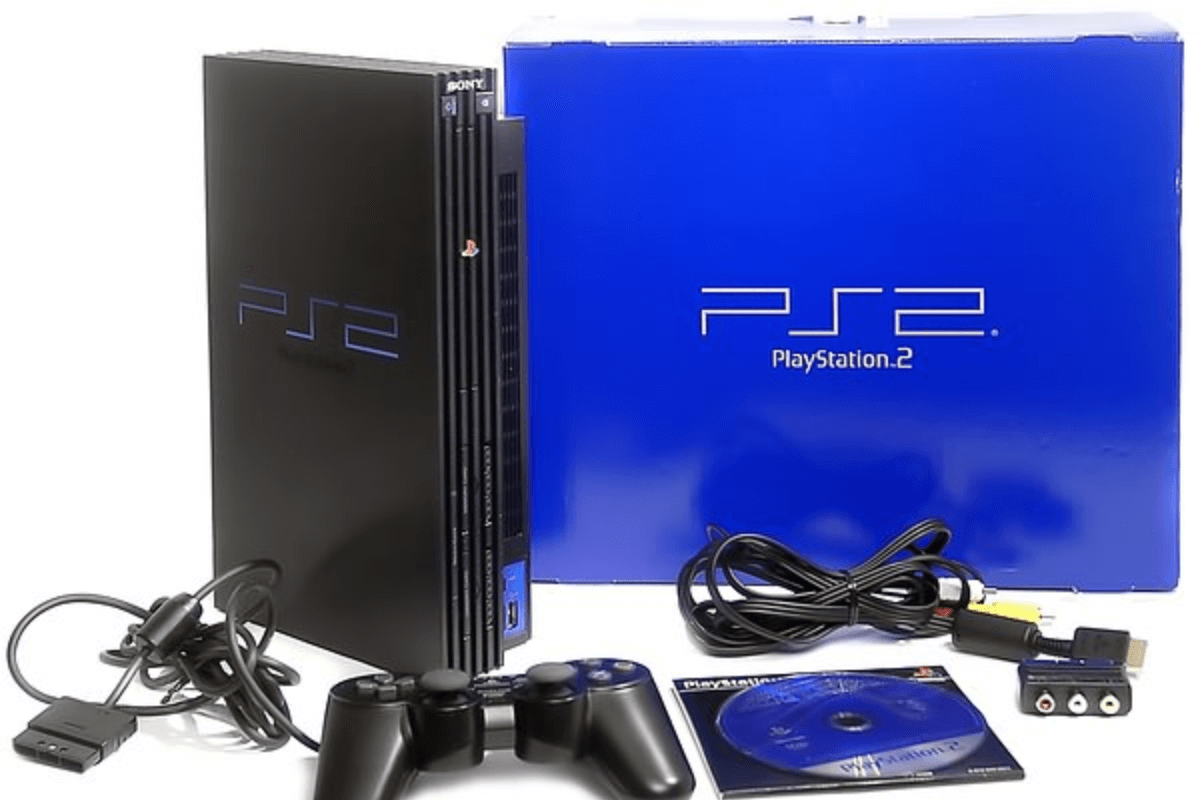
Тогда же, в девяностые, концерн презентует и цифровые фотоаппараты Cyber-Shot, и миниатюрные карты памяти Memory Stick. Однако именно этот период ознаменуется печальными событиями для его большой семьи — в 1997 покидает земной мир Ибука Масару, а в 1999 — Акио Морита.
Sony + Ericsson = Xperia. Японские мобильники и смартфоны
Третье тысячелетие начинается со знакового партнерства: в 2001 «Сони» совместно со шведской «Эрикссон» создает совместное предприятие по изготовлению сотовых телефонов и сопутствующих аксессуаров. В 2002 партнеры выпускают первые мобильники под общей маркой. Постепенно Sony внедряет свои изобретения в новинки — так появляются линейки смартфонов-плееров Walkman и «фототелефонов» Cyber-shot.
Через десять лет «японке» удастся целиком выкупить долю делового партнера. Став единоличной обладательницей «Сони Эрикссон», корпорация переименует предприятие в Sony Mobile Communications, чтобы выйти на рынок с новой торговой маркой смартфонов — Xperia. Но мобильниками дело не ограничивается: в 2005 презентуется новый бренд плазменных телевизоров BRAVIA. Уже в следующем году они выйдут на первое место по продажам в мире (в своем сегменте).
Sony умирает? Почему компания начала XXI век с убытков
В отличие от ХХ столетия, новое тысячелетие не было таким же благосклонным к японскому производителю. Он был вынужден констатировать сокращение собственной доли мировых продаж по всем типам электроники. Объективных причин этому немало:
- Появление конкурентов в Китае, Южной Корее, Тайване, имевших сильный козырь — дешевую рабочую силу.
- Мощное землетрясение (2011) в Японии, парализовавшее Производство и нанесшее огромные убытки.
- Высокий курс йены: стоимость японских разработок пришлось увеличить, что отнюдь не способствовало росту экспорта.
- Новые продукты и инновационные технологии (как то было при Морите) перестали быть основным вектором развития. Пришедшее на смену руководство более беспокоило уменьшение издержек производства, увеличение объемов выпускаемой техники, рост продаж уже изобретенных продуктов.
- Если раньше топ-менеджеры 85 % рабочего времени уделяли собственным передовым исследованиям (на кадровые вопросы оставалось 10 %, а на экономические проблемы и того меньше — 5 %), то в новом тысячелетии все кардинально изменилось. На планерках теперь обсуждают уменьшение расходов на личные разработки, налаживание массового производства, продление амортизации заводского оборудования и прочие скучные вещи.
Концерну оставалось лишь экстренно принимать решения по реструктуризации. В 2013 «Сони» продает свою 37-этажную башню на Манхеттене, выручив с этого $1 млрд. Также корпорации пришлось сократить штат на 5000 мест, продать собственное подразделение по изготовлению ноутбуков и персональных компьютеров Vaio. Все эти неудачи порой связывают с уходов из жизни Масару Ибуки и Акио Мориты: эксперты отмечают, что у основателей было редкое умение предугадывать будущее и желания своих клиентов.
«Сони» сегодня: как обстоят дела в Третьем тысячелетии?

Но положение японской компании в XXI веке не такое печальное, как кажется на первый взгляд. В 2004 вместе с немецкой Bertelsmann AG «Сони» основывает звукозаписывающую компанию Sony BMG, которая в будущем полностью перейдет под контроль «японки», получив название Sony Music Entertainment (2009). А в 2006 Sony стала наследницей технологических наработок Konica-Minolta, признанного японского лидера в сегменте фототехники. Знания по производству дальномерных камер, зеркальных фотоаппаратов и сопутствующей оптики, систем фотопечати и изготовления фотобумаги явно не стали лишними. Не нужно забывать и о тесном сотрудничестве (с 1995) с германским концерном Carl Zeiss, который поставляет бренду для разнообразных моделей фотоаппаратов высококачественную оптику.
В десятых-двадцатых годах история компании не менее яркая:
- 2012. Поглощение доли «Эрикссон» в Sony Ericsson, начало производства Android-смартфонов и планшетов.
- 2012. Создание совместного с японскими партнерами Toshiba и Hitachi предприятия Japan Display, выпускающего экраны для всевозможных гаджетов.
- 2018. Немецкая звукозаписывающая компания EMI становится дочерним подразделением «Сони».
- 2018. Вывод изготовления 3D-камер на массовое производство.
- 2022. 31 января компания приобрела Bungie — американскую студию, разрабатывающую видеоигры. Цена вопроса составила $3,6 млрд.
В сфере айдентики компания к настоящему времени практически не поменялась: фирменным логотипом остается написание Sony, принятое еще в далеком 1973. История слоганов интереснее:
- Первый вариант: It’s a Sony — «Это Сони».
- Следующая фраза: Like No Other — «Как никто другой».
- С 2019: Make believe — «Делаем реальностью».
В апреле 2021 концерн впервые за 60-летие сменил свое название с Sony на Sony Group (Sony Group Corporation).
Деловая Sony: руководство, акционеры, финансы
На настоящий момент «за штурвалом» высокотехнологичной компании стоят:
- Кэнъитиро Ёсида (род. 1959) — президент и главный исполнительный директор «Сони».
- Сюдзо Суми (род. 1947) — независимый председатель Совета директоров.
Выручка корпорации в географическом разрезе распределяется следующим образом:
- Япония: 29,9 %.
- США: 22,9 %.
- Европа: 21,5 %.
- Азиатско-Тихоокеанские страны: 10,5 %.
- Китай: 8,9 %.
- Остальные локации: 6,3 %.
На собственных заводах «Сони» изготавливает до 64 % продукции, притом ½ из этого производится в Японии. У конгломерата имеются личные предприятия в Индиане (США), Пекине, Ханчжоу, Уси (Китай), Пинанге и Банги (Малайзия), а также в Таиланде. Но при этом за границей компания больше полагается на сторонних подрядчиков: 57 % в КНР, 72 % — в азиатских государствах. При этом в самой Японии 89 % производств — собственные.
Согласно последним экономическим показателям (февраль 2022):
- Рыночная капитализация: 14,99 трлн ¥.
- Стоимость акции: 11 890 ¥.
По последнему квартальному отчету (декабрь 2021):
- Доход: 3,03 трлн.
- Чистая прибыль: 346,16 млрд.
- Себестоимость: 2,22 трлн.
По последнему годовому отчету (2021):
- Доход: 9 трлн.
- Чистая прибыль: 1,17 трлн.
- Себестоимость: 6,57 трлн.
Среди крупнейших акционеров «Сони Корпорейшн» — американская инвестиционная компания Capital Research and Management Company (6,85 %), холдинг Sumitomo Mitsui Trust Bank, Limited (5,04 %), международная инвест-группа BlackRock Japan Co., Ltd.(5,01 %), частное независимое инвестиционное объединение PRIMECAP Management Company (3,66 %).
Компьютеры, телефоны, роботы, музыка, Аниме: что входит в семейство Sony?
Сама Sony Corporation — бизнес-вектор группы «Сони». Его задача — разработки, исследования, планирование, проектирование, а также Маркетинг. Помимо этого, у концерна есть масса иных направлений деятельности.
Аудиоустройства
Все началось в 1979 с портативного музыкального плеера «Волкман», в паре с которым шли легкие и удобные наушники. Название Walkman настолько прижилось, что им стали именовать не только портативные цифровые аудио- и видеопроигрыватели, но и «музыкальные» линейки смартфонов «Сони Эрикссон».
Видеопродукция
Именно Sony первой в мире выпустила транзисторный телевизор — TV8-301 (1959). Следующим достижением стала торговая марка Trinitron (1968), под которой выпускали сначала ТВ-приемники с электронно-лучевыми трубками и апертурными решетками, а затем уже и компьютерные мониторы. «Тринитрон» существовал вплоть до 2007 — тогда был выпущен последний аналоговый TV-проигрыватель. Ему на смену пришла BRAVIA — внутренний бренд жидкокристаллических и проекционных телевизоров, фронтальных проекторов и домашних кинотеатров.
В том же 2007 производитель выходит на новый уровень, презентовав свой первый OLED-телевизор (с экраном на органических светодиодах). В 2013 будет готов уже первый 4K OLED-TV. С 2017 ТВ-устройства с применением технологии Organic light-emitting diode выпускаются под знакомым публике брендом BRAVIA. В 2021 японский концерн представил «умные телевизоры» «Бравия» с искусственным интеллектом.
Компьютеры и ноутбуки
Старт «Сони» в компьютерном бизнесе был неудачным: в 1980-1990 корпорация пыталась выйти на рынок с персональными компьютерами MSX и рабочими станциями NEWS. Второй заход пришелся на 1996 с новым брендом VAIO — Video Audio Integrated Operation. Нейм был выбран неслучайно — японские продукты стали первыми в мире ПК и ноутбуками с выделенными звуковыми и визуальными опциями. Однако и тут не обошлось без проблем: в 2006 появились тревожные сообщения в СМИ, что у некоторых владельцев лэптопов «Вайо» взорвались аккумуляторы. Дело закончилось тем, что в 2014 направление завершило свою работу из-за низких продаж.
Телефоны, смартфоны и планшеты
В 2001 начало работу партнерское предприятие Sony Ericsson Mobile Communications, которому удалось выйти на прибыль уже в 2003. Фишкой телефонов «Сони Эрикссон» было наличие камеры, музыкального проигрывателя и других интересных мультимедийных функций. Однако в 2007 производство начинает терпеть убытки из-за конкуренции с Apple iPhone, но еще до 2009 входит в число лидеров по производству мобильников, уступая лишь Nokia, Samsung и LG.
В 2012 становится известным, что японский концерн приобрел долю «Эрикссон» за $1 млрд и переименовал производство смартфонов во внутренний бренд Xperia. Пика продаж ему удалось достичь в 2014, когда было реализовано 40 млн гаджетов. В 2011, на пике популярности планшетных компьютеров, японский конгломерат запускает собственные планшеты Sony Tablet на Android. С 2012 они продаются под брендом «Ксперия».
Фотоаппараты и видеокамеры
Концерн выпускает несколько серий качественных устройств для фото- и видеосъемки:
- Cyber-shot — цифровые фотоаппараты;
- Alpha (приобретенная компания Konica Minolta) — цифровые зеркальные однообъективные фотокамеры;
- Sony — видео- и экшн-камеры;
- CineAlta — профессиональная продукция для кинематографистов.
С 2010 бренд производит беззеркальные фотокамеры с комплектом сменных объективов NEX-3 и NEX-5. Среди производителей фотоаппаратов «японка» занимает почетное третье место в мире, уступая лишь корифеям Canon и Nikon.
Производство контента
Sony Entertainment, Inc. — настоящий гигант в кино- и музыкальной индустрии, насчитывающий несколько направлений:
- Sony Pictures Entertainment — производство, распространение фильмов и сериалов. SPE выпустила «Человека-Паука», «Людей в черном», «Парня-каратиста».
- Sony Music Entertainment — «Сони Мьюзик» по праву считается второй по величине компанией в сфере записи музыки.
- A-1 Pictures — собственная аниме-студия конгломерата.
Отдельно выделяется Sony Interactive Entertainment — производитель игровых приставок «Сони ПлейСтейшен». Помимо этого, подразделение занимается разработкой известных серийных видеоигр, таких как God of War, Uncharted, The Last of Us.
Робототехника
Начиная с девяностых, Sony выпускала игровых роботов — собачек AIBO, цифровых гуманоидов QRIO и интерактивных андроидов, воспроизводящих музыку. Однако производство дорогих игрушек особо не окупалось, поэтому компания ушла из робототехники на десятилетие, чтобы вернуться в 2016 с действительно полезными новинками. Первым был презентован Aerosense — дрон для разведки и воздушного наблюдения. В 2021 представили «малыша» Airpeak — самого миниатюрного дрона, работающего в паре с камерой Sony Alpha.
Биотехнологии и Медицина
В «Сони» уверены, что био-разработки и здравоохранение — перспективный для развития в будущем сектор. Поэтому гигант принял ряд стратегических решений:
- 2010. Приобретение производителя проточных цитометров, переименованного в Sony Biotechnology Inc.
- 2011. Покупка разработчика диагностического инструментария на базе микрофлюидики Micronics, Inc.
- 2012. Скупка 100 % акций M3, Inc., оператора специализированных порталов для медиков.
- 2013. Основание совместного с «Олимпус» предприятия Sony Olympus Medical Solutions Inc., занимающегося разработкой инновационных хирургических эндоскопов с разрешением 4К и возможностью работы в 3D.
В 2014 стало известным, что Sony, М3 и Illumina создали совместное начинание Р5, Inc., занимающееся анализами геномов.
13 самых значимых изобретений компании «Сони»
Эксперты приписывают конгломерату тринадцать открытий, которые здорово повлияли на развитие мировых технологий:
- 1946. Электрическая рисоварка — первая проба на пути к впечатляющим открытиям.
- 1950. Первый кассетный магнитофон.
- 1955. Первый на планете транзисторный радиоприемник.
- 1960. Первый транзисторный телевизор, который мог похвастаться 8-дюймовым экраном.
- 1965. Первый видеомагнитофон.
- 1968. Первый цифровой телевизор (работает на технологии «Тринитрон»).
- 1975. Создание профессионального видео-формата «Бетакам» и выпуск домашнего видеопроигрывателя «Бетамакс».
- 1979. Первый портативный музыкальный плеер «Волкман», с которого фактически началась эпоха смартфонов и других миниатюрных гаджетов.
- 1981. Разработка и выпуск совместно с «Филипс» компакт-диска.
- 1994. Выпуск легендарной игровой консоли «Сони ПлейСтейшен».
- 2011. Начала совместного с «Тошиба» и «Хитачи» производства экранов для смартфонов и других девайсов.
- 2012. Производство телефонов «Ксперия» на базе ОС «Андроид».
- 2013. Выпуск игровой приставки «ПлейСтейшен» четвертого поколения.
PS-4 была настолько ожидаемой, что только в первые сутки после старта продаж Sony удалось реализовать 1 млн устройств!
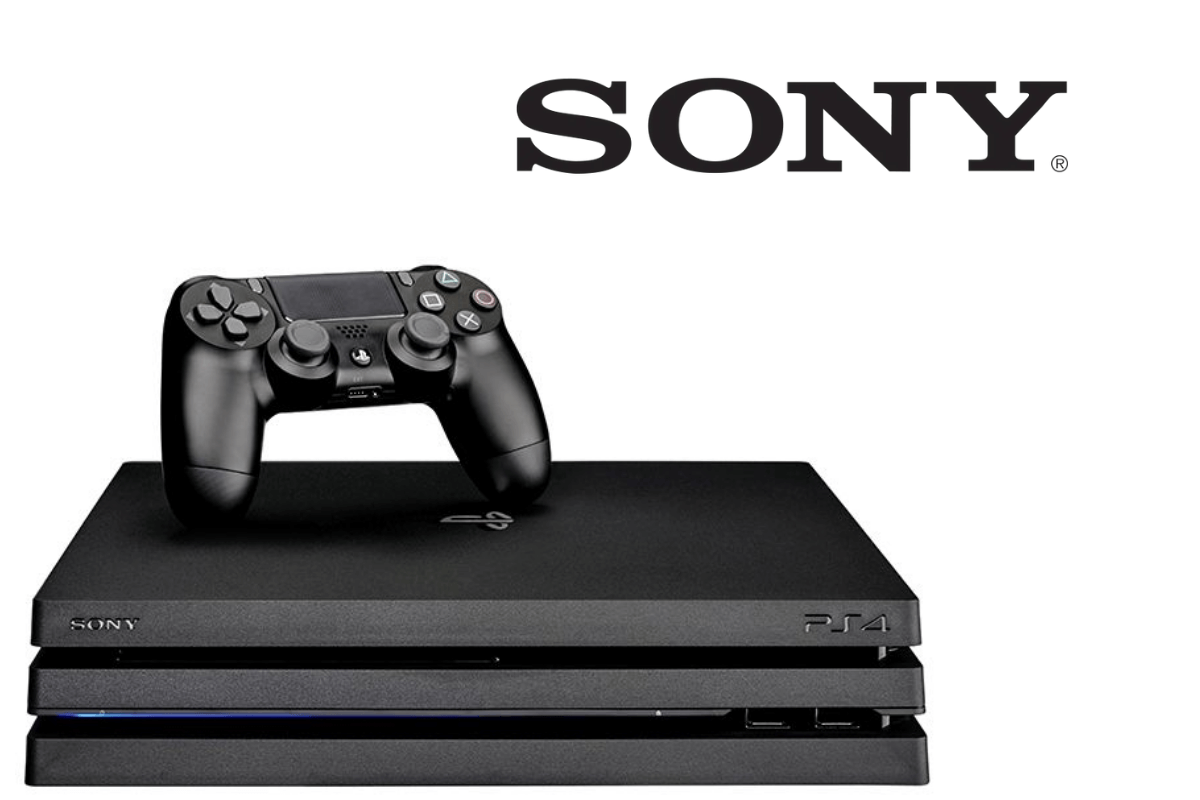
Маркетинг, менеджмент, идеология: дзен-буддистское управление — залог успеха.
Все сотрудники «Сони» отмечали идеальный менеджмент: для достижения общей цели фирма делилась на различные функциональные группы, каждая из которых занималась решением определенной задачи. При этом подразделения тесно взаимодействовали и были в курсе успехов друг друга. Сегодня Сигеру Кобаяси (главный идеолог концерна) говорит, что управление компанией строится в четком следовании «дзен-буддистскому принципу Му». В частности, практикуется «неопредмечивание» и «неовеществление». Здесь не следуют жестким и четким планам: главной задачей менеджеров является проявление максимальной гибкости, спасающей от бюрократии и «окостенения» корпорации.
Стремительный взлет компании в ХХ веке связывался с целой совокупностью факторов:
- Основатели вовремя поняли, что маленькой тогда фирме будет сложно конкурировать с признанными гигантами. Поэтому они стали прокладывать собственный путь — делать устройства и приборы, которых до них никто не производил.
- Компания не стала зацикливаться на одной нише — от магнитофонов перешла к телевизорам, видеопроигрывателям, кассетам, плеерам, игровым консолям. Она открывала новые рынки и по праву занимала на них максимальную долю.
- Главная цель — качество: каждый новый продукт должен представлять нечто неординарное.
- Философское отношение к конкуренции — Морита считал ее главным фактором развития бизнеса.
- Всеобщая настроенность на решение главных задач. Здесь умеют ставить цели так ясно, что они понятны каждому работнику.
- Сокращение сроков выпуска новых продуктов с 2 лет до 6 месяцев. Важно отметить, что «Сони» не разрешала другим фирмам копировать свои разработки.
- Равномерное распределение ответственности между персоналом и менеджментом: «Корпорация ничего не достигнет, если взвалит всю умственную работу на руководство. В компании каждый должен вносить свой посильный вклад, и вклад нижнего звена не должен ограничиваться только физическим трудом. Мы всегда требовали от наших работников умения самостоятельно мыслить и в большей мере добивались этого».
- Личный талант руководителя Акио — прирожденного управленца, менеджера-стратега и просто эрудированного человека, имевшего самое полное представление о мировых экономических порядках.
Сам Морита секретом успеха своего детища считал не только современный менеджмент и грамотное управление проектами, но еще и врожденную аккуратность своего народа: «Возможно, причиной этого стала тщательность, с которой мы выводим иероглифы своего наречия».
Эко-Sony: добрые дела и «зеленые» проекты
Высокотехнологичный концерн по сей день занимает звание одной из самых эко-ориентированных корпораций. С 2008 «Сони» — участница Eco-Patent Commons, мирового проекта, созданного для разрешения экологических проблем. Его адепты открывают свободный доступ к собственным патентам и разработкам во имя улучшения непростой экологической обстановки.
В ряде изделий бренда используется кинетическая энергия:
- Цифровой фотоаппарат «покрути и снимай»: чтобы быстро подзарядить устройство, нужно лишь вращать его корпус.
- Наушники «потяни и слушай»: подпитать аксессуар возможно, вытягивая специальный проводок.
Разработчики «Сони» успели представить био-аккумуляторы со встроенными генераторами, вырабатывающими электричество в ходе расщепления глюкозы под воздействием энзимов. Планы на будущее у японской корпорации впечатляющие: к 2050 она добьется 0 % выбросов парниковых газов — что для производимой техники, что для собственных предприятий.
Топ-10 малоизвестных фактов о корпорации «Сони»
О серьезной компании можно найти довольно интересные заметки:
- Если сегодня японские товары — эквивалент высокого качества, то раньше было совершенно не так! Вот поэтому Sony была вынуждена печатать на своей продукции «произведено в Японии» совсем микроскопическим шрифтом, чтобы не привлекать к надписи внимание.
- В основе нейма бренда Игра слов: англ. sunny boys («солнечные ребята») на японском стало звучать как sonny-boys, что имело уже другое значение — «маленькие гении».
- Для магнитного покрытия первых ленточных носителей кассет использовали оксалат железа, предварительно обжаренный на кухонной сковороде!
- Те самые первые карманные радиоприемники TR63 на самом деле были довольно велики для кармана даже классической мужской рубашки. Однако маркетологи «Сони» не растерялись: для рекламы своего продукта они заказали сорочки со специально увеличенными кармашками.
- Росту спроса на цветные телевизоры Sony поспособствовала летняя Олимпиада-1964 в Токио. Многие японцы желали лично следить за происходящим, ведь в тот памятный год их страна заняла третье место на Играх, уступив лишь США и СССР.
- Идея Walkman принадлежала Акио Морите: наблюдая за дочерью-меломанкой, он часто думал, что бы изобрести для людей, не желающих расставаться с музыкой. Так и получился плеер с наушниками, который можно всюду брать с собой.
- CD-диск был совместным проектом «Сони» и «Филипс». Первоначально партнеры договаривались, что диаметр изобретения будет 11,5 см, но японцы настояли: размер надо увеличить до 12 см. И все только затем, чтобы на носителе полностью помещалась 9-я хоральная симфония Бетховена длительностью 74 минуты.
- Самым «урожайным» для Sony стал 1990 — тогда компания презентовала 500 новых продуктов!
- Основатели компании ушли из жизни с разницей всего в два года. На прощании с создателями гигантской корпорации было сказано: «Каждый сотрудник, начиная с Акио Мориты, работал, чтобы мечта Масару Ибуки сбылась».
- На японском Sony Group Corporation звучит как «кабусики-гайся Сони Гурупу».
Мало кто знает, но в первые годы существования компании Ибуке приходилось брать плату за свои приборы… рисом. Впрочем, в условиях послевоенного голода в Японии это было вполне объяснимо.
Самые провальные проекты корпорации «Сони»
В истории транснационального производителя (как и в летописях его главных конкурентов) было немало невыгодных проектов:
- ноутбуки VAIO с «самовозгорающимися» аккумуляторами;
- «задушенные» айфонами мобильники «Сони Эрикссон»;
- неинтересные массовому покупателю дорогие игровые роботы.
Однако эксперты считают главными провалами японского производителя два продукта:
- Стандарт Sony Betamax. В семидесятые конгломерат сделал ставку на сбыт видеопроигрывателей, поддерживающих полудюймовые кассеты его собственной разработки с шириной ленты 12,7 мм. Конкурентам и покупателям же оставался ближе «старый добрый» VHS — видеокассеты с магнитной лентой, заправлять которые было гораздо удобнее и проще. Неудивительно, что «Бетамакс» проиграл в неравной битве.
- Sony Ericsson Xperia Play. Как только необычный продукт вышел на рынок, шутники поспешили назвать его «гибридом ежа с ужом». Перед покупателями предстал полусмартфон-полуприставка для видеоигр. Пользуясь огромной популярностью консоли Sony PSP, разработчики пытались с ее помощью возродить интерес к телефонам «Сони Эрикссон», чьи продажи неминуемо падали. В результате инженеры презентовали сенсорный «Андроид»-смартфон с выдвижной кнопочной панелью специально для геймеров. Для данного гаджета выпустили адаптации любимых игр с PSP и PlayStation, но устройство это не спасло. Медленная работа, не самого лучшего качества дисплей, программные недочеты и аппаратные недостатки вкупе с высокой стоимостью провалили продажи продукта.
Главной причиной провалов считают чрезмерную уверенность «Сони» в своих силах. Компания долгое время была лидером на рынке электроники и вовремя не заметила роста таких опасных конкурентов, как «Эппл», «Самсунг» и «Майкрософт». Современный покупатель не желает платить лишнее за известный в далеком прошлом бренд — ему важна функциональность приобретаемого продукта «здесь и сейчас». Стоит добавить, что, потеряв основателей, концерн утратил способность мгновенно реагировать на происходящее во Вселенной электроники. Если в ХХ веке Sony задавала тенденции в области высоких технологий, то сегодня производителю сложно угнаться за разработками прямых оппонентов.
«Сделано в Японии»: книга Акио Мориты о своем бизнесе
Сооснователь «Сони» написал произведение не только о своей компании, но и о «жизни и работе японцев». Из его бестселлера читатели узнают, почему семья является в Стране Восходящего Солнца ключевым двигателем прогресса, как влияет на становление бизнесменов ответственность перед старшими и преемственность поколений. В Made in Japan: Akio Morita and Sony поднимается сразу несколько тем:
- успешная интеграция западной и японской моделей менеджмента;
- мемуары основателя успешной высокотехнологичной корпорации;
- пример «Сони» как интеграции «мировой глобализации и японского консерватизма»;
- знакомство с малоизвестными особенностями восточной культуры.
Морита резюмирует: «Какой бы жестокой ни была конкуренция, неписаное правило борьбы за долю на рынке гласит, что ни одна компания не должна алчно захватывать все. Однако, если фирма просто неконкурентоспособна, противник уничтожит ее».
Документальные фильмы о «Сони», которые стоит посмотреть
Познакомиться с историей концерна в видеоформате помогут познавательные интересные ролики:
- Документальный фильм «Он просто «ремонтировал» старую технику и придумал бренд SONY | История компании «SONY»…». Канал Face Story подготовил яркий видеосюжет о зарождении громадной корпорации из задумки пары энтузиастов.
- Документальный фильм «Sony: Сделано в Японии — История бренда». «Годно о технике» рассказывает о самых интересных и революционных устройствах, разработанным японской компанией.
- Документальный фильм «Кремниевые Титаны #36: Sony». Автор Дмитрий Бачило подготовил краткий обзор становления одного из мировых производителей электроники.
- Документальный фильм «Как SONY построили медиа империю?». «Канал Зубарга» предлагает обратить внимание на медиа-сферу деятельности конгломерата, создавшего свою игровую Вселенную.
- Документальные фильмы «SONY: ОТ КНОПОЧНЫХ ТЕЛЕФОНОВ ДО ПРИСТАВОК PLAYSTATION ЧАСТЬ 1» и «НАСКОЛЬКО ВЕЛИК SONY? ЧАСТЬ 2». «Кик Обзор» представил своим зрителям двухсерийную историю знаменитого концерна.
Также на YouTube можно найти немало интересных видеосюжетов, посвященных самым известным и интересным разработкам гиганта: «Эволюция телефонов Sony Ericsson: история знаменитого бренда — обзор от Ники», «Эволюция PlayStation (1988 — 2020)», «ВСЁ О ХИТАХ SONY ANIMATION [Мульто-Мыло]», «КАК ПОГИБ SONY ERICSSON — ЛУЧШИЙ ТЕЛЕФОН В ИСТОРИИ», «Эволюция Sony Xperia» и др.
Посмотреть подборку интересных видеороликов и фильмов про историю успеха корпорации Sony можно по ссылке.
Заключение
Редакция lindeal.com находит, что именно «Сони» удалось первой из японских брендов доказать: продукция из Страны Восходящего Солнца = высокое качество и удивительная надежность. Электроника и бытовая техника Sony созданы согласно последним разработкам — долго служат владельцу, удивляют «умной начинкой». Несмотря на то, что сегодня у компании появились два конкурента-гиганта, Apple и Samsung, она продолжает развиваться, преодолевая сложности. Японский бренд стал настоящей экосистемой, которая предлагает миру самую различную продукцию от телевизоров и геймпадов до роботов и аниме.
Компания признана мировым лидером в области интерактивных и цифровых развлечений. Sony Interactive Entertainment (SIE) отвечает за бренд PlayStation® и семейство продуктов и услуг. PlayStation поставляет на рынок инновации с момента запуска оригинальной PlayStation в Японии в 1994 году.
Аналогично. Как купить акции PlayStation? Как купить акции Sony Group Corporation
- Сравните платформы для торговли акциями. Воспользуйтесь нашей сравнительной таблицей, чтобы найти платформу, которая вам подходит.
- Откройте свой брокерский счет. Заполните заявку, указав свои данные.
- Подтвердите свои платежные реквизиты. …
- Изучите акции. …
- Купите сейчас или позже. …
- Проверьте свои вложения.
Кто делает xbox1? Xbox One
| Вверху: оригинальная консоль Xbox One, контроллер и сенсор Kinect, черные. Внизу: модель Xbox One S, белый цвет. | |
|---|---|
| Застройщик | Microsoft |
| ПРОИЗВОДИТЕЛЬ | Флекстроникс, Фоксконн |
| Семейство продуктов | Xbox |
| Тип | Домашняя игровая приставка |
Кроме того, кто производит PS5?
PlayStation 5 (PS5) — домашняя игровая приставка, разработанная Sony Interactive Entertainment .
…
PlayStation 5.
| Базовая консоль PlayStation 5 (с оптическим приводом) в режиме покоя и контроллер DualSense | |
|---|---|
| Также известный под названием | PS5 |
| Застройщик | Sony Interactive Entertainment |
| ПРОИЗВОДИТЕЛЬ | Сони, Фоксконн |
| Семейство продуктов | PlayStation |
Playstation 5 есть в наличии?
Выпуски PlayStation 5 в США были довольно редкими: Антонлайн пополнил запасы консоли 8 апреля 2022 года и на Game Stop 2 апреля 2022 года.
…
В США ( ):
| Розничный торговец | Консоль PS5 | Консоль PS5 Digital Edition |
|---|---|---|
| GameStop | Нет на складе | Нет на складе |
| цель | Нет на складе | Нет на складе |
| Клуб Сэма | Нет на складе | – |
• 4 дней назад
Где я могу найти акции PS5? Как найти PS5 на складе
- Перейдите на страницу PS5 на сайте NowInStock.
- Зарегистрируйте бесплатную учетную запись на NowInStock.
- Проверьте свой почтовый ящик на наличие подтверждающего электронного письма и щелкните правильную ссылку для подтверждения.
- Вернитесь на страницу PS5 NowInStock.
- Щелкните Добавить / управлять предупреждениями в правом углу экрана.
- Добавьте элемент, чтобы отслеживать его.
Почему PS5 до сих пор нет в наличии? У Sony заканчиваются продажи консолей PS5
Это связано с проблемы с нехваткой чипов Sony — и почти каждая крупная технологическая компания — столкнулась с ними за последние пару лет, в основном из-за продолжающейся пандемии.
Xbox One снят с производства? Заявление Microsoft показывает, что компания прекратила выпуск консолей Xbox One в 2020 году., и его платформы следующего поколения пожинают плоды. В заявлении для The Verge старший директор по маркетингу консольных продуктов Синди Уокер заявила, что производство всех консолей Xbox One будет остановлено к концу 2020 года.
Оригинальный Xbox One все еще хорош?
Хотя в нем отсутствуют последние аппаратные улучшения, предлагаемые Xbox One S и Xbox One X (например, поддержка 4K и HDR), оригинальный Xbox One по-прежнему является мощной машиной, которая может играть в любую игру в системе., и многое другое от предыдущих двух человек благодаря поддержке обратной совместимости…
Почему PS5 распродана? К сожалению, одной из главных причин нехватки консолей PS5 является из-за скальперов. Эти предприимчивые люди использовали ботов для сканирования розничных продавцов в поисках запасов PS5, когда она станет доступной, и купить как можно больше консолей за один раз.
Почему PS5 распроданы?
Неудачи Sony PS5 начались с пандемии
Сроки изготовления и отгрузки были растянуты, а спрос превысил предложение – прошло семь лет с момента запуска крупной консоли Sony. Таким образом, Covid-19 имеет непосредственное отношение к тому, почему сегодня вы не можете найти PS5 в наличии.
Пополняет ли Best Buy PS5? Ритейлер не пополнял запасы PlayStation 5 с 20 января.. Хотя недостатком является то, что большинство пополнения запасов Best Buy предназначено только для членов Totaltech. Это членство стоит 199.99 долларов в год и не гарантирует, что вы получите консоль.
Когда PlayStation 5 будет доступна?
Дата выпуска и доступность PlayStation 5
PS5 была запущена в США, Японии, Канаде, Мексике, Австралии, Новой Зеландии и Южной Корее. 12 ноября 2020. Он прибыл в остальной мир (включая Великобританию) 19 ноября 2020 года. С того дня, как он поступил в продажу, спрос превысил предложение.
Как я узнаю, когда PS5 появится в продаже в Best Buy?
Лучшее, что можно сделать, это скачать приложение «HotStock» это приложение сообщит вам, когда в магазинах появится PS5. Когда вы загрузите его и настроите свои предпочтения, приобретите премиум-опцию. Это (как указано выше) уведомляет вас раньше бесплатных пользователей.
Будет ли PS5 пополняться? Они пополняют запасы по четвергам и пятницам, хотя они также предлагают пополнение запасов в понедельник.. Сейчас они распроданы, но, как правило, предлагают пополнение запасов, чем в прошлом году. Цифровое издание PS5 распродано в Best Buy. Однако, когда у них есть акции, они продают их по прейскуранту.
PS5 еще продаются? Где сейчас можно купить новую консоль PlayStation 5? Спрос на PS5 превысил предложение, в результате чего многие не могут купить консоль следующего поколения.
…
Акции PS5: когда и где можно купить PS5 в Северной Америке?
| Розничный торговец | Walmart |
|---|---|
| PS5 Сток | Нет на складе |
| Запасы цифрового издания PS5 | Нет на складе |
| Ожидаемое пополнение | Март 2022 года |
Почему так сложно купить PS5?
Даже если бы вы хотели купить один, Sony не может производить PS5 достаточно быстро, чтобы удовлетворить спрос. Из-за постоянных проблем с глобальной цепочкой поставок, в том числе из-за нехватки основных чипов, используемых при производстве консоли, любые запасы PS5 немедленно скупаются — и, вероятно, спекулянтами.
Почему так сложно получить PS5 2022? Sony продаст меньше консолей PlayStation 5 в 2022 году из-за Нехватка чипа. Было практически невозможно заполучить игровую консоль следующего поколения с момента ее запуска в конце 2020 года, и не стоит ожидать, что в ближайшее время ситуация улучшится.
PS4 все еще производится?
Как сообщает японское издание NLab, Sony Interactive Entertainment PR заявила, что не было планов по прекращению производства PS4 в 2021 году. Sony планирует продолжать предлагать PS4 параллельно с PS5 в обозримом будущем.
Будет ли Xbox в 2022 году? 2022 год — год консолей нового поколения. Однако количество выпущенных игр в прошлом году не впечатляло. 2022 доставит. В этом году самые крупные релизы для Xbox Series X и S.
Почему все консоли Xbox распроданы?
Одна из причин нехватки запасов Xbox Series X и Series S связана с спекулянты скупают большое количество консолей нового поколения за один раз, а затем продают их по грабительским ценам.; мы берем тысячи долларов за игровую приставку за 499 долларов.