
 |
|

Headquarters in Maranello |
|
| Type | Public (S.p.A.) |
|---|---|
|
Traded as |
|
| ISIN | NL0011585146  |
| Industry | Automotive |
| Founded | 13 September 1939; 83 years ago in Modena, Italy (as Auto Avio Costruzioni)[1] |
| Founder | Enzo Ferrari |
| Headquarters |
[2] |
|
Area served |
Worldwide |
|
Key people |
|
| Products | Sports cars |
|
Production output |
 13,221 units shipped (2022)[3] 13,221 units shipped (2022)[3] |
| Revenue | €5.095 billion (2022)[3] |
|
Operating income |
€1.227 billion (2022)[3] |
|
Net income |
€ 939 million (2022)[3] |
| Total assets | € 6.86 billion (2021)[4] |
| Total equity | € 2.21 billion (2021)[4] |
| Owners |
|
|
Number of employees |
4,571 (2021)[4] |
| Parent | Ferrari N.V. |
| Subsidiaries |
|
| Website | www.ferrari.com |
| Footnotes / references [3] [4][5] |
Ferrari S.p.A. (; Italian: [ferˈraːri]) is an Italian luxury sports car manufacturer based in Maranello, Italy. Founded by Enzo Ferrari (1898–1988) in 1939 from the Alfa Romeo racing division as Auto Avio Costruzioni, the company built its first car in 1940, and produced its first Ferrari-badged car in 1947.
Fiat S.p.A. acquired 50% of Ferrari in 1969 and expanded its stake to 90% in 1988.[6] In October 2014, Fiat Chrysler Automobiles (FCA) announced its intentions to separate Ferrari S.p.A. from FCA; as of the announcement FCA owned 90% of Ferrari.[7][8][9] The separation began in October 2015 with a restructuring that established Ferrari N.V. (a company incorporated in the Netherlands) as the new holding company of the Ferrari S.p.A. group,[10] and the subsequent sale by FCA of 10% of the shares in an IPO and concurrent listing of common shares on the New York Stock Exchange.[11] Through the remaining steps of the separation, FCA’s interest in Ferrari’s business was distributed to shareholders of FCA, with 10% continuing to be owned by Piero Ferrari.[12] The spin-off was completed on the 3rd of January 2016.[11]
Throughout its history, the company has been noted for its continued participation in racing, especially in Formula One, where it is the oldest and most successful racing team, holding the most constructors’ championships (16) and having produced the highest number of drivers’ championship wins (15).[13] Ferrari road cars are generally seen as a symbol of speed, luxury and wealth.[14] Ferrari cars are built at the 165,000 square-metre (16.5-hectare) Maranello factory.[15] In 2014 Ferrari was rated the world’s most powerful brand by Brand Finance.[16] As of 2021, Ferrari is the 10th-largest car manufacturer by market capitalisation, with $52.21 billion.[17]
History[edit]

Enzo Ferrari during a rare interview, with the Ferrari’s symbol Cavallino Rampante («prancing horse») behind him
Enzo Ferrari was not initially interested in the idea of producing road cars when he formed Scuderia Ferrari in 1929, with headquarters in Modena. Scuderia Ferrari (pronounced [skudeˈriːa]) literally means «Ferrari Stable» and is usually used to mean «Team Ferrari». Ferrari bought,[citation needed] prepared, and fielded Alfa Romeo racing cars for gentleman drivers, functioning as the racing division of Alfa Romeo. In 1933, Alfa Romeo withdrew its in-house racing team and Scuderia Ferrari took over as its works team:[1] the Scuderia received Alfa’s Grand Prix cars of the latest specifications and fielded many famous drivers such as Tazio Nuvolari and Achille Varzi. In 1938, Alfa Romeo again brought its racing operation in-house, forming Alfa Corse in Milan and hired Enzo Ferrari as manager of the new racing department; thereby disbanding the Scuderia Ferrari.[1]
In September 1939, Ferrari left Alfa Romeo under the provision he would not use the Ferrari name in association with races or racing cars for at least four years.[1] A few days later he founded Auto Avio Costruzioni, with headquarters in the facilities of the old Scuderia Ferrari.[1] The new company ostensibly produced machine tools and aircraft accessories. In 1940, Ferrari produced a racing car – the Tipo 815, based on a Fiat platform. It was the first Ferrari car and debuted at the 1940 Mille Miglia, but due to World War II it saw little competition. In 1943, the Ferrari factory moved to Maranello, where it has remained ever since. The factory was bombed by the Allies and subsequently rebuilt including works for road car production.


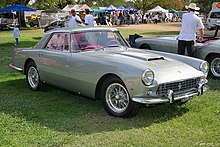
The first Ferrari-badged car was the 1947 125 S, powered by a 1.5 L V12 engine;[1] Enzo Ferrari reluctantly built and sold his automobiles to fund Scuderia Ferrari.[18][circular reference]
The Scuderia Ferrari name was resurrected to denote the factory racing cars and distinguish them from those fielded by customer teams.
In 1960, the company was restructured as a public corporation under the name SEFAC S.p.A. (Società Esercizio Fabbriche Automobili e Corse).[19]
Early in 1969, Fiat took a 50% stake in Ferrari. An immediate result was an increase in available investment funds, and work started at once on a factory extension intended to transfer production from Fiat’s Turin plant of the Ferrari-engined Fiat Dino. New model investment further up in the Ferrari range also received a boost.
In 1988, Enzo Ferrari oversaw the launch of the Ferrari F40, the last new Ferrari launched before his death later that year. In 1989, the company was renamed Ferrari S.p.A.[19] From 2002 to 2004, Ferrari produced the Enzo, their fastest model at the time, which was introduced and named in honour of the company’s founder, Enzo Ferrari. It was to be called the F60, continuing on from the F40 and F50, but Ferrari was so pleased with it, they called it the Enzo instead. It was initially offered to loyal and recurring customers, each of the 399 made (minus the 400th which was donated to the Vatican for charity) had a price tag of $650,000 apiece (equivalent to £400,900).[citation needed]
On 15 September 2012, 964 Ferrari cars worth over $162 million (£99.95 million) attended the Ferrari Driving Days event at Silverstone Circuit and paraded round the Silverstone Circuit setting a world record.[20]
Ferrari’s former CEO and Chairman, Luca di Montezemolo, resigned from the company after 23 years, who was succeeded by Amedeo Felisa and finally on 3 May 2016 Amedeo resigned and was succeeded by Sergio Marchionne, CEO and Chairman of Fiat Chrysler Automobiles, Ferrari’s parent company.[21] In July 2018, Marchionne was replaced by board member Louis Camilleri as CEO and by John Elkann as chairman.[22]
On 29 October 2014, the FCA group, resulting from the merger between manufacturers Fiat and Chrysler, announced the split of its luxury brand, Ferrari. The aim was to turn Ferrari into an independent brand, 10% of whose stake would be sold in an IPO in 2015.[23] Ferrari officially priced its initial public offering at $52 a share after the market close on 20 October 2015.[24]
On 10 December 2020, CEO Louis Camilleri announced that he will step down as CEO and chairman John Elkann will step in to the Interim CEO role until a permanent successor is selected.[25]
On 9 June 2021, the company announced the appointment of Benedetto Vigna from Geneva-based STMicroelectronics as its next CEO starting September.[26]
Motorsport[edit]

Since the company’s beginnings, Ferrari has been involved in motorsport, competing in a range of categories including Formula One and sports car racing through its Scuderia Ferrari sporting division as well as supplying cars and engines to other teams and for one-make race series.
1940 AAC 815 was the first racing car to be designed by Enzo Ferrari, although it was not badged as a Ferrari model.
Scuderia Ferrari[edit]
Scuderia Ferrari has participated in several classes of motorsport, though it is currently only officially involved in Formula One. It is the only team to have competed in the Formula One World Championship continuously since its inception in 1950. José Froilán González gave the team its first F1 victory at the 1951 British Grand Prix.

Alberto Ascari gave Ferrari its first Drivers Championship a year later. Ferrari is the oldest team in the championship, and the most successful: the team holds nearly every Formula One record. As of 2014, the team’s records include 15 World Drivers Championship titles, 16 World Constructors Championship titles, 221 Grand Prix victories, 6736.27 points, 679 podium finishes, 207 pole positions, and 230 fastest laps in 890 Grands Prix contested. Of the 19 tracks used in 2014, 8 have lap records set by the F2004, with a further 3 set by the F2003-GA, F2008 and F10.
Ferrari drivers include: Tazio Nuvolari, José Froilán González, Juan Manuel Fangio, Alberto Ascari, Luigi Chinetti, Eugenio Castellotti, Maurice Trintignant, Wolfgang von Trips, Phil Hill, Olivier Gendebien, Mike Hawthorn, Peter Collins, Giancarlo Baghetti, Ricardo Rodríguez, Chris Amon, John Surtees, Lorenzo Bandini, Ludovico Scarfiotti, Jacky Ickx, Mario Andretti, Clay Regazzoni, Niki Lauda, Carlos Reutemann, Jody Scheckter, Gilles Villeneuve, Didier Pironi, Patrick Tambay, René Arnoux, Michele Alboreto, Gerhard Berger, Nigel Mansell, Alain Prost, Jean Alesi, Michael Schumacher, Eddie Irvine, Rubens Barrichello, Felipe Massa, Kimi Räikkönen, Fernando Alonso, Sebastian Vettel, Charles Leclerc and Carlos Sainz Jr.
At the end of the 2006 season, the team courted controversy by continuing to allow Marlboro to sponsor them after they, along with the other F1 teams, made a promise to end sponsorship deals with tobacco manufacturers. A five-year deal was agreed and although this was not due to end until 2011, in April 2008 Marlboro dropped their on-car branding on Ferrari.
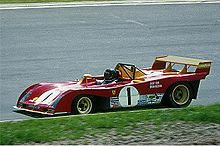
In addition to Formula One, Ferrari also entered cars in sportscar racing, the two programs existing in parallel for many years.
In 1949, Luigi Chinetti drove a 166 M to Ferrari’s first win in motorsports, the 24 Hours of Le Mans. Ferrari went on to dominate the early years of the World Sportscar Championship which was created in 1953, winning the title seven out of its first nine years.
When the championship format changed in 1962, Ferrari earned titles in at least one class each year through to 1965 and then again in 1967. Ferrari would win one final title, the 1972 World Championship of Makes before Enzo decided to leave sports car racing after 1973 and allow Scuderia Ferrari to concentrate solely on Formula One.
During Ferrari’s seasons of the World Sportscars Championship, they also gained more wins at the 24 Hours of Le Mans, with the factory team earning their first in 1954. Another win would come in 1958, followed by five consecutive wins from 1960 to 1964. Luigi Chinetti’s North American Racing Team (NART) would take Ferrari’s final victory at Le Mans in 1965.
Although Scuderia Ferrari no longer participated in sports cars after 1973, they have occasionally built various successful sports cars for privateers. These include the 512 BB LM in the 1970s, the 333 SP which won the IMSA GT Championship in the 1990s, and currently the 458 GT2 and GT3 which are currently winning championships in their respective classes.
Competizioni GT official drivers[edit]
[27]
Race cars for other teams[edit]
Throughout its history, Ferrari has supplied racing cars to other entrants, aside from its own works Scuderia Ferrari team.
In the 1950s and ’60s, Ferrari supplied Formula One cars to a number of private entrants and other teams. One famous example was Tony Vandervell’s team, which raced the Thinwall Special modified Ferraris before building their own Vanwall cars. The North American Racing Team’s entries in the final three rounds of the 1969 season were the last occasions on which a team other than Scuderia Ferrari entered a World Championship Grand Prix with a Ferrari car.[28]
Ferrari supplied cars complete with V8 engines for the A1 Grand Prix series, from the 2008–09 season.[29] The car was designed by Rory Byrne and is styled to resemble the 2004 Ferrari Formula one car.
Ferrari currently runs a customer GT program for a racing version of its 458 and has done so for the 458’s predecessors, dating back to the 355 in the late 1990s. Such private teams as the American Risi Competizione and Italian AF Corse teams have been very successful with Ferrari GT racers over the years. This car, made for endurance sportscar racing to compete against such racing versions of the Audi R8, McLaren MP4-12C, and BMW Z4 (E89) has proven to be successful, but not as successful as its predecessor, the F430. The Ferrari Challenge is a one-make racing series for the Ferrari 458. The FXX is not road legal and is therefore only used for track events.
Road cars[edit]

The first vehicle made with the Ferrari name was the 125 S. Only two of this small two-seat sports/racing V12 car were made. In 1949, the 166 Inter was introduced marking the company’s significant move into the grand touring road car market. The first 166 Inter was a four-seat (2+2) berlinetta coupe with body work designed by Carrozzeria Touring Superleggera. Road cars quickly became the bulk of Ferrari sales.
The early Ferrari cars typically featured bodywork designed and customised by independent coachbuilders such as Pininfarina, Scaglietti, Zagato, Vignale and Bertone.
The original road cars were typically two-seat front-engined V12s. This platform served Ferrari very well through the 1950s and 1960s. In 1968 the Dino was introduced as the first two-seat rear mid-engined Ferrari. The Dino was produced primarily with a V6 engine, however, a V8 model was also developed. This rear mid-engine layout would go on to be used in many Ferraris of the 1980s, 1990s and to the present day. Current road cars typically use V8 or V12 engines, with V8 models making up well over half of the marque’s total production. Historically, Ferrari has also produced flat 12 engines.
For a time, Ferrari built 2+2 versions of its mid-engined V8 cars. Although they looked quite different from their 2-seat counterparts, both the GT4 and Mondial were closely related to the 308 GTB.[citation needed]
Ferrari entered the mid-engined 12-cylinder fray with the Berlinetta Boxer in 1973. The later Testarossa (also mid-engined 12 cylinders) remains one of the most popular and famous Ferrari road cars of all time.
The company has also produced several front-engined 2+2 cars, culminating in the recent V12 model Lusso and V8 models Roma, Portofino and Lusso T. The California is credited with initiating the popular current model line of V8 front-engined 2+2 grand touring performance sports cars.[citation needed]
Starting in the early 2010s with the LaFerrari, the focus was shifted away from the use of independent coach builders to what is now the standard, Ferrari relying on in-house design from the Centro Stile Ferrari for the design of all its road cars.
Current models[edit]
| Model | Calendar year introduced |
Current model | Vehicle description | ||
|---|---|---|---|---|---|
| Introduction | Update/facelift | ||||

|
812 Superfast | 2017 | 2017 | – | Front mid-engine, rear-wheel-drive grand tourer. |

|
Portofino M | 2017 | 2017 | 2021 | Retractable hardtop convertible grand tourer. |
|
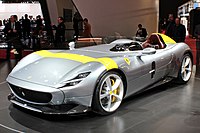
Monza SP1 | 2019 | 2019 | – | Limited production single-seater sports car, part of the new Icona range. |

|
Monza SP2 | 2019 | 2019 | – | Limited production two-seater sports car, part of the new Icona range. |

|
F8 | 2019 | 2019 | – | Mid-engine sports car that replaced the Ferrari 488. |
|
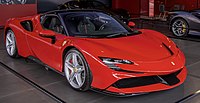
SF90 Stradale | 2019 | 2019 | – | Mid-engine, plug-in hybrid sports car. |

|
Roma | 2020 | 2020 | – | Grand tourer sports car. |

|
296 GTB | 2022 | 2022 | – | Mid-engine, plug-in hybrid sports car. |

|
Daytona SP3 | 2022 | 2022 | – | Limited production mid-engine sports car, part of the new Icona range. |

|
Purosangue | 2022 | 2023 | – | Ferrari’s first SUV; uses the same platform as the Roma. |
Customization[edit]
In the 1950s and 1960s, clients often personalized their vehicles as they came straight from the factory.[30] This philosophy added to the mystique of the brand. Every Ferrari that comes out of Maranello is built to an individual customer’s specification. In this sense, each vehicle is a unique result of a specific client’s desire.
Ferrari formalized this concept with its earlier Carrozzeria Scaglietti programme. The options offered here were more typical such as racing seats, rearview cameras, and other special trim. In late 2011, Ferrari announced a significant update of this philosophy. The Tailor Made programme allows clients to work with designers in Maranello to make decisions at every step of the process. Through this program almost any trim, any exterior color or any interior material is possible. The program carries on the original tradition and emphasizes the idea of each car being unique.[30]
Supercars[edit]


The 1984 288 GTO may be considered the first in the line of Ferrari supercars. This pedigree extends through the Enzo Ferrari to the LaFerrari. In February 2019, at the 89th Geneva International Motor Show, Ferrari revealed its latest mid-engine V8 supercar, the F8 Tributo.[31]
Ferrari SF90 Stradale is the first-ever Ferrari to feature PHEV (Plug-in Hybrid Electric Vehicle) architecture which sees the internal combustion engine integrated with three electric motors, two of which are independent and located on the front axle, with the third at the rear between the engine and the gearbox.[32]
Concept cars and specials[edit]
Ferrari has produced a number of concept cars, such as the Mythos. While some of these were quite radical (such as the Modulo) and never intended for production, others such as the Mythos have shown styling elements that were later incorporated into production models.
The most recent concept car to be produced by Ferrari themselves was the 2010 Millechili.
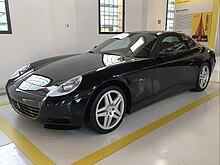
A number of one-off special versions of Ferrari road cars have also been produced, commissioned to coachbuilders by wealthy owners. Recent examples include the P4/5[33] and the 612 Kappa.
Ferrari Special Projects[edit]
The Special Projects programme, also called the Portfolio Coachbuilding Programme, was launched in 2008 as a way to revive the tradition of past one-off and limited production coachbuilt Ferrari models, allowing clients to work with Ferrari and top Italian coachbuilders to create bespoke bodied models based on modern Ferrari road cars.[34][35] Engineering and design is done by Ferrari, sometimes in cooperation with external design houses like Pininfarina or Fioravanti, and the vehicles receive full homologation to be road legal.[35] Since the creation of Ferrari’s in-house styling centre in 2010 though, the focus has shifted away somewhat from outside coachbuilders and more towards creating new in-house designs for clients.[36][37]
The first car to be completed under this programme was the 2008 SP1, commissioned by a Japanese business executive. The second was the P540 Superfast Aperta, commissioned by an American collector.[35] The following is a list of Special Projects cars that have been made public:
| Name | Picture | Year | Based on | Commissioned by | Notes |
|---|---|---|---|---|---|
| SP1 | 
|
2008 | F430[38] | Junichiro Hiramatsu[38] | Design by Leonardo Fioravanti, inspired by the 1998 F100 concept by Fioravanti.[38] |
| P540 Superfast Aperta | 
|
2009 | 599 GTB[39] | Edward Walson[39] | Inspired by a similarly gold-painted and open-topped one-off built by Carrozzeria Fantuzzi on a Ferrari 330 LMB chassis.[35][39] Design by Pininfarina |
| Superamerica 45 | 
|
2011 | 599 GTB[40] | Peter Kalikow[40] | Rotating targa top;[40] design by Ferrari Styling Centre |
| SP12 EC | 
|
2012 | 458 Italia[41] | Eric Clapton[41] | Designed by Ferrari Styling Centre and Pininfarina, in homage to the 512 BB.[41] |
| SP30 | 
|
2013[42] | 599 GTO[42] | Cheerag Arya[42] | |
| SP FFX | 
|
2014 | FF[43] | Shin Okamoto[43] | Design by Pininfarina[43] |
| Ferrari F12 TRS | 
|
2014 | F12berlinetta[44] | — | Barchetta body, inspired by the Ferrari 250 Testa Rossa. Design by Ferrari Styling Centre.[44] |
| Ferrari SP America | 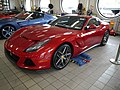
|
2014 | F12berlinetta | Danny Wegman[45] | Design by Pininfarina |
| Ferrari 458 MM Speciale | 
|
2016 | 458 Speciale[46] | — | Design by Ferrari Styling Centre.[46] |
| SP275 RW Competizione | 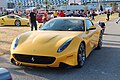
|
2016 | F12tdf | Rick Workman[47] | Inspired by the 1964 275 GTB/C Speciale. Design by Pininfarina in collaboration with Ferrari Styling Centre.[48] |
| Ferrari J50 | 
|
2017 | 488 Spider | — | Design by Ferrari Design Center team in Maranello directed by Flavio Manzoni.[49] |
| SP38 | 
|
2018 | 488 GTB | — | Inspired by the F40 and 308.[50] |
| Ferrari SP3JC | 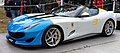
|
2018 | F12tdf | John Collins[51] | Designed by the Ferrari Styling Centre. Two matching cars ordered, one in LHD, the other in RHD with different liveries.[52] Took 3.5 years to complete. Presented in 2018. |
| P80/C | 
|
2019 | 488 GT3 | — | One-off track-only car inspired by the 330 P3, 330 P4 and the Dino 206 S. |
| Ferrari Omologata | 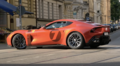
|
2020 | Ferrari 812 Superfast | Design by Ferrari Design Center team in Maranello directed by Flavio Manzoni[53] | |
| Ferrari BR20 | 
|
2021 | Ferrari GTC4Lusso | Fastback coupé instead of a shooting brake. Inspired by the 410 Superamerica and 500 Superfast[54] |
Bio-fuel and hybrid cars[edit]
An F430 Spider that runs on ethanol was displayed at the 2008 Detroit Auto Show. At the 2010 Geneva Motor Show, Ferrari unveiled a hybrid version of their flagship 599. Called the «HY-KERS Concept», Ferrari’s hybrid system adds more than 100 horsepower on top of the 599 Fiorano’s 612 HP.[55] Also in mid-2014, the flagship LaFerrari was put into production.
Naming conventions[edit]
From the beginning, the Ferrari naming convention consisted of a three-digit unitary displacement of an engine cylinder with an additional suffix representing the purpose of a vehicle. Therefore, Ferrari 125 S had 1.5 L (1,496.77 cc) V12 engine with a unitary displacement of 124.73 cc; whilst S-suffix represented Sport. Other race cars also received names invoking particular races like Ferrari 166 MM for Mille Miglia. With the introduction of road-going models, the suffix Inter was added, inspired by the Scuderia Inter racing team of Igor Troubetzkoy. Popular at that time 166-series had 2.0 L (1,995.02 cc) engines with 166.25 cc of unitary displacement and a very diverse 250-series had 3.0 L (2,953.21 cc) of total displacement and 246.10 cc of unitary. Later series of road cars were renamed Europa and top-of-the-line series America and Superamerica.
Until the early 1990s, Ferrari followed a three-number naming scheme based on engine displacement and a number of cylinders:
- V6 and V8 models used the total displacement (in decilitres) for the first two digits and the number of cylinders as the third. Thus, the 206 was a 2.0 L V6 powered vehicle, while the 348 used a 3.4 L V8, although, for the F355, the last digit refers to 5 valves per cylinder. Upon introduction of the 360 Modena, the digits for V8 models (which now carried a name as well as a number) refer only to total engine displacement. The numerical indication aspect of this name carried on to the F430; the F430’s replacement, the 458 Italia, uses the same naming as the 206 and 348. The 488 uses the system formerly used by the V12 cars.
- V12 models used the displacement (in cubic centimetres) of one cylinder. Therefore, the famed 365 Daytona had a 4,390 cc (268 cu in) V12. However, some newer V12-engined Ferraris, such as the 599, have three-number designations that refer only to total engine displacement or boxer-style designations such as the [nominally] six-litre, V12 612.
- Flat 12 models used the displacement in litres for the first digit and the number of cylinders for the next two digits. Therefore, the 512 BB was five-litre flat 12 (a Berlinetta Boxer, in this case). However, the original Berlinetta Boxer was the 365 GT4 BB, which was named in a similar manner to the V12 models.
- Flagship models (aka «halo cars») use the letter F followed by the anniversary in years, such as the F40 and F50. The Enzo skipped this rule, although the F60 name was applied to a Ferrari Formula One car and is sometimes attached to the Enzo.
- Some models, such as the 1980 Mondial and 1984 Testarossa did not follow a three-number naming scheme.
Most Ferraris were also given designations referring to their body style. In general, the following conventions were used:
- M («Modificata»), placed at the end of a model’s number, denotes a modified version of its predecessor and not a complete evolution (see F512 M and 575 M Maranello).
- GTB («Gran Turismo Berlinetta») models are closed Berlinettas, or coupés.
- GTS («Gran Turismo Scoperta») this suffix can be seen in older spiders, or convertibles (see 365 GTS/4). Now the convertible models use the suffix «Spider» (spelt «i») (see F355 Spider, and 360 Spider). In more recent models, this suffix is used for targa top models (see Dino 246 GTS, and F355 GTS), which is an absolutely correct use of the suffix since «scoperta» means «uncovered». An increasing number of people tend to refer to GTS as «Gran Turismo Spyder», which creates the false assumption that Ferrari does not know the difference between «spyder» and «targa». The 348 TS, which is the only targa named differently, is an exception.
- GTO («Gran Turismo Omologata»), placed at the end of a model’s number, denotes a modified version of its predecessor. It designates a model that has been designed and improved for racetrack use while still being street legal. Only three models bear those three letters: the 250 GTO of 1962, the 288 GTO of 1984, and the 599 GTO of 2010.
This naming system can be confusing, as some entirely different vehicles used the same engine type and body style. Many Ferraris also had other names affixed (like Daytona) to identify them further. Many such names are actually not official factory names. The Daytona name commemorates Ferrari’s triple success in the February 1967 24 Hours of Daytona with the 330 P4.[56] Only in the 1973 Daytona 24 Hours, a 365 GTB/4 run by NART (who raced Ferraris in America) ran second, behind a Porsche 911.[57]
The various Dino models were named for Enzo’s son, Dino Ferrari, and were marketed as Dinos by Ferrari and sold at Ferrari dealers – for all intents and purposes they are Ferraris.
In the mid-1990s, Ferrari added the letter «F» to the beginning of all models (a practice abandoned after the F512 M and F355, but adopted again with the F430, but not with its successor, the Ferrari 458).
Identity[edit]
The «Prancing Horse»[edit]
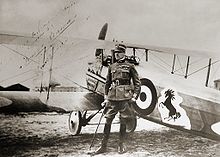
Count Francesco Baracca, originator of Ferrari’s prancing horse
Ferrari’s symbol is the «Prancing Horse» (Italian: Cavallino Rampante, lit. ‘little prancing horse’), a prancing (or rearing)[58] black horse on a yellow background. Minor details of its appearance have changed many times, but its shape has remained consistent: it is always presented either as a shield, with the Italian tricolour above the horse and the initials SF («Scuderia Ferrari») below; or as a rectangle, replacing «SF» with the word «Ferrari» rendered in the company’s trademark typeface.[58]
Enzo Ferrari offered an account of the horse’s origins. In his story, after a 1923 victory in Ravenna, the family of Count Francesco Baracca, a deceased flying ace who painted the emblem on his airplane, paid him a visit. Countess Paolina Biancoli, Francesco’s mother, suggested that Ferrari adopt the horse as a good luck charm: he accepted the request, and the Prancing Horse was first used by his racing team in 1932, applied to their Alfa Romeo 8C with the addition of a canary yellow background — the «colour of Modena,» Enzo’s hometown.[58][59][60] The rectangular Prancing Horse has been used since 1947, when the Ferrari 125 S — also the first Ferrari-branded sports car — became the first to wear it.[58][60]
Colour[edit]
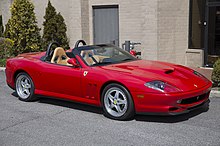
A Ferrari 550 painted in rosso corsa. Both varieties of the Prancing Horse logo are present: the shield is located in front of the door, the rectangle is on the bonnet. The horse alone can also be found on the wheels, grille, and seats.
For many years, rosso corsa («racing red»)[61] was the required colour of all Italian racing cars.[62] It is also closely associated with Ferrari: even after livery regulations changed, allowing race teams to deviate from their national colours, Scuderia Ferrari continued to paint its cars bright red, as it does to this day. On Ferrari’s road-going cars, the colour has always been among the company’s most popular choices: in 2018, 40 percent of Ferraris left the factory painted red, while in the early 1990s the figure was even higher, at 85 percent.[61][62] Some Ferrari vehicles, like the 288 GTO, have only been made available in red.[61]
Although rosso corsa is thought to be the definitive Ferrari colour,[61][62] it has not always been the colour of choice. Ferraris fielded by privateers have run in a rainbow of colours, and one of the company’s own early Formula One liveries was a distinctive dark green.[63] In a particularly noteworthy case from 1964, while protesting the FIA’s homologation requirements, the company moved its racing assets to NART, an affiliated, United States-based racing team. As a result, for the 1964 Mexican Grand Prix, Ferrari’s cars were painted in American colours — white with blue racing stripes.[64] Red has also become less popular on Ferrari’s road cars, a phenomenon which the company attributes to the popularity of its customisation programmes.[62]
Speaking to both the iconic nature of rosso corsa and the power of the Ferrari brand, Enzo Ferrari is reported to have once said the following: «Ask a child to draw a car, and he will certainly paint it red.»[61][62]
Brand image[edit]
Ferrari meticulously manages its brand image and public perception: it goes to great lengths to protect its trademarks, and its customers are expected to honour its rules and guidelines when caring for their cars. The company is noted for its frequent and diverse lawsuits, which have centred around such subjects as the shape of the Ferrari 250 GTO’s bodywork,[65] exclusive rights to model names (including «Testarossa» and «Purosangue»),[66][67] replica vehicles, and several unsanctioned owner modifications.[68]

This pink Ferrari 360 may be captivating, but it’s against the company’s wishes: Ferrari offers no pink paint from the factory.
Ferrari aims to cultivate an image of exclusivity and refined luxury. To facilitate this, vehicle production is deliberately limited to below customer demand, and purchasers are internally ranked based on their desirability and loyalty.[69] The company’s most exclusive supercars, such as the LaFerrari, may have wait lists multiple times in excess of total production, with only the most loyal customers selected to purchase one.[70] Sometimes, Ferrari’s desire to maintain this perception goes against the wishes of its clientele; in one case, the company sued the fashion designer Philipp Plein over «distasteful» Instagram posts featuring his personal 812 Superfast. The posts, which showcased two models in suggestive positions atop the car, were seen by Ferrari as «unlawfully appropriating» the Ferrari brand to promote Plein’s clothing, and as being outside Ferrari’s intended brand perception.[71]
Furthermore, the company places restrictions on what owners may do with their cars: they are not allowed to undertake certain modifications,[68] and the company’s right of first refusal contract, designed to discourage speculation and flipping, prohibits unauthorised sales within the first two years of ownership.[72] Purchasers who break these rules are placed on a «blacklist,» and may not be permitted to buy a Ferrari vehicle through official means.[73] These owner restrictions came to high profile in 2014, when the musician Deadmau5 was sent a cease and desist letter regarding his highly customised Ferrari 458: the car, which he dubbed the «Purrari,» possessed custom badges and a Nyan Cat-themed wrap, and was put up for sale on Craigslist.[68][74]
Ferrari does encourage its buyers to personalise their cars, but only through official channels, which include its Tailor Made programme for bespoke trim packages and special coachbuilding initiatives for more demanding commissions.[75] The customisation options offered through these channels are extensive, though they are always in line with Ferrari’s desired branding — for example, the company offers no pink paint for its cars. In 2017, the CEO of the company’s Australasia branch commented that this and similar customisations are «against the company’s ethos,» and that such a stance is «a brand rule. No pink. No Pokémon Ferraris!»[76]
Corporate affairs[edit]
In 1963, Enzo Ferrari was approached by the Ford Motor Company about a possible buy out.[77] Ford audited Ferrari’s assets but legal negotiations and talks were unilaterally cut off by Ferrari when he realized that the deal offered by Ford would not enable him to stay at the helm of the company racing program. Henry Ford II consequently directed his racing division to negotiate with Lotus, Lola, and Cooper to build a car capable of beating Ferrari on the world endurance circuit, eventually resulting in the production of the Ford GT40 in 1964.
As the Ford deal fell through, FIAT approached Ferrari with a more flexible proposal and purchased controlling interests in the company in 1969. Enzo Ferrari retained a 10% share, which is currently owned by his son Piero Lardi Ferrari.
Ferrari has an internally managed merchandising line that licenses many products bearing the Ferrari brand, including eyewear, pens, pencils, electronic goods, perfume, cologne, clothing, high-tech bicycles, watches, cell phones, and laptop computers.
Ferrari also runs a museum, the Museo Ferrari in Maranello, which displays road and race cars and other items from the company’s history.
Formula Uomo programme[edit]
In 1997, Ferrari launched a long term master planned effort to improve overall corporate efficiency, production and employee happiness. The program was called Formula Uomo and became a case study in social sustainability.[78] It took over ten years to fully implement and included over €200 million (2008) in investment.[79]
Technical partnerships[edit]
Ferrari has had a long-standing relationship with Shell Oil. It is a technical partnership with Ferrari and Ducati to test as well as supply fuel and oils to the Formula One, MotoGP and World Superbike racing teams. For example, the Shell V-Power premium gasoline fuel has been developed with the many years of technical expertise between Shell and Ferrari.[80]
Ferrari has had agreements to supply Formula One engines to a number of other teams over the years, and currently supply the Alfa Romeo and Haas F1 F1 teams.
Sales history[edit]
As of the end of 2019, the total of Ferrari built and sold cars in their whole company history is 219,062.[81]
- Annual Ferrari sales to end customers (number of type-approved vehicles)
| Year | Sales |
|---|---|
| 1947[82] |  3 3
|
| 1948[82] | 5
|
| 1949[82] | 21
|
| 1950[82] | 25
|
| 1951[82] | 33
|
| 1952[82] | 44
|
| 1953[82] | 57
|
| 1954[82] | 58
|
| 1955[82] | 61
|
| 1956[82] | 81
|
| 1957[82] | 113
|
| 1958[82] | 183
|
| 1959[82] | 248
|
| 1960[82] | 306
|
| 1961[82] | 441
|
| 1962[82] | 493
|
| 1963[82] | 598
|
| 1964[82] | 654
|
| 1965[82] | 619
|
| 1966[82] | 928
|
| Year | Sales |
|---|---|
| 1967[82] | 706
|
| 1968[82] | 729
|
| 1969[82] | 619
|
| 1970[82] | 928
|
| 1971[82] | 1,246
|
| 1972[82] | 1,844
|
| 1973[82] | 1,772
|
| 1974[82] | 1,436
|
| 1975[82] | 1,337
|
| 1976[82] | 1,426
|
| 1977[83] | 1,798
|
| 1978[82] | 1,939
|
| 1979[82] | 2,221
|
| 1980[82] | 2,470
|
| 1981[82] | 2,565
|
| 1982[82] | 2,209
|
| 1983[84] | 2,366
|
| 1984[85] | 2,856
|
| 1985[83] | 3,051 |
| 1986[83] | 3,663 |
| Year | Sales |
|---|---|
| 1987[86] | 3,942 |
| 1988[87] | 4,001 |
| 1989[87] | 3,821 |
| 1990[88] | 4,293 |
| 1991[88] | 4,487 |
| 1992[88] | 3,384 |
| 1993[88] | 2,345 |
| 1994[88] | 2,671 |
| 1995[88] | 3,144 |
| 1996[89] | 3,350 |
| 1997[89] | 3,581 |
| 1998[90] | 3,652 |
| 1999[90] | 3,775 |
| 2000[91] | 4,070 |
| 2001[92] | 4,289 |
| 2002[93] | 4,236 |
| 2003[94] | 4,238 |
| 2004[95] | 4,975 |
| 2005[96] | 5,409 |
| 2006[97] | 5,671 |
| Year | Sales |
|---|---|
| 2007[98] | 6,465 |
| 2008[99] | 6,587 |
| 2009[100] | 6,250 |
| 2010[101] | 6,461 |
| 2011[102] | 7,001 |
| 2012[103] | 7,318 |
| 2013[104] | 6,922 |
| 2014[105] |  7,255 7,255
|
| 2015[106] | 7,664
|
| 2016[107] | 8,014
|
| 2017[108] | 8,398
|
| 2018[109] | 9,251
|
| 2019[110] | 10,131
|
| 2020[111] | 9,119
|
| 2021[112] | 11,115 |
| 2022[3] | 13,221 |
 Figure refers to units produced rather than to units sold
- Figure refers to units shipped rather than to units sold
|
|

Recalls[edit]
In January 2020 the Italian carmaker said it will recall 982 vehicles for passenger airbags due to the Takata airbag recalls.[113] If the inflator explodes, the airbag will spew metal shrapnel at passengers, which can cause severe injury.[113][114] Every car involved will get a new passenger-side airbag assembly, complete with a new inflator without the dangerous propellant.[113]
On 8 August 2022, the company recalled almost every car it’s sold in the US since 2005 over a potential for brake failure.[115][116] According to an NHTSA recall filing, 23,555 Ferrari models sold in America are fitted with a potentially faulty brake fluid reservoir cap that may not vent pressure adequately.[115] The fix is simple.[115]
Stores[edit]
Roughly thirty Ferrari boutiques exist worldwide, with two owned by Ferrari and the rest operating as franchises. The stores sell branded clothes,[117] accessories and racing memorabilia. Clothing includes upscale and lower-priced collections[118] for men, women, and children.
Some stores include race car simulation games for entertainment.[119]
Attractions[edit]
There are currently two Ferrari-themed amusement parks in the world.
Ferrari World Abu Dhabi[edit]
Opened in 2010, Ferrari World Abu Dhabi is the first Ferrari-branded theme park in the world and boasts 37 rides and attractions. Located on Yas Island in Abu Dhabi, it is home to the world’s fastest roller coaster — Formula Rossa, and a dynamic coaster with one of the world’s tallest loop — Flying Aces.[120]
Ferrari Land in PortAventura[edit]
Opened in 2017, Ferrari Land in PortAventura World resort is the second such Ferrari-themed amusement park in the world, after Ferrari World Abu Dhabi. With 16 rides and attractions, it is home to Europe’s fastest and highest vertical accelerator coaster — Red Force.[121]
See also[edit]
- List of Ferrari road cars
- List of Ferrari engines
- List of Ferrari competition cars
- List of Ferrari engines
- Scuderia Ferrari
- List of car brands
- List of companies of Italy
Citations[edit]
- ^ a b c d e f «History of Enzo Ferrari». auto.ferrari.com. Archived from the original on 29 May 2016. Retrieved 31 May 2016.
- ^ «Ferrari SpA Direzione e stabilimento» (PDF). Ferrari Corporate. Archived (PDF) from the original on 24 June 2017.
- ^ a b c d e f «Ferrari FY 2022 Results Press-Release» (PDF). Ferrari. 2 February 2023. Retrieved 2 February 2023.
- ^ a b c d e f «Annual Report 2021» (PDF). Ferrari. 25 February 2022. Retrieved 7 September 2022.
- ^ «2019 Annual Report» (PDF). Ferrari. 10 February 2020. Retrieved 5 September 2020.
- ^ «Fiat Raises Stake in Ferrari to 90%». The New York Times. 8 September 1988. Archived from the original on 20 April 2015. Retrieved 10 April 2014.
- ^ «Fiat 2013 Annual Report» (PDF). Fiat S.p.A. Archived from the original (PDF) on 13 May 2014. Retrieved 13 August 2014.
- ^ «FCA Announces Board Intention to Spin Off Ferrari S.p.A» (PDF). Fiat S.p.A. Archived (PDF) from the original on 4 November 2014. Retrieved 28 October 2014.
- ^ Sylvers, Eric (3 March 2015). «Fiat Chrysler May Sell More of Ferrari in IPO Sale». The Wall Street Journal. Archived from the original on 30 May 2015. Retrieved 31 May 2015.
- ^ «Ferrari N.V. signs advance agreement on Patent Box». GlobeNewswire (Press release). 11 September 2018.
- ^ a b «Questions and answers regarding the Ferrari spin-off». Ferrari. Archived from the original on 13 February 2016. Retrieved 7 January 2016.
- ^ Visnic, Bill (23 July 2015). «Wall Street, Buckle Up! Ferrari Officially Files For IPO». The Wall Street Journal. Archived from the original on 25 July 2015. Retrieved 24 July 2015.
- ^ «Ferrari». wise-motorist.com. Archived from the original on 8 August 2016.
- ^ «Luxury supercars». The Australian. Retrieved 31 May 2016.[permanent dead link]
- ^ «Where are Ferraris Made?». Continental AutoSports. Archived from the original on 9 June 2020. Retrieved 9 June 2020.
- ^ Haigh, Robert (18 February 2014). «Ferrari – The World’s Most Powerful Brand». Brand Finance. Archived from the original on 2 February 2016. Retrieved 9 February 2015.
- ^ «Largest automakers by market capitalization». CompaniesMarketCap.com. Archived from the original on 23 January 2021. Retrieved 24 January 2021.
- ^ «History of Ferrari in DK Engineering». 14 September 2010. Archived from the original on 29 September 2018. Retrieved 29 September 2018.
- ^ a b «Ferrari S.p.A. History». Funding Universe. Archived from the original on 12 August 2014. Retrieved 10 April 2014.
- ^ «Felipe Massa and Marc Gene lead a record breaking parade of Ferraris at Silverstone». Skidmark. 15 September 2012. Archived from the original on 19 September 2012. Retrieved 18 September 2012.
- ^ «Ferrari CEO Quits in a Huff, Says Company Is Now ‘American’«. 10 September 2014. Archived from the original on 14 September 2014.
- ^ «Ferrari picks Louis Camilleri as CEO, Elkann as chairman». Reuters. 21 July 2018. Archived from the original on 21 July 2018. Retrieved 21 July 2018.
- ^ Ferrari quitte Fiat et rentre dans le circuit boursier Archived 13 November 2014 at the Wayback Machine, le Monde, 30 October 2014
- ^ «Ferrari IPO prices at $52/share, within range». CNBC. 20 October 2015. Archived from the original on 21 October 2015. Retrieved 21 October 2015.
- ^ Noble, Jonathan. «Ferrari CEO Camilleri announces shock retirement with immediate effect». Autosport.com. Retrieved 10 December 2020.
- ^ Isidore, Chris (9 June 2021). «Tech executive tapped as new Ferrari CEO as it plans its first EV». CNN. Retrieved 15 July 2021.
- ^ «Ferrari Competizioni GT — Drivers | Ferrari.com». www.ferrari.com. Retrieved 21 February 2023.[permanent dead link]
- ^ Hayhoe, David & Holland, David (2006). Grand Prix Data Book (4th edition). Haynes, Sparkford, UK. ISBN 978-1-84425-223-7
- ^ «Ferrari’s A1GP Deal». Yahoo Sport. 11 October 2007. Retrieved 24 March 2008.[dead link]
- ^ a b Lingeman, Jake (5 December 2011). «Ferrari-offers-tailor-made-program». Autoweek. Archived from the original on 12 August 2018. Retrieved 12 August 2018.
- ^ «The Ferrari F8 Tributo». magazine.ferrari.com. Retrieved 11 October 2019.
- ^ Fingas, Jon. «Ferrari’s first production plug-in hybrid is its fastest supercar yet». Engadget. Archived from the original on 30 May 2019. Retrieved 29 May 2019.
- ^ West, Ted (September 2006). «Pininfarina Ferrari P4/5 – Feature». Car and Driver. Archived from the original on 25 May 2014. Retrieved 22 June 2014.
- ^ «SP3JC, two very special Ferrari One-Offs». www.ferrari.com. Retrieved 26 July 2022.
often ‘One-Offs’, but not always
- ^ a b c d Neff, John (11 December 2009). «Ferrari P540 Superfast Aperta revealed, second from Special Projects program». autoblog.com. Archived from the original on 14 December 2014. Retrieved 14 December 2014.
- ^ «Celebrating 10 years of Ferrari One-Off projects». www.ferrari.com. Retrieved 26 July 2022.
- ^ «Ferrari SP48 Unica: A new One-Off from Maranello». www.ferrari.com. Retrieved 26 July 2022.
- ^ a b c «Ferrari SP1». carbodydesign.com. 12 November 2008. Archived from the original on 5 December 2014. Retrieved 13 December 2014.
- ^ a b c Gluckman, David (11 December 2009). «Ferrari P540 Superfast Aperta: A One-Off Based on a One-Off». caranddriver.com. Archived from the original on 14 December 2014. Retrieved 13 December 2014.
- ^ a b c Kable, Greg (18 May 2011). «Ferrari Superamerica 45: One-off 599 created for wealthy American customer». autoweek.com. Archived from the original on 14 December 2014. Retrieved 13 December 2014.
- ^ a b c Lingeman, Jake (6 November 2012). «Ferrari and Pininfarina finish Clapton’s customized 512BB homage». autoweek.com. Archived from the original on 14 December 2014. Retrieved 13 December 2014.
- ^ a b c «Ferrari SP Arya one-off in the works». carbodydesign.com. 28 August 2012. Archived from the original on 14 December 2014. Retrieved 13 December 2014.
- ^ a b c «Japan Gathering Features Two One-Off Models». cavallino.com. 1 April 2014. Archived from the original on 14 December 2014. Retrieved 13 December 2014.
- ^ a b Joseph, Noah (23 June 2014). «Ferrari reveals one-off F12 TRS at Sicily cavalcade homage». autoblog.com. Archived from the original on 14 December 2014. Retrieved 13 December 2014.
- ^ Anderson, Brad (24 September 2014). «One-off 2015 Ferrari F12 SP America snapped in public». gtspirit.com. Archived from the original on 20 December 2016. Retrieved 13 December 2016.
- ^ a b Migliore, Greg (31 May 2016). «Ferrari reveals extra ‘speciale’ 458». autoblog.com. Archived from the original on 10 September 2016. Retrieved 1 September 2016.
- ^ «Full details on the one-off SP 275 RW Competizione». Motor Authority. Archived from the original on 21 March 2018. Retrieved 6 April 2018.
- ^ «Ferrari reveals its latest bespoke one-off: the SP 275 rw competizione – Ferrari.com». Ferrari GT – en-US. Archived from the original on 21 March 2018. Retrieved 6 April 2018.
- ^ «Ferrari J50». iF World Design Guide. Retrieved 11 August 2020.
- ^ «Surprise! The Ferrari SP38 is Maranello’s latest one-off». www.topgear.com. 23 May 2018. Archived from the original on 26 May 2018. Retrieved 25 May 2018.
- ^ «Ferrari SP3JC one-off channels vintage roadsters with a color-wheel twist». Autoblog. Archived from the original on 2 July 2019. Retrieved 29 November 2018.
- ^ «SP3JC, two very special Ferrari One-Offs». magazine.ferrari.com. Archived from the original on 2 September 2019. Retrieved 2 September 2019.
- ^ «Ferrari Omologata, la nuova one-off di Maranello». quattroruote.it. quattroruote.it. 25 September 2020. Retrieved 25 September 2020.
- ^ «Ferrari BR20 One-Off Fastback Debuts As Sleeker GTC4Lusso With V12». motor1.com. Retrieved 12 November 2021.
- ^ «The Ferrari HY-KERS Bows at Geneva». Automoblog.net. Archived from the original on 22 April 2016. Retrieved 31 May 2016.
- ^ «World Championship 1967». Wspr-racing.com. Archived from the original on 14 May 2011. Retrieved 26 September 2010.
- ^ «World Championship 1973». Wspr-racing.com. Archived from the original on 14 May 2011. Retrieved 26 September 2010.
- ^ a b c d «Prances With Horse: The History of the Ferrari Logo». Motor Trend. 20 October 2020. Retrieved 13 March 2023.
- ^ «The prancing horse». Museo Francesco Baracca. Retrieved 14 March 2023.
- ^ a b «The Début of the Prancing Horse». Ferrari Magazine. 2 April 2019. Retrieved 13 March 2023.
- ^ a b c d e Rees, Chris (20 March 2018). «Rosso Ferrari». Ferrari Magazine. Retrieved 14 March 2023.
- ^ a b c d e Achim, Adina (9 December 2022). «Ferrari’s Signature Red Paint Has More Shades Than You Think». Hotcars. Retrieved 14 March 2023.
- ^ Jupo, Ethan (21 February 2023). «The 9 best Ferrari liveries that aren’t red». Goodwood. Retrieved 14 March 2023.
- ^ «Do you remember…when Ferrari raced in blue». Formula One. 28 October 2015. Retrieved 14 March 2023.
- ^ Taylor, Michael (8 July 2020). «Ferrari Just Lost The Trademark Rights To Its Most Iconic Car». Forbes. Retrieved 12 March 2023.
- ^ Woodard, Colin (7 August 2017). «Ferrari Loses Testarossa Trademark in Germany». Motor Trend. Retrieved 13 March 2023.
- ^ Hogan, Mack (3 February 2020). «Ferrari Is Suing a Charity to Get the Naming Rights for Its SUV». Road & Track. Retrieved 12 March 2023.
- ^ a b c Reid, Alex (22 March 2020). «5 Times Ferrari filed absurd lawsuits to protect its brand». Driving.ca. Retrieved 17 March 2023.
- ^ Valdes-Dapena, Peter (27 March 2015). «How Ferrari maintains its mystique». CNN. Retrieved 13 March 2023.
- ^ Golson, Jordan (24 October 2014). «How to Earn the Right to Buy Ferrari’s Most Exclusive Hypercar». Wired. Retrieved 12 March 2023.
- ^ Kammel, Benedikt (2 August 2019). «Ferrari Sues Influencer Over Racy Instagram Posts». Bloomberg. Retrieved 12 March 2023.
- ^ Cushing, Tim (3 September 2014). «Ferrari ‘DRM:’ Don’t Screw With Our Logos And We’ll Let You Know If It’s OK To Sell Your Car». Techdirt. Retrieved 13 March 2023.
- ^ «The celebrities on Ferrari’s blacklist». El País. 27 April 2022. Retrieved 13 March 2023.
- ^ Nunez, Alex (18 June 2014). «deadmau5’s [sic] Nyan Cat Ferrari 458 is on Craigslist for $380,000″. Road & Track. Retrieved 20 March 2023.
- ^ Vijayenthiran, Viknesh (7 December 2011). «This Is Ferrari’s New Tailor-Made Program: Video». Motor Authority. Retrieved 12 March 2023.
- ^ Hoyer, Melissa (5 April 2017). «They may be the sexiest sports car in the world but one colour has been globally banned by Ferrari». News.com.au. Retrieved 12 March 2023.
- ^ «Ford GT». rmauctions.com.com. Archived from the original on 18 May 2015. Retrieved 13 May 2015.
- ^ «Wellbeing Programme Ferrari Formula Uomo». Europa OSHA Case Studies. Europe. Archived from the original on 29 November 2018. Retrieved 13 July 2018.
- ^ «Ferrari California Begins Production on New Line». worldcarfans.com. 26 June 2008. Archived from the original on 31 January 2015. Retrieved 14 July 2018.
- ^ «Ferrari and Shell V-Power». Shell Canada. 15 January 2009. Archived from the original on 17 August 2009. Retrieved 20 January 2009.
- ^ «Crunching Ferrari’s Global Numbers». Ferraris-online.com. Archived from the original on 3 November 2014. Retrieved 22 June 2014.
- ^ a b c d e f g h i j k l m n o p q r s t u v w x y z aa ab ac ad ae af ag ah ai Fenu, Michele (March 1992), Nombre De Voitures Produtes Par Ferrari Depuis 1947 (in French), archived from the original on 9 January 2019, retrieved 8 January 2019
- ^ a b c Fenu, Michele (16 January 1987), «Ferrari, un anno magico—Dieci anni di produzione», La Stampa (in Italian), p. 17, archived from the original on 24 June 2016, retrieved 13 February 2016
- ^ «Azienda senza crisi», La Stampa (in Italian), p. 15, 7 September 1984, archived from the original on 24 June 2016, retrieved 13 February 2016
- ^ «Ferrari un ’85 record», La Stampa (in Italian), p. 15, 25 January 1985, archived from the original on 24 June 2016, retrieved 13 February 2016
- ^ Rogliatti, Gianni (13 May 1988), «Ferrari «F40″, si guida come un giocattolo», La Stampa (in Italian), p. 21, archived from the original on 24 June 2016, retrieved 13 February 2016
- ^ a b Rogliatti, Gianni (13 May 1988), «Ferrari «F40″, si guida come un giocattolo», La Stampa (in Italian), p. 21, retrieved 13 February 2016
- ^ a b c d e f The Official Ferrari Opus. Opus. 2011. ISBN 978-1-905794-34-8.
- ^ a b «Il fatturato Ferrari vola a mille miliardi», La Repubblica (in Italian), 16 May 1998, archived from the original on 4 March 2016, retrieved 11 September 2015
- ^ a b «Fiat Group 1999 Annual Report» (PDF). fcagroup.com. p. 51. Archived (PDF) from the original on 18 February 2018. Retrieved 22 January 2019.
- ^ «Fiat Group 2000 Annual Report» (PDF). fcagroup.com. p. 70. Archived (PDF) from the original on 22 August 2018. Retrieved 22 January 2019.
- ^ «Fiat Group 2001 Annual Report» (PDF). fcagroup.com. p. 70. Archived (PDF) from the original on 22 August 2018. Retrieved 22 January 2019.
- ^ «Fiat Group 2002 Annual Report» (PDF). fcagroup.com. p. 52. Archived (PDF) from the original on 22 January 2019. Retrieved 22 January 2019.
- ^ «Fiat Group 2003 Annual Report» (PDF). fcagroup.com. p. 56. Archived (PDF) from the original on 22 August 2018. Retrieved 22 January 2019.
- ^ «Fiat Group 2004 Annual Report» (PDF). fcagroup.com. p. 65. Archived (PDF) from the original on 22 August 2018. Retrieved 22 January 2019.
- ^ «Fiat Group 2005 Annual Report» (PDF). fcagroup.com. p. 59. Archived (PDF) from the original on 22 August 2018. Retrieved 22 January 2019.
- ^ «Fiat Group 2006 Annual Report» (PDF). fcagroup.com. p. 67. Archived (PDF) from the original on 22 August 2018. Retrieved 22 January 2019.
- ^ «Fiat Group 2007 Annual Report» (PDF). fcagroup.com. p. 72. Archived (PDF) from the original on 22 August 2018. Retrieved 22 January 2019.
- ^ «Fiat Group 2008 Annual Report» (PDF). fcagroup.com. p. 76. Archived (PDF) from the original on 22 August 2018. Retrieved 22 January 2019.
- ^ «Fiat Group 2009 Annual Report» (PDF). fcagroup.com. p. 95. Archived (PDF) from the original on 22 August 2018. Retrieved 22 January 2019.
- ^ «Fiat Group 2010 Annual Report» (PDF). fcagroup.com. p. 108. Archived (PDF) from the original on 27 October 2017. Retrieved 22 January 2019.
- ^ «Fiat Group 2011 Annual Report» (PDF). fcagroup.com. p. 111. Archived (PDF) from the original on 21 June 2018. Retrieved 22 January 2019.
- ^ «Fiat Group 2012 Annual Report» (PDF). fcagroup.com. p. 51. Archived (PDF) from the original on 12 June 2018. Retrieved 22 January 2019.
- ^ Holloway, Hilton. «Ferrari profits rise despite fewer sales in 2013». Autocar.co.uk. Archived from the original on 21 March 2015. Retrieved 2 June 2015.
- ^ FCA Full Year 2014 results (PDF), Fiat Chrysler Automobiles, 28 January 2015, p. 6, archived (PDF) from the original on 18 February 2015, retrieved 11 March 2015
- ^ Ferrari FY 2015 Results (PDF), Ferrari N.V., 2 February 2016, p. 20, archived (PDF) from the original on 7 February 2016, retrieved 3 February 2016
- ^ Ferrari Full Year 2016 Results (PDF), Ferrari N.V., 2 February 2016, p. 3, archived (PDF) from the original on 8 February 2017, retrieved 7 February 2017
- ^ Ferrari Full Year 2017 Results (PDF), Ferrari N.V., 2 February 2017, p. 3, archived (PDF) from the original on 18 February 2018, retrieved 16 February 2018
- ^ Ferrari Full Year 2018 Results (PDF), Ferrari N.V., 26 February 2018, p. 3, archived (PDF) from the original on 1 April 2019, retrieved 9 June 2019
- ^ Ferrari Full Year 2019 Results (PDF), Ferrari N.V., 18 February 2020, p. 16, retrieved 12 June 2020
- ^ Ferrari Full Year 2020 Results (PDF), Ferrari N.V., 26 February 2021, p. 304, archived (PDF) from the original on 8 May 2021, retrieved 26 January 2022
- ^ Ferrari Full Year 2021 Results (PDF), Ferrari N.V., 25 February 2022, p. 26, retrieved 29 April 2022
- ^ a b c Sean Szymkowski (15 January 2020). «Takata airbag recall hits Ferrari California, 458 Italia». CNET.
- ^ «Urgent Takata Airbag Recall». Ferrari Official Website.
- ^ a b c Chris Perkins (8 August 2022). «Ferrari Recalls Nearly Every Car It’s Made Since 2005 For Possible Brake Failure». Road & Track.
- ^ Evan Simko-Bednarski (9 August 2022). «Ferrari recalls 17 years worth of luxury cars over possible brake failure». New York Post.
- ^ «Ferrari Roars Into the Fashion World». GQ. 6 October 2021. Retrieved 30 March 2022.
- ^ Valle, Natalí (15 June 2021). «Ferrari Now Triumphs In The Runway: Their Latest Fashion Drop». www.vanityteen.com. Retrieved 30 March 2022.
- ^ Martens, Cynthia (16 March 2015). «Ferrari Opens New Flagship Store». WWD. Archived from the original on 4 February 2017. Retrieved 3 February 2017.
- ^ Merlin, Lalla (1 September 2020). «Taking the guest experience up a gear at Ferrari World Abu Dhabi». Blooloop. Retrieved 29 October 2020.
- ^ «Red Force — Ferrari Land Attractions». PortAventura World. Retrieved 29 October 2020.
General references[edit]
- Gustafson, Eric, «Cavallino Rampante», Sports Car International (Oct/Nov 2000): 94.
- Adler, Dennis, Ferrari: The Road from Maranello. Random House, 2006. ISBN 978-1-4000-6463-2.
External links[edit]
- Official website

- Ferrari Official Car Configurator
- Ferrari Past Models on auto.ferrari.com
- Ferrari Single-seaters on formula1.ferrari.com
- Ferrari Special Projects listing on Coachbuild.com
- Business data for Ferrari:
- Bloomberg
- Reuters
- SEC filings
- Yahoo!
Итальянская компания Ferrari обошла по рыночной стоимости производителя Fiat и вошла в тройку самых дорогих компаний, акции которых торгуются на миланской бирже. Благодаря стабильному спросу на предметы роскоши капитализация Ferrari выросла с начала года на 34% — это самый высокий показатель среди европейских автоконцернов
Рыночная стоимость Ferrari NV достигла €49,2 млрд ($53,9 млрд), в результате чего итальянская компания превзошла по стоимости автоконцерн Stellantis NV (оценивается в €47,1 млрд), в который ранее входила, пишет Bloomberg.
Рыночная стоимость Ferrari выросла с начала года на 34% — это самый высокий показатель среди европейских автоконцернов. Это позволило компании войти в тройку самых дорогих компаний, которые торгуются на миланской бирже. Когда Ferrari вышла на нью-йоркскую биржу в 2015 году, она оценивалась примерно в $10 млрд.
Ferrari смогла достичь хороших показателей, несмотря на то, что она подняла цены на спорткары — спрос на них остается высоким. Вместе с тем массовые автопроизводители вынуждены снижать цены из-за замедления экономики.
Сектор товаров роскоши для европейского рынка — то же самое, что бигтех для американского, отмечает Bloomberg. Тренд на его рост доказывают и хорошие показатели LVMH Moet Hennessy Louis Vuitton, которая стала первой в Европе компанией дороже $500 млрд и вошла в первую десятку по рыночной стоимости в мире.
Бренд Ferrari ранее принадлежал итало-американскому автоконцерну Fiat Chrysler Automobiles, но в 2014 году последний объявил о намерении выделить производителя суперкаров в независимую компанию. Сам Fiat Chrysler Automobiles в 2019 году объявил о слиянии с французской компанией Groupe PSA (бренды Peugeot, Citroen, Opel). Объединенный автоконцерн назвали Stellantis. Крупнейшим акционером и Ferrari, и Stellantis (в этот конгломерат входит Fiat) сейчас остается холдинговая компания Exor NV, принадлежащая семье Аньелли.
Акции Ferrari на Нью-йоркской бирже торговались во вторник по $295,62, потеряв в цене 0,45% с открытия торгов.
Истинная картинка мировой автомобильной промышленности.
В самые первые дни автомобильной промышленности все автопроизводители были независимы друг от друга ни в какой степени. Но рынок есть рынок, всегда кто-то из них становится успешней своего конкурента. В итоге получается, более успешные автомобильные компании становятся покупателями конкурирующих с ними автобрендов. Таким образом в автопромышленности начали создаваться крупнейшие в мире конгломераты, которые и по сей день являются смыми крупными автокомпаниями в мире по количеству производимой ими продукции и естественно по самим продажам. Уважаемые читатели, давайте вместе посмотрим на текущее состояние всего Мирового автобизнеса. Предлагаем вам познакомиться с известными и очень популярными автомобильными брендами, которые в настоящий момент находятся под контролем крупных корпораций и автоальянсов.
«Abarth» — Принадлежит компании «Fiat / Chrysler»

Компания «Abarth» была основана в 1949 году. Первоначально этот авто-бренд занимался производством гоночных автомобилей и заодно производством автокомпонентов для мощных транспортных средств. В 1971 году основатель компании Карло Абат продал свой бренд компании «Fiat». В данный момент компания «Abarth» производит очень мощные версии машин на базе автомобилей Fiat.
«Alfa Romeo» — Принадлежит компании «Fiat / Chrysler»
История автофирмы «Alfa Romeo» берет свое начало в первые годы 20-го века. В истории компании были и взлеты и падения, которые в целом повлияли на всю мировую автопромышленность. Но несмотря даже на то, что компания «Alfa Romeo» становилась в 1950 и 1951 годах победителем гонок Формула-1, все-же к середине 1980-х годов этот автомобильный бренд оказался в очень тяжелом финансовом положении. Именно в этот момент фирма «Alfa Romeo» стала частью империи «Fiat».
«Audi» — Принадлежит компании (в данное время концерн) «Volkswagen»
Компания «Audi» была одной из четырех компаний, которая в 1932 году объединились в автомобильный бренд «Auto Union». Но в 1964 году у этого авто-бренда произошол провал, компания «Volkswagen» купила половину бизнеса у фирмы «Auto Union» и переименовала компанию в первоночальный бренд вернув тем самым ей имя «Audi».
Смотрите также: Одинаковые автомобили под разными брендами
В настоящий момент бренд «Audi» является самой крупной частью крупнейшего в мире автоконцерна «Volkswagen».
«Bentley» — Принадлежит «Volkswagen»
Компания «Bentley» за всю свою историю присутствотала на авторынке в качестве независимого производителя и продолжалось это всего 12 лет, вплоть до 1931 года. Затем данный автомобильный бренд стал частью компании «Rolls-Royce» которая в 1980 году продала фирму «Bentley» компании «Vickers». Далее «Vickers» продает бренд «Bentley» Немецкому автоконцерну «Volkswagen», который в это же самое время продал компанию «Rolls-Royce» автокомпании «BMW».
«Citroen / DS» — Принадлежит компании «Peugeot»
В 1934 году компания «Citroen» была отдана за долги компании «Michelin». А в 1976 году фирма «Citroen» была куплена компанией «Peugeot». Так на мировом рынке появился крупный автоконцерн «PSA Peugeot Citroen». В 2010 году на авторынке появился бренд «DS», который также стал принадлежать концерну «PSA Peugeot Citroen».
«Dacia» — Принадлежит фирме «Renault»

Компания «Dacia» была создана в Румынии в начале 1960-х годов, чтобы фирма «Renault» могла производить по лицензии доступные гражданам автомобили для внутреннего рынка. В итоге в 1999 году «Renault» покупает компанию «Dacia» и в настоящее время по-прежнему продолжает использовать этот авто-бренд для выпуска бюджетных моделей автомобилей. Но несмотря на выпуск для граждан автомобилей эконом-класса большинство моделей компании «Dacia» в настоящий момент уже используют многие новые технологии фирмы «Renault».
Смотрите также: Самые красивые автомобили Alfa-Romeo
«Ferrari» — Принадлежит фирме «Fiat»
В 1969 году компания «Fiat» приобрела 50% пакет акций компании «Ferrari». Случилось это после того, как не состоялся планируемый выкуп этого Итальянского премиального бренда компанией «Ford». В конце-концов через определенное время компания «Fiat» просто увеличила свою долю акций и довела его до 90%. В 2014 году концерн «Fiat Chrysler» решил отделить авто-бренд «Ferrari» от основной группы. В конечном итоге эта сделка была завершена в 2016 году, а семья Аньелли, основавшая компанию «Fiat», стала одной из крупнейших акционеров фирмы «Ferrari».
«Infiniti» — Принадлежит фирме «Nissan»

Бренд «Infiniti» был изначально придуман специально для выхода компании «Nissan» на рынок премиум-автомобилей США, случилось это в 1990-е годы. Точно также поступила и компания «Honda» создавшая авто-бренд «Acura» для рынка США и компания «Toyota» выведя на рынок Соединенных Штатов авто-бренд «Lexus».
В 2008 году фирма «Infiniti» расширила свою деятельность по всему миру увеличив поставку своих автомобилей на территорию Европы. В настоящий время автомобильный бренд «Infiniti» по-прежнему принадлежит компании «Nissan».
«Jaguar» — Принадлежит компании «TATA»

Прошлые владельцы «Jaguar» продали его Индийской компании «Tata Motors». Сделка была заключена в 2008 году. «Tata Motors» на сегодняшний день является частью гигантской группы «Tata Group» в которую входят другие виды бизнеса, включая сюда гостиницы, спутниковое вещание и производство пакетированного чая. Вместе с компанией «Jaguar» была также продана и компания «Land Rover». Причина продаж двух популярных премиум-брендов одна, это тяжелое финансовое положение компании во время мирового кризиса.
«Jeep» — Принадлежит компании «Chrysler»
Прежде чем владельцем авто-бренда «Jeep» в 1987 году стала компания «Chrysler», этот Американский автопроизводитель внедорожных автомобилей принадлежал двум Американским компаниям тесно связаным с фирмами «Renault» и «Mercedes». В настоящий момент бренд «Jeep» является частью группы «Fiat-Chrysler».
«Kia» — Принадлежит компании «Hyundai»

Корейская компания «Kia» была независимой компанией на протяжении более 50 лет. Во время Азиатского финансового кризиса случившегося в 1997 году компания «Kia» обанкротилась. Но сам бренд «Kia» остался, и все благодаря спасению его компанией «Hyundai Motor», которая приобрела контрольный пакет акций фирмы «Kia», произошло это в 1998 году. В наши дни автокомпания «Kia» по-прежнему принадлежит фирме «Hyundai».
«Lamborghini» — принадлежит «Volkswagen»
В конце 1980-х годов и в начале 1990-х компания «Lamborghini» принадлежала концерну «Chrysler». В настоящий момент «Lamborghini» входит в концерн «Volkswagen Group». Частью этой компании-концерна фирма «Lamborghini» стала в 1998 году, когда этот авто-бренд перешел под контроль фирмы «Audi».
«Land Rover» — Принадлежит компании «TATA»
Компанией «Land Rover» за долгую историю автопромышленности владели многие известные автомобильные бренды, начиная например от «BMW» и заканчивая Американской компанией «Ford». Но в начале 2008 года данный авто-бренд «Land Rover» вместе с фирмой «Jaguar» перешел под контроль Индийского промышленного гиганта «Tata». Сразу после их поглощения эти два независимых авто-бренда «Land Rover» и «Jaguar» были объединены в одну компанию.
«Lexus» — Принадлежит компании «Toyota»
Авто-бренд «Lexus» полностью принадлежит компании «Toyota». Он является люксовым подразделением данной Японской компании. Как и «Acura», и «Infiniti» принадлежащие фирмам «Honda» и «Nissan» соответственно, данный бренд «Lexus» был выведен на рынок США а также и Великобритании для выхода и продажи на нем премиальных автомобилей.
«Lotus» — Принадлежит фирме «Proton»
Малазийский автопроизводитель «Proton» в 1993 году купил компанию «Lotus» у Итальянского бизнесмена Романо Артиоли, который в те годы владел фирмой «Bugatti». Сегодня авто-бренд «Lotus» по-прежнему принадлежит фирме «Proton». Самое странное здесь то, что автомобили марки Lotus до сих пор выпускаются и продаются по всему миру (преимущественно в Англии), тогда как под брендом «Proton» выпуск автомобилей был полностью прекращен.
«Maserati» — Принадлежит автоконцерну «Fiat — Chrysler»

Фирма «Maserati» является 100% дочерней компанией «Fiat» начиная с 1993 года. Сегодня бренд «Maserati» принадлежит автоконцерну «Fiat-Chrysler».
«Mercedes» — Принадлежит компании «Daimler»
Фирма «Mercedes-Benz» является самым крупным и наиболее известным в мире автомобильным брендом и принадлежит корпорации «Daimler». Также корпорация «Daimler» владеет подразделением «Mercedes-AMG» и несколькими коммерческими производителями различных транспортных средств.
«MG» — Принадлежит фирме «Saic»
Фирма «MG» принадлежит сегодня Китайской компании, случилось это после того, как в 2005 году обанкротилась компания «MG Rover». Изначально этот бренд «MG» купила Китайская компания «Nanjing Automobile», ну а затем его перекупила Шанхайская компания «SAIC».
«Mini»— Принадлежит компании «BMW»
В 2000 году компания «BMW» продала принадлежащие ей авто-бренды «MG», «Rover» и «Land Rover», которые, как известно, входили в корпорацию «Rover Group». Но при продаже компания «BMW» все-же сохранила контроль над компанией «Mini». В итоге на данный момент компания «BMW» помимо бренда «Rolls-Royce» сохраняет контроль и над брендом «Mini».
«Mitsubishi» — Принадлежит «Nissan-Renault»
«Mitsubishi Motors» является автомобильным подразделением компании «Mitsubishi Group», которая помимо автопроизводства занимается еще и проектами в ядерной энергетике, в банковской деятельности и в других многих сферах бизнеса. В октябре 2016 года компания «Nissan» стала крупнейшим акционером компании «Mitsubishi» купив 34% акций. Таким образом компания «Mitsubishi» стала частью автоальянса «Renault-Nissan».
«Nissan» — Принадлежит автоальянсу «Renault — Nissan»
После нескольких лет финансовых трудностей компания «Nissan» в 1993 году вступила в союз с компанией «Renault». Чисто технически эти две компании являются отдельными фирмами. Но сами технологии, методы работы при производстве автомобилей у них остаются одинаковыми. Также у этого автоальянса и единый генеральный директор господин Карлос Гон. Фирма «Nissan» имеет меньшую долю в компании «Renault», тогда как «Renault» имеет уже большую долю в компании «Nissan», которая по своей сути является младшим партнером.
«Porsche» — Принадлежит компании (концерну) «Volkswagen»
Производитель автомобилей Porsche является дочерней компанией «Volkswagen».
«Renault» — Принадлежит альянсу «Renault — Nissan»
Когда-то компания «Renault» принадлежала Французскому правительству. В 1996 году компания была приватизирована. Но сегодня Франция по-прежнему имеет свою долю в фирме «Renault». В наши дни «Renault» входит в крупнейший в мире автоальянс «Renault-Nissan» в который недавно также вошла и компания «Mitsubishi».
«Rolls-Royce» — Принадлежит компании «BMW»
«Rolls-Royce Motors» был куплен фирмой «Volkswagen», случилось это в 1998 году. Пять лет спустя компания полностью перешла к фирме «BMW».
«Seat» — Принадлежит компании «Volkswagen»
Начиная с 1986 года фирма «Seat» являлась единственным и крупнейшим автопроизводителем в Испании. С этого года эта фирма является частью компании «Volkswagen».
«Skoda» — Принадлежит компании «Volkswagen»

Компания «Volkswagen» начала покупать акции «Skoda» в 1991 году, случилось это в период больших перемен в бывшей Чехословакии. С 2000 года компания «Skoda» полностью принадлежит концерну «VW Group».
«Smart» — Принадлежит фирме «Daimler»
Изначально идея радикального городского автомобиля впервые была предложена владельцем производителем часов марки «Swatch». Теперь компания «Smart» полностью принадлежит фирме «Daimler».
«SsangYong» — Принадлежит компании «Mahindra & Mahindra»
Хотя по-прежнему компания «SsangYong» базируется в Южной Корее в настоящее время основным собственником этого Корейского авто-бренда является Индийская компания «Mahindra & Mahindra», которая в 2011 году приобрела 70% акций этой Корейской компании.
«Subaru» — Принадлежит компании «Fuji»
Авто-бренд «Subaru» принадлежит компании «Fuji Heavy Industries» (FHI), которая в скором времени изменит и поменяет свое название на «Subaru Corporation». В компанию «FHI» входит шесть независимых автомобильных компаний. Крупными акционерами компании являются фирмы «Toyota» и «Suzuki». Большую долю в ней имеет компания «Suzuki».
«Vauxhall / Opel» — Принадлежит «PSA» (Citroen- Peugeot)
Автомобили Vauxhall и Opel несмотря на то, что позиционировались как Британские и Немецкие автомобильные бренды, на самом деле долгое время являлись частью крупнейшего в мире автопроизводителя компании «General Motors». Компания «General Motors» владела данными брендами «Vauxhall» и «Opel» начиная с 1925 года. В марте 2017 года было объявлено, что бренды «Vauxhall» и «Opel» переходят в собственность автоальянса «Citroen- Peugeot» (PSA).
«Volvo» — Принадлежит компании «Geely»
После того, как более 70 лет подряд компания «Volvo» была полностью независимым Шведским авто-брендом, произошло следующее. А именно, в 2000 году она вошла сначала в состав компании «Ford», а спустя 9 лет этот Шведский авто-бренд был продан Китайской компании «Geely».
«Лада АвтоВАЗ» — Принадлежит альянсу «Renault — Nissan» и «Ростеху»

В 2008 году контрольный пакет акций над автозаводом «АвтоВАЗ» получила компания «Renault».
«ГАЗ» — Принадлежит компании «Базовый элемент» Олега Дерипаски
В 2000 году контрольный пакет ОАО «ГАЗ» был приобретён компанией «Базовый элемент» под управлением Олега Дерипаски. В 2001 году Горьковский автомобильный завод вошел в состав авто холдинга «РусПромАвто».
Размещённые в настоящем разделе сайта публикации носят исключительно ознакомительный характер, представленная в них информация не является гарантией и/или обещанием эффективности деятельности (доходности вложений) в будущем. Информация в статьях выражает лишь мнение автора (коллектива авторов) по тому или иному вопросу и не может рассматриваться как прямое руководство к действию или как официальная позиция/рекомендация АО «Открытие Брокер». АО «Открытие Брокер» не несёт ответственности за использование информации, содержащейся в публикациях, а также за возможные убытки от любых сделок с активами, совершённых на основании данных, содержащихся в публикациях. 18+
АО «Открытие Брокер» (бренд «Открытие Инвестиции»), лицензия профессионального участника рынка ценных бумаг на осуществление брокерской деятельности № 045-06097-100000, выдана ФКЦБ России 28.06.2002 (без ограничения срока действия).
ООО УК «ОТКРЫТИЕ». Лицензия № 21-000-1-00048 от 11 апреля 2001 г. на осуществление деятельности по управлению инвестиционными фондами, паевыми инвестиционными фондами и негосударственными пенсионными фондами, выданная ФКЦБ России, без ограничения срока действия. Лицензия профессионального участника рынка ценных бумаг №045-07524-001000 от 23 марта 2004 г. на осуществление деятельности по управлению ценными бумагами, выданная ФКЦБ России, без ограничения срока действия.

Содержание
- Организация
- Немного об Энцо Феррари и его компании
- Главные акционеры
- Дивиденды
- Прогнозы для акций Ferrari
- Перспективы компании
- Развитие творчества в компании Ferrari
Организация
Гоночная команда, именуемая «Скудерия Феррари» (Scuderia Ferrari) была основана Энцо Феррари в 1929 году. Начала производить транспортные средства только в 1947 году.
В настоящее время компания Ferrari принадлежит группе Fiat. Председатель совета директоров и президент компании CEO – Серджио Маркионне. Головной офис и производство находится в итальянском городе Маранелло, вблизи Модены.
Немного об Энцо Феррари и его компании

Знаменитый Энцо Феррари родился в 1898 году, в Модене. Он вспоминал, что с самых юных лет был заядлым фанатом автомобильных гонок и быстрых автомобилей. По окончании Первой Мировой он попал в спортивную команду CMN. В 1920-м работал в компании «Альфа Ромео». Период службы в итальянском концерне сыграл немалую роль в профессиональном росте парня, хотя он трудился там простым водителем-испытателем. Позднее Энцо собрал собственную команду (она называлась «Скудерия Феррари»). Главной деятельностью группы являлось усовершенствование разработок «Альфа Ромео», которые применялись в гонках. Как эмблема использовалась картинка вздыбленной лошади. Здесь Феррари прослужил до 1938 года. Через 2 года он создал собственное предприятие «Авио Конструциони».
Изначально компания занималась изготовлением металлических станков. Тогда Энцо разработал свою первую модель авто – «815» – но не дал ей своё имя, так как при увольнении из «Альфа Ромео» конструктор заключил контракт. Согласно его положениям конструктор не мог производить автомобили на протяжении 4 лет. Поэтому тогда никто не знал о разработке Феррари. На фото Энцо Феррари. При этом в 1940 году Рангони и Аскари гоняли на ней в «Милле Милья». Однако они так и не сумели дойти до финишной прямой. После начала войны Энцо перевёл свою компанию в маленький городок Маранелло. По окончании войны предприятие перенесло несколько воздушных налётов. В 1946 году завод был реконструирован. Тогда наладился выпуск гоночных автомобилей. Эта дата считается моментом официального появления концерна «Феррари».

Mauro Forghieri
Ferrari стала процветать в 60-х годах под магическим инженерным талантом Forghieri. Такие модели, как Dino стали почти мгновенно классическими хитами, значительно увеличив продажи. Устойчивый денежный поток позволил команде Ferrari углубиться в исследования и новые разработки двигателя, который, в конечном счете, увенчался последующим релизом 250 P.
В середине 60-х годов, Ferrari отошел на второй план после Ford GT Mark 2, который внезапно прекратил серию побед Scuderia в Ле-Мане. После благополучного выхода из законопроекта FIA, запрещающего попадание в LeMans всех автомобилей выше 3000 л.с. и будучи вынужденным приостановить проектирование модели 312 Р, Ferrari знакомится с новым соперником. Угроза пришла от Porsche, который доминировал в гонках в начале 70-х, оставляя Ferrari лишь мечты о титуле.
Позже, однако, Ferrari вернулась в свет с моделью 312PB. В 1973 году Ferrari ушла из спортивных гонок и полностью сосредоточилась на F1. После жизни, заключенной между провалами и победами, Enzo Ferrari умер в 90 лет. Его кончина поставила точку в мифе о Ferrari, а также она помогла увеличить продажи и общие ценности бренда.
После ухода отца-основателя

Piero Ferrari
Говорят, что со смертью Энцо Ансельмо Феррари в 1988 году (а прожил он долгих 90 лет), сияние звезды Ferrari померкло. Еще в критические для компании времена Энцо продал 40% своих акций компании Fiat, с условием передачи еще 50% после своей смерти. 10% акций он оставил своему сыну, Пьеро Ларди Феррари, который до чих пор является вице-президентом компании. Также, в 2014 году Fiat полностью выкупил американскую компанию Chrysler и на сегодня компания Fiat Chrysler Automobiles торгуется на Нью-Йоркской бирже под тикером FCAU. Состоянием на октябрь 2015 года Fiat отделяет Ferrari и последняя выходит на Нью-Йоркскую биржу.
Ferrari вышла на торги 21 октября 2015 года и привлекла 893 миллиона долларов. Рыночная капитализация компании составила 9,8 миллиарда долларов. Согласно данным Financial Times, стоимость одной акции на конец дня составила 60 долларов. Топ-менеджеры компании утверждают, что благодаря IPO компания не только рассчитается с долгами, но и увеличит продажи.
Не только гоночные автомобили
Эта мультимиллиардная компания в основном занимается выпуском автомобилей для гонок, но в ее концерне есть и другие бренды, торговые марки, которые работают в других направлениях. 30 магазинов по всему миру (не забываем про интернет-магазины), ежегодно приносят дополнительно 1,5 миллиарда долларов благодаря желанию людей приобретать все, что имеет отношение к компании Ferrari.
Главные акционеры
После реорганизации бизнеса, которая была завершена в начале 2016 года, крупнейшими держателями акций Ferrari N.V. стали: компания Exor S.p.A., владеющая 24% от всего объема эмитированных бумаг и сын Энцо Феррари – Пьеро Феррари, который владеет 10% от всех выпущенных акций. Другим держателям принадлежат остальные – 66% бумаг.
Дивиденды
Компания Ferrari выплачивает дивиденды с 2016 года. Дивидендные выплаты были рассчитаны на основе полученного эмитентом дохода по результатам последних лет. Доходность выплат составила примерно 0,8% от курсовой стоимости акций на бирже. По мнению экспертов, наличие ежегодных дивидендов приводит к тому, что стоимость акций Ferrari постепенно растет. Дивидендные выплаты делают бумаги итальянского эмитента привлекательным активом для тех инвесторов, кто хотел бы периодически получать средства на свои вложения и при этом не продавать имеющиеся в портфеле акции. В частности, из-за того, что котировки бумаг компании Ferrari N.V. растут, и выплачиваются дивиденды, ее акции пользуются хорошим спросом у пенсионных фондов, а также организаций, относящихся к сфере коллективных инвестиций.
Прогнозы для акций Ferrari

Специалисты финансовых рынков в большинстве своем считают ценные бумаги Феррари скорее предметом роскоши, нежели перспективными активами автомобильной компании. В нулевых годах в России было модно в ходе делового разговора упомянуть о своей доле (пусть и небольшой) в Газпроме или Сбербанке. Сегодня акциями Газпрома никого не удивишь, и тренд плавно сместился в сторону иностранных активов и всемирно известных брендов. Наличие акций Ferrari на брокерском счету, безусловно, добавит престижности любому бизнесмену.
Первоначальный ажиотаж вокруг ценных бумаг Феррари был сформирован дороговизной и известностью бренда. История знает множество примеров, когда завышенные цены громких и популярных корпораций «опускались на землю» суровой финансовой действительностью, которая диктует свои правила.
Перспективы компании

В ближайшем будущем итальянский автопроизводитель планирует увеличить объем выпускаемых машин. Это позволит повысить выручку, прибыль и улучшить другие финансовые показатели компании, что может подтолкнуть вверх курс ее бумаг. В частности, ранее действовало ограничение по выпуску, равное 7 тыс. автомобилей в год. Менеджмент компании собирается в будущем нарастить ежегодное производство до 9 тыс. машин.
По мнению аналитиков, увеличение объема выпуска способно повысить размер прибыли, приходящейся на 1 акцию этого итальянского эмитента. Все это может привести к тому, что динамика бумаг итальянской компании повысится. На сегодняшний день, примерно 70% выручки эмитента обеспечивается реализацией автомобилей и запчастей к ним.
Также есть планы начать производство под брендом Ferrari новой модели, относящейся к классу внедорожников. Новый полноприводный автомобиль способен привлечь внимание большого числа потенциальных покупателей. Тщательно проведенная аналитика, позволила экспертам предположить, что будущий внедорожник, оборудованный гибридной силовой установкой с бензиновым ДВС, принесет большую прибыль, в пересчете на единицу продукции, чем ранее выпускавшиеся модели машин.
На сегодняшний день в компании Ferrari N.V. примерно 15% всей выручки обеспечивается ранее подписанными спонсорскими соглашениями, которые касаются размещения рекламы на автомобилях, принимающих участие в соревнованиях «Формулы – 1». Существующий прогноз позволяет сделать вывод, что ценность такой рекламы будет возрастать, что поможет компании нарастить доходы, получаемые от этого вида деятельности.
Развитие творчества в компании Ferrari

Беседа с Марио Алмондо, технический директор Ferrari
Ferrari славится своими роскошными автомобилями. Но мало кто знает, сколь творчески здесь относятся к творчеству. О том, как в Ferrari вдохновляют сотрудников в интервью редактору HBR рассказал Марио Алмондо, директор по персоналу Ferrari.
Все компании вкладывают деньги в разного рода обучающие программы для своих сотрудников. Что делает в этом направлении Ferrari?
Четыре года назад мы запустили программу Formula Uomo: создаем уютные с архитектурной точки зрения и экологичные рабочие места и проводим необычные занятия, в том числе касающиеся здоровья. И мы вовсе не занимаемся филантропией. Мы ищем способ связать благосостояние и личный рост сотрудников с производительностью компании. Скажем, любой штатный сотрудник, который хочет совершенствовать свой английский, может перед работой посетить урок «English@breakfast». Кто-то предпочитает заниматься в обед («English@lunch») или во второй половине дня («English@tea»). Для почитателей немецкого у нас есть программа «Deutsche Party». Это бесплатные курсы, они открыты для всех. Записаться на них можно на нашем внутрикорпоративном сайте.
Как вы развиваете творческие способности сотрудников?
Специальной методики не существует. Но можно создать условия, способствующие раскрепощению творческого начала. У нас регулярно проходят встречи (шесть подряд) с людьми искусства – эта программа называется «Творческий клуб». Мы организуем ее несколько раз в год, считаем, что она будоражит людей, заставляет быстрее биться их творческую жилку, подстегивает их фантазию. А еще на трех мастер-классах (по шесть-восемь занятий) эти люди учат наших сотрудников азам своего мастерства. У нас уже побывали художники, скульпторы, один джазмен, писатель, радиоведущий, фотограф, повар, актер, дирижер и многие другие. Цель таких занятий – показать нашим сотрудникам, как рождаются и воплощаются творческие идеи.
Видео
Источники
- https://ru.wikipedia.org/wiki/Ferrari
http://a2goos.com/ferrari/
http://hbr-russia.ru/management/upravlenie-personalom/a10408/
https://equity.today/akcii-ferrari.html